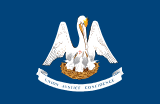
Louisiana
LA · Data from 2022–2023 government sources · Southeast · 50 States Learning Path
Louisiana, the Pelican State, is a place like nowhere else in America. Shaped by French, Spanish, African, and Creole influences, Louisiana has a culture, cuisine, and musical heritage that are uniquely its own. From the jazz clubs of New Orleans to the Cajun bayous of the Atchafalaya Basin, Louisiana pulses with a vibrant energy that draws visitors from around the world.
Think you know Louisiana? Test your geography skills.
History
Louisiana's history reflects a mosaic of cultures. France claimed the territory in 1682, naming it after King Louis XIV. Spain ruled from 1763 to 1800 before France briefly reclaimed it and sold the entire Louisiana Territory to the United States in 1803 for $15 million — the Louisiana Purchase. Louisiana became the 18th state on April 30, 1812. The state's legal system is based on Napoleonic Code rather than English common law, making it unique among U.S. states. New Orleans has been a cultural capital since its founding in 1718.
Economy
Louisiana's economy is built on energy, petrochemicals, agriculture, shipping, and tourism. The state is a major producer of oil and natural gas, both onshore and in the Gulf of Mexico. The Port of South Louisiana is the largest tonnage port in the Western Hemisphere. Agriculture includes sugarcane, rice, cotton, and a thriving crawfish industry. Tourism generates over $18 billion annually, driven largely by New Orleans — Mardi Gras alone brings in an estimated $1 billion.
Geography & Landmarks
Louisiana covers 52,378 square miles at the mouth of the Mississippi River, much of it low-lying and prone to flooding. The Atchafalaya Basin is the largest wetland and swamp in the United States. The Mississippi River Delta, while ecologically critical, is rapidly eroding — Louisiana loses approximately a football field of coastline every 100 minutes. Northern Louisiana features piney hills, while the southern half is dominated by marshes, bayous, and barrier islands. The Atchafalaya Basin, the nation's largest river swamp at roughly 1.4 million acres, serves as a critical overflow for the Mississippi River and supports an extraordinarily rich ecosystem of cypress-tupelo forests, crawfish, and migratory waterfowl. Louisiana's coastline is rapidly changing due to subsidence, erosion, and sea-level rise.
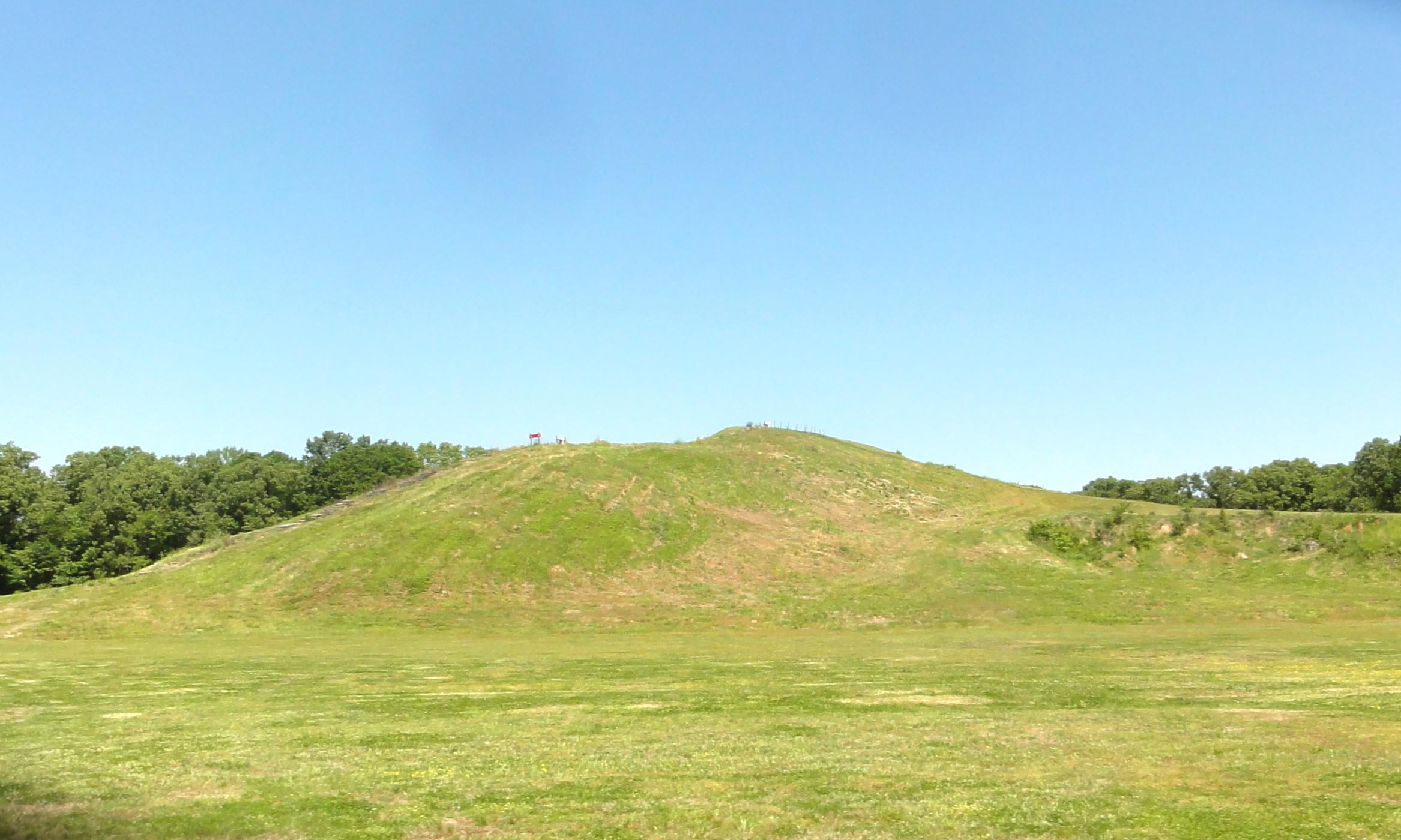
Poverty Point National Monument — Bart Everson
Source: NPS API
Culture & Traditions
Louisiana's cultural identity is among the most distinctive in the nation, shaped by French, Spanish, African, and Caribbean influences that produced Cajun and Creole traditions found nowhere else. New Orleans is the birthplace of jazz, with legends Louis Armstrong, Jelly Roll Morton, and Sidney Bechet emerging from its clubs and street parades, and the city's live music scene remains unmatched, from Preservation Hall to the annual Jazz & Heritage Festival. Louisiana cuisine is world-renowned — gumbo, jambalaya, crawfish etouffee, beignets at Cafe Du Monde, and po'boy sandwiches are pillars of American gastronomy. Mardi Gras in New Orleans, with its elaborate krewes, float parades, and masquerade balls, is the largest free party in the United States and draws over a million visitors annually. The Cajun culture of southwest Louisiana maintains its own distinct music (zydeco and Cajun two-step), cuisine, and French-influenced dialect.
Notable Cities
Baton Rouge
CapitalThe state capital and home to Louisiana State University (LSU). The Louisiana State Capitol, at 450 feet, is the tallest state capitol building in the U.S.
225,500
Population
$50,155
Median income
$217,700
Home value
$1,010
Median rent
31.9
Median age
8.6%
Unemployment
47.9%
Homeownership
27,639
Bachelor's+
New Orleans
The birthplace of jazz and one of America's most culturally rich cities. Known for the French Quarter, Mardi Gras, Creole and Cajun cuisine, and a resilient spirit shown after Hurricane Katrina.
Shreveport
The largest city in northern Louisiana, known for its riverboat casinos, the Shreveport-Bossier metro, and the Louisiana State Fair.
Lafayette
The heart of Cajun country, known as the Happiest City in America. A center for Cajun music, zydeco, boudin, and crawfish festivals.
Lake Charles
A southwestern Louisiana city known for Creole cuisine, casino resorts, and the Contraband Days pirate festival.
Capital city data: Census Bureau ACS 5-Year (2022)
Intel File · Fun Facts
Louisiana is the only state whose legal system is based on Napoleonic Code (French civil law) rather than English common law.
New Orleans' Mardi Gras celebration dates back to 1699 and generates an estimated $1 billion in economic activity each year.
Louisiana produces about 90% of the nation's crawfish — over 150 million pounds annually.
The Louisiana State Capitol in Baton Rouge, at 450 feet, is the tallest state capitol building in the United States.
Jazz, one of America's greatest cultural contributions to the world, was born in New Orleans in the early 1900s.
Printable Worksheet
Free, GeoProwl-branded, classroom-ready.
Download the Louisiana Worksheet (PDF)
One page · ready to print at home or in class
Nickname
The Pelican State
Motto
Union, Justice, and Confidence
State Bird
Eastern Brown Pelican
State Flower
Magnolia
State Tree
Bald Cypress
Also included: fill in what you learned
1. Louisiana is the only state whose legal system is based on Napoleonic Code (French civil law) rather than English common law.
2. New Orleans' Mardi Gras celebration dates back to 1699 and generates an estimated $1 billion in economic activity each year.
3. Louisiana produces about 90% of the nation's crawfish — over 150 million pounds annually.
4. The Louisiana State Capitol in Baton Rouge, at 450 feet, is the tallest state capitol building in the United States.
Want all 50 states?
One PDF packet, every state, ready to print for the whole class.
Pair it with a math worksheet
Four Fours Challenge: build every number 1–100 using exactly four 4s.
Data & Statistics
Demographics
- Population
- 4,640,546
- Median income
- $57,852
- Median age
- 37.6
- Median home value
- $198,300
- Below poverty line
- 842,038
- Bachelor's degree+
- 519,481
Source: U.S. Census Bureau, ACS 5-Year Estimates (2022)
Agriculture
- Total farms
- 25,006
- Cropland
- 4,303,687 acres
- Market value
- $4,807M
Source: USDA NASS, Census of Agriculture (2022)
Public Health
- Obesity rate
- 39.9%
- Diabetes rate
- 16.1%
- Smoking rate
- 15.7%
- High blood pressure
- 43.4%
- Uninsured
- 5.2%
Source: CDC BRFSS Prevalence Data (2023, 2022 fallback)
National Parks & Sites
- National parks
- 0
- Total NPS sites
- 6
- Sites
- Cane River Creole National Historical Park, El Camino Real de los Tejas National Historic Trail, Jean Lafitte National Historical Park and Preserve, New Orleans Jazz National Historical Park, Poverty Point National Monument, Vicksburg National Military Park
Source: National Park Service API
Climate
- Avg temperature
- 66.6°F
- Avg high
- 77.2°F
- Avg low
- 55.6°F
- Annual precipitation
- 59.9 in
- Annual snowfall
- 0.2 in
Source: NOAA Climate Normals (2010)
Frequently Asked Questions
What is the capital of Louisiana?▾
Baton Rouge is the capital of Louisiana. While New Orleans is more famous and was once the capital, Baton Rouge has served as the state capital since 1880.
What is Cajun vs Creole?▾
Cajun culture descends from French-speaking Acadian exiles who settled in rural southwestern Louisiana in the 18th century. Creole culture developed in New Orleans from a mix of French, Spanish, African, and Caribbean influences. Both traditions have distinct (but sometimes overlapping) cuisines, music, and dialects.
When is Mardi Gras?▾
Mardi Gras (Fat Tuesday) falls 47 days before Easter, so the date varies each year — typically between early February and early March. The Carnival season begins on January 6 (Twelfth Night) and builds to the main Mardi Gras day parades.
Why is Louisiana losing its coastline?▾
Louisiana loses about 25-35 square miles of coastal wetlands per year due to a combination of sea-level rise, subsidence (sinking land), reduced sediment from the dammed Mississippi River, oil and gas canal dredging, and saltwater intrusion. Since the 1930s, Louisiana has lost over 2,000 square miles of land.
Data sources
U.S. Census Bureau · USDA NASS · CDC BRFSS · National Park Service · NOAA CDO
This product uses the Census Bureau Data API but is not endorsed or certified by the Census Bureau. This product uses the NASS API but is not endorsed or certified by NASS.
Test your knowledge →
Play today's GeoProwl daily challenge — 10 states, 3 clues each, powered by real data.