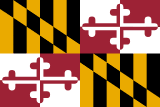
Maryland
MD · Data from 2022–2023 government sources · Northeast · 50 States Learning Path
Maryland, the Old Line State, packs remarkable diversity into a small area. Bordering the Chesapeake Bay — the largest estuary in North America — Maryland offers everything from Atlantic beaches to Appalachian mountain ridges within a 250-mile drive. The state's proximity to Washington, D.C. makes it a center of federal government activity, while Baltimore offers a gritty, historic port city culture all its own.
Think you know Maryland? Test your geography skills.
History
Maryland was founded in 1634 as a haven for English Catholics by Cecil Calvert, Lord Baltimore. The colony's Toleration Act of 1649 was one of the first laws of religious freedom in the New World. Maryland was one of the original 13 colonies and the seventh state to ratify the Constitution. During the Civil War, Maryland was a Union border state, and the Battle of Antietam (1862) near Sharpsburg was the bloodiest single-day battle in American history. The Star-Spangled Banner was written by Francis Scott Key during the bombardment of Baltimore's Fort McHenry in 1814.
Economy
Maryland's economy benefits enormously from proximity to the federal government. Major employers include the National Institutes of Health (NIH) in Bethesda, the National Security Agency (NSA) at Fort Meade, and NASA's Goddard Space Flight Center in Greenbelt. The state has a highly educated workforce and a thriving biotech corridor along the I-270 corridor. Johns Hopkins University and its health system are the state's largest private employer. The Port of Baltimore is a major East Coast shipping hub.
Geography & Landmarks
Maryland covers 12,406 square miles — the 42nd-largest state — but features extraordinary geographic variety. The Eastern Shore, across the Chesapeake Bay Bridge, is flat coastal plain with farming communities and beach towns. The western panhandle reaches into the Appalachian Mountains, with elevations exceeding 3,000 feet. The Chesapeake Bay, about 200 miles long, dominates the state's geography and ecology, supporting a famous blue crab fishery. Assateague Island, shared with Virginia, is a 37-mile barrier island famous for its herds of wild horses and pristine Atlantic beaches within a national seashore. The Chesapeake Bay is the largest estuary in the United States at approximately 200 miles long.
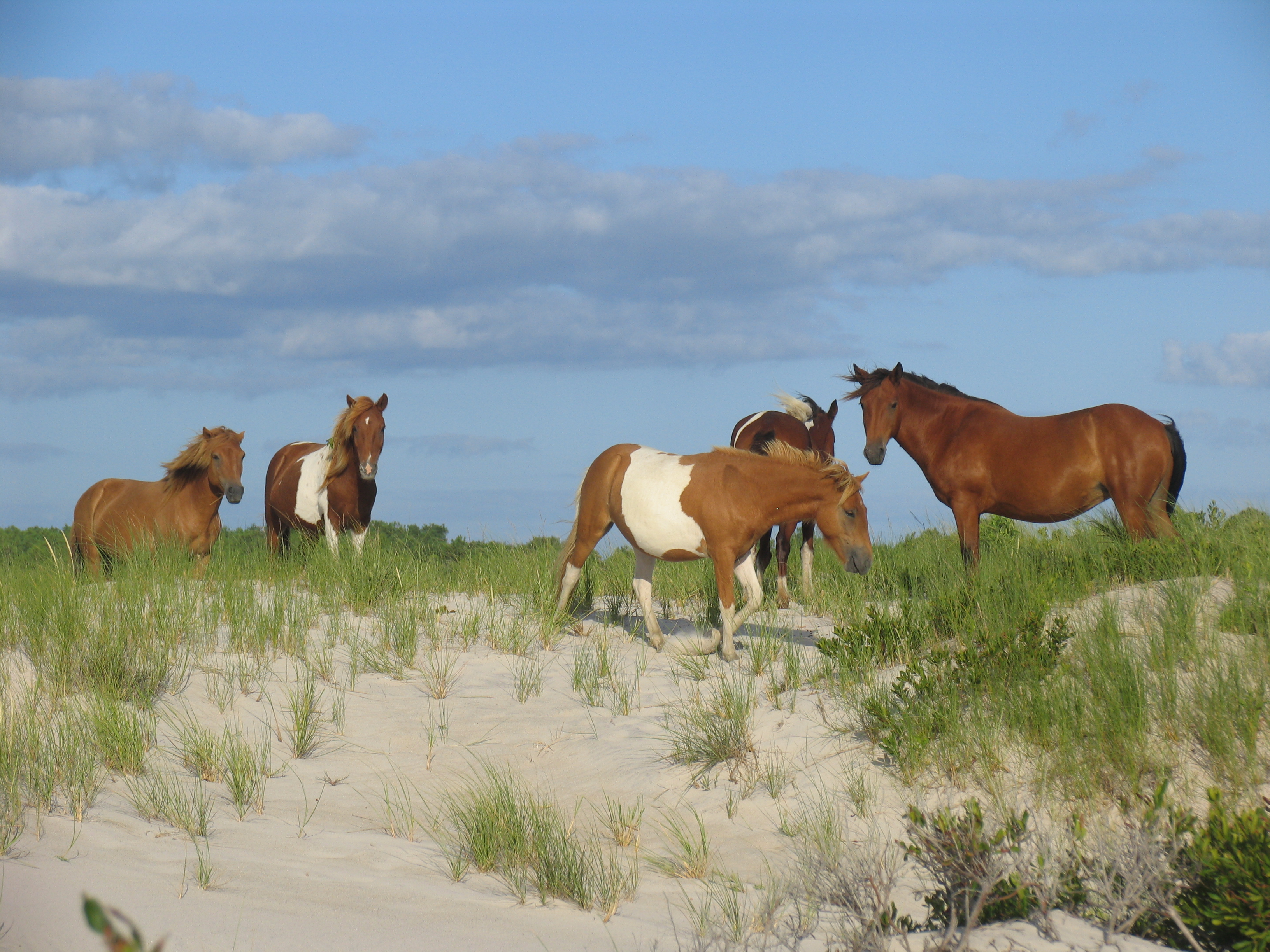
Assateague Island National Seashore — NPS Photo
Source: NPS API
Culture & Traditions
Maryland's cultural landscape is shaped by the Chesapeake Bay and its position between North and South. The state's culinary identity revolves around blue crabs — steamed with Old Bay seasoning, picked by hand at newspaper-covered tables — a ritual that defines Maryland summer gatherings. Baltimore's Inner Harbor anchors the city's cultural life, with the National Aquarium, the American Visionary Art Museum, and the Walters Art Museum within walking distance. The city produced filmmaker John Waters, whose irreverent movies (Hairspray, Pink Flamingos) celebrated Baltimore's eccentric character. The Baltimore Ravens and Baltimore Orioles enjoy passionate followings, with Camden Yards (opened 1992) having pioneered the retro-modern ballpark design that transformed stadium architecture across professional sports. The Maryland Renaissance Festival in Crownsville, running since 1977, is one of the largest Renaissance faires in the country.
Notable Cities
Annapolis
CapitalThe state capital and home to the United States Naval Academy. One of the best-preserved colonial towns in America, with a waterfront that hosts world-class sailing.
40,719
Population
$97,219
Median income
$473,100
Home value
$1,750
Median rent
37.7
Median age
4.2%
Unemployment
59.8%
Homeownership
8,023
Bachelor's+
Baltimore
Maryland's largest city, known for the Inner Harbor, Fort McHenry, Johns Hopkins University, Chesapeake blue crabs, and a vibrant arts scene.
Bethesda
An affluent suburb of Washington, D.C. and home to the National Institutes of Health, Walter Reed National Military Medical Center, and a thriving restaurant scene.
Frederick
A historic city in the foothills of the Blue Ridge Mountains, known for its revitalized downtown, Civil War history, and proximity to Catoctin Mountain Park (site of Camp David).
Ocean City
Maryland's Atlantic beach resort town, with a 3-mile boardwalk and 10 miles of public beaches drawing over 8 million visitors annually.
Capital city data: Census Bureau ACS 5-Year (2022)
Intel File · Fun Facts
The Star-Spangled Banner was inspired by the British bombardment of Fort McHenry in Baltimore Harbor on September 13-14, 1814.
Maryland's Chesapeake Bay produces more blue crabs than any other body of water in the world.
The U.S. Naval Academy in Annapolis has trained naval officers since 1845.
Maryland has no natural lakes — all of its lakes are man-made reservoirs.
Camp David, the presidential retreat, is located in Maryland's Catoctin Mountain Park, about 60 miles northwest of Washington, D.C.
Printable Worksheet
Free, GeoProwl-branded, classroom-ready.
Download the Maryland Worksheet (PDF)
One page · ready to print at home or in class
Nickname
The Old Line State
Motto
Fatti Maschii, Parole Femine (Strong Deeds, Gentle Words)
State Bird
Baltimore Oriole
State Flower
Black-eyed Susan
State Tree
White Oak
Also included: fill in what you learned
1. The Star-Spangled Banner was inspired by the British bombardment of Fort McHenry in Baltimore Harbor on September 13-14, 1814.
2. Maryland's Chesapeake Bay produces more blue crabs than any other body of water in the world.
3. The U.S. Naval Academy in Annapolis has trained naval officers since 1845.
4. Maryland has no natural lakes — all of its lakes are man-made reservoirs.
Want all 50 states?
One PDF packet, every state, ready to print for the whole class.
Pair it with a math worksheet
Four Fours Challenge: build every number 1–100 using exactly four 4s.
Data & Statistics
Demographics
- Population
- 6,161,707
- Median income
- $98,461
- Median age
- 39.1
- Median home value
- $380,500
- Below poverty line
- 558,567
- Bachelor's degree+
- 952,916
Source: U.S. Census Bureau, ACS 5-Year Estimates (2022)
Agriculture
- Total farms
- 12,550
- Cropland
- 1,397,492 acres
- Market value
- $3,378M
Source: USDA NASS, Census of Agriculture (2022)
Public Health
- Obesity rate
- 34.1%
- Diabetes rate
- 12.2%
- Smoking rate
- 9.1%
- High blood pressure
- 35.8%
- Uninsured
- 6.8%
Source: CDC BRFSS Prevalence Data (2023, 2022 fallback)
National Parks & Sites
- National parks
- 0
- Total NPS sites
- 27
- Sites
- Antietam National Battlefield, Appalachian National Scenic Trail, Assateague Island National Seashore, Baltimore-Washington Parkway, Captain John Smith Chesapeake National Historic Trail, Catoctin Mountain Park, Chesapeake & Ohio Canal National Historical Park, Chesapeake Bay, Civil War Defenses of Washington, Clara Barton National Historic Site, Fort Foote Park, Fort McHenry National Monument and Historic Shrine, Fort Washington Park, George Washington Memorial Parkway, Glen Echo Park, Greenbelt Park, Hampton National Historic Site, Harmony Hall, Harpers Ferry National Historical Park, Harriet Tubman Underground Railroad National Historical Park, Monocacy National Battlefield, Oxon Cove Park & Oxon Hill Farm, Piscataway Park, Potomac Heritage National Scenic Trail, Star-Spangled Banner National Historic Trail, Thomas Stone National Historic Site, Washington-Rochambeau Revolutionary Route National Historic Trail
Source: National Park Service API
Climate
- Avg temperature
- 55.5°F
- Avg high
- 65.9°F
- Avg low
- 45.1°F
- Annual precipitation
- 44.1 in
- Annual snowfall
- 17.1 in
Source: NOAA Climate Normals (2010)
Frequently Asked Questions
What is the capital of Maryland?▾
Annapolis is the capital of Maryland. It is the home of the U.S. Naval Academy and served briefly as the capital of the United States in 1783-1784.
What is Maryland known for?▾
Maryland is known for the Chesapeake Bay and its blue crabs, the Star-Spangled Banner's origin at Fort McHenry, the U.S. Naval Academy in Annapolis, Johns Hopkins University and Hospital, proximity to Washington D.C., and its Old Bay seasoning.
What is the Chesapeake Bay?▾
The Chesapeake Bay is the largest estuary in North America, stretching about 200 miles from the Susquehanna River in Maryland to the Atlantic Ocean in Virginia. It drains a watershed covering six states and is famous for its blue crabs, oysters, and diverse marine ecosystems.
Why is Maryland called the Old Line State?▾
Maryland earned the nickname 'The Old Line State' from George Washington, who praised the 'troops of the line' from Maryland for their bravery during the Revolutionary War, particularly at the Battle of Long Island in 1776.
Data sources
U.S. Census Bureau · USDA NASS · CDC BRFSS · National Park Service · NOAA CDO
This product uses the Census Bureau Data API but is not endorsed or certified by the Census Bureau. This product uses the NASS API but is not endorsed or certified by NASS.
Test your knowledge →
Play today's GeoProwl daily challenge — 10 states, 3 clues each, powered by real data.