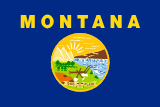
Montana
MT · Data from 2022–2023 government sources · West · 50 States Learning Path
Montana, Big Sky Country, is the fourth-largest state by area but one of the least densely populated. Its vast open spaces, towering mountain ranges, and unspoiled wilderness have earned it a reputation as one of America's last great wild places. Glacier National Park's retreating glaciers and Yellowstone's geothermal wonders anchor a state that remains deeply connected to its frontier heritage.
Think you know Montana? Test your geography skills.
History
Montana was home to numerous Native American tribes including the Crow, Blackfeet, Salish, and Kootenai. The Lewis and Clark expedition crossed Montana in 1805-06. Gold discoveries in the 1860s brought miners and led to territorial status in 1864. Montana became the 41st state on November 8, 1889. The Battle of the Little Bighorn in 1876 — where Lakota and Cheyenne warriors defeated General Custer — is the most famous event in Montana's history. Copper mining in Butte made Montana an industrial powerhouse in the late 1800s.
Economy
Montana's economy relies on agriculture, tourism, energy, and timber. Cattle ranching and wheat farming dominate the eastern plains. Tourism generates over $5 billion annually, driven by Glacier and Yellowstone national parks. The state has significant coal, oil, and natural gas reserves. A growing tech and remote-work sector has brought new residents to cities like Bozeman and Missoula, driving rapid growth.
Geography & Landmarks
Montana covers 147,040 square miles — the fourth-largest state. The western third is dominated by the Rocky Mountains, with peaks exceeding 12,000 feet. The eastern two-thirds are Great Plains grassland. Glacier National Park contains 26 named glaciers (down from 150 in 1850) and over 700 miles of hiking trails. The Continental Divide runs through the state. Montana's rivers — the Missouri, Yellowstone, and Flathead — offer world-class fly fishing. Scientists project most of Glacier National Park's remaining glaciers may disappear by 2030 due to climate change. The Missouri River Breaks, a remote stretch of badlands and white cliff formations along the upper Missouri River, remain almost exactly as Lewis and Clark described them in 1805.
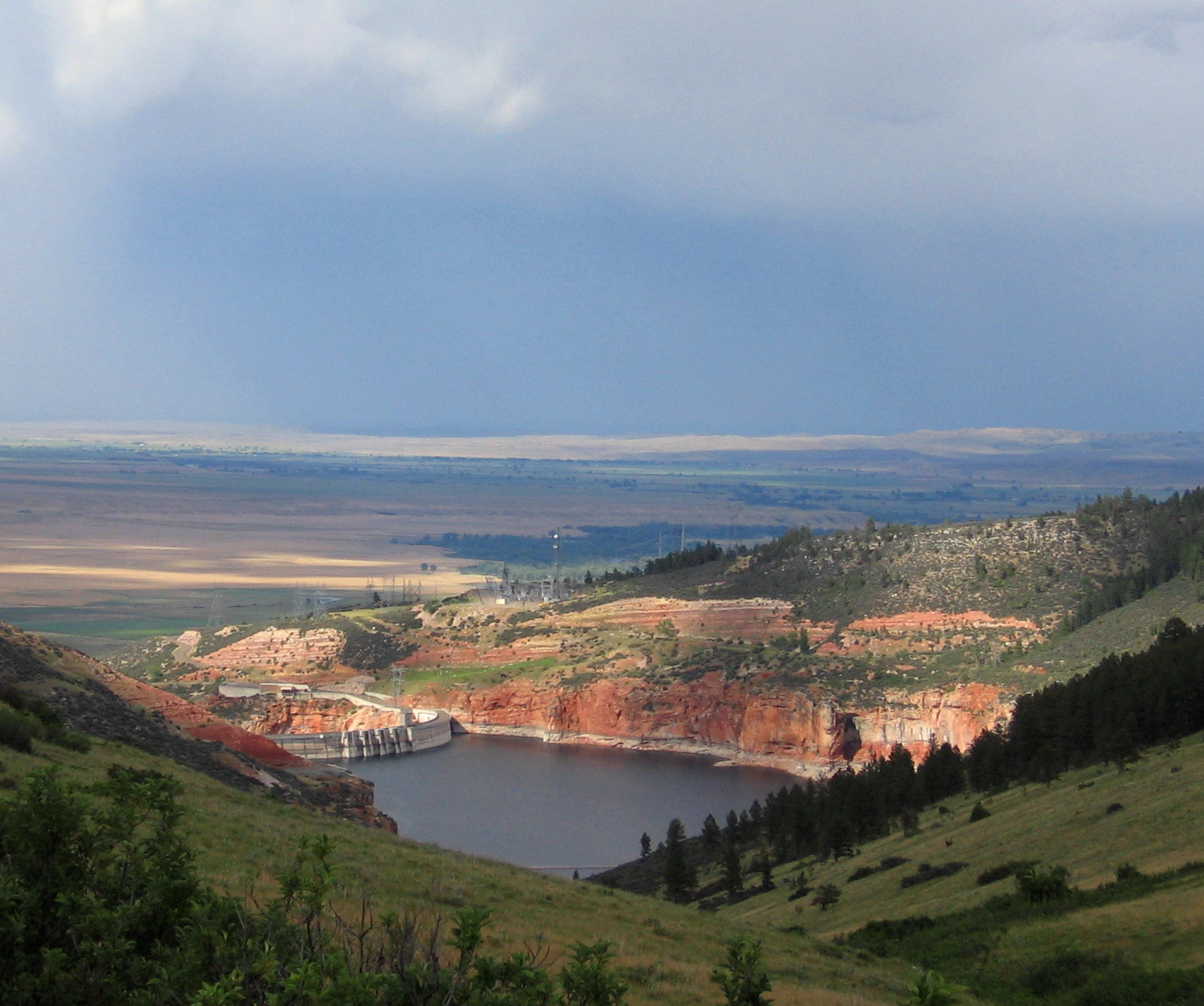
Bighorn Canyon National Recreation Area — Sharron Genaux
Source: NPS API
Culture & Traditions
Montana's cultural identity is rooted in its cowboy heritage and wide-open spaces. The state hosts numerous rodeos, with the Miles City Bucking Horse Sale and the Livingston Roundup among the most authentic Western events in the country. Montana's literary tradition is rich, with Norman Maclean's A River Runs Through It (set on the Blackfoot River) and Ivan Doig's Montana novels capturing the state's landscape and character. The C.M. Russell Museum in Great Falls houses the largest collection of works by cowboy artist Charles M. Russell, whose paintings and sculptures defined the visual mythology of the American West. Montana's craft brewing scene has exploded, with more breweries per capita than almost any other state. Fly fishing on the Yellowstone, Madison, and Gallatin Rivers draws anglers from around the world.
Notable Cities
Helena
CapitalThe state capital, founded during the 1864 gold rush. Helena's Last Chance Gulch downtown district sits on the original mining claim.
32,529
Population
$64,798
Median income
$331,700
Home value
$969
Median rent
39.9
Median age
3.2%
Unemployment
55.2%
Homeownership
7,161
Bachelor's+
Billings
Montana's largest city, located on the Yellowstone River. A regional hub for energy, healthcare, and agriculture in the eastern part of the state.
Missoula
A vibrant college town surrounded by five mountain ranges, home to the University of Montana and a thriving arts and outdoor recreation culture.
Bozeman
One of the fastest-growing cities in the U.S., gateway to Big Sky Resort and Yellowstone. Montana State University and a booming tech scene drive its growth.
Butte
The Richest Hill on Earth — once a copper mining boomtown that powered America's electrical revolution. The Berkeley Pit, a former open-pit mine, is now a Superfund site.
Capital city data: Census Bureau ACS 5-Year (2022)
Intel File · Fun Facts
Montana has more cattle (2.5 million) than people (1.1 million).
Glacier National Park's glaciers have shrunk by about 80% since 1850, with scientists predicting they could disappear entirely by mid-century.
The Battle of the Little Bighorn (1876) in southeastern Montana was the most significant Native American victory over the U.S. Army.
Montana's Roe River, at just 201 feet long, held the Guinness record as the world's shortest river.
Yellowstone National Park, while mostly in Wyoming, has three of its five entrances in Montana.
Printable Worksheet
Free, GeoProwl-branded, classroom-ready.
Download the Montana Worksheet (PDF)
One page · ready to print at home or in class
Nickname
The Treasure State
Motto
Oro y Plata (Gold and Silver)
State Bird
Western Meadowlark
State Flower
Bitterroot
State Tree
Ponderosa Pine
Also included: fill in what you learned
1. Montana has more cattle (2.5 million) than people (1.1 million).
2. Glacier National Park's glaciers have shrunk by about 80% since 1850, with scientists predicting they could disappear entirely by mid-century.
3. The Battle of the Little Bighorn (1876) in southeastern Montana was the most significant Native American victory over the U.S. Army.
4. Montana's Roe River, at just 201 feet long, held the Guinness record as the world's shortest river.
Want all 50 states?
One PDF packet, every state, ready to print for the whole class.
Pair it with a math worksheet
Four Fours Challenge: build every number 1–100 using exactly four 4s.
Data & Statistics
Demographics
- Population
- 1,091,840
- Median income
- $66,341
- Median age
- 40.1
- Median home value
- $305,700
- Below poverty line
- 132,329
- Bachelor's degree+
- 170,549
Source: U.S. Census Bureau, ACS 5-Year Estimates (2022)
Agriculture
- Total farms
- 24,266
- Cropland
- 16,069,748 acres
- Market value
- $4,545M
Source: USDA NASS, Census of Agriculture (2022)
Public Health
- Obesity rate
- 30.5%
- Diabetes rate
- 9.4%
- Smoking rate
- 12.4%
- High blood pressure
- 32.2%
- Uninsured
- 7.9%
Source: CDC BRFSS Prevalence Data (2023, 2022 fallback)
National Parks & Sites
- National parks
- 2
- Total NPS sites
- 10
- Sites
- Big Hole National Battlefield, Bighorn Canyon National Recreation Area, Fort Union Trading Post National Historic Site, Glacier National Park, Grant-Kohrs Ranch National Historic Site, Ice Age Floods National Geologic Trail, Lewis & Clark National Historic Trail, Little Bighorn Battlefield National Monument, Nez Perce National Historical Park, Yellowstone National Park
Source: National Park Service API
Climate
- Avg temperature
- 44.3°F
- Avg high
- 57.3°F
- Avg low
- 30.9°F
- Annual precipitation
- 14.0 in
- Annual snowfall
- 41.7 in
Source: NOAA Climate Normals (2010)
Frequently Asked Questions
What is the capital of Montana?▾
Helena is the capital of Montana. Founded as a gold mining camp in 1864, it became the state capital in 1875 and was once home to more millionaires per capita than any other city in the U.S.
Why is Montana called Big Sky Country?▾
Montana earned the nickname 'Big Sky Country' because its vast, open landscapes and low population density create unobstructed views of enormous skies. The phrase was popularized by A.B. Guthrie Jr.'s 1947 novel 'The Big Sky.'
What is there to do in Glacier National Park?▾
Glacier National Park offers 700+ miles of hiking trails, the Going-to-the-Sun Road (one of America's most scenic drives), backcountry camping, fishing, and wildlife viewing including grizzly bears, mountain goats, and moose. The park straddles the Continental Divide.
Is Montana a good place to live?▾
Montana attracts residents with its natural beauty, outdoor recreation, low population density, and lack of state sales tax. However, housing costs in cities like Bozeman and Missoula have risen sharply, winters can be harsh, and services in rural areas are limited.
Data sources
U.S. Census Bureau · USDA NASS · CDC BRFSS · National Park Service · NOAA CDO
This product uses the Census Bureau Data API but is not endorsed or certified by the Census Bureau. This product uses the NASS API but is not endorsed or certified by NASS.
Test your knowledge →
Play today's GeoProwl daily challenge — 10 states, 3 clues each, powered by real data.