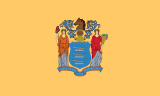
New Jersey
NJ · Data from 2022–2023 government sources · Northeast · 50 States Learning Path
New Jersey, the Garden State, is the most densely populated state in America — yet it also contains surprisingly diverse landscapes, from the Pine Barrens wilderness to the Atlantic Shore's 130 miles of beaches. Sandwiched between New York City and Philadelphia, New Jersey has long been underestimated, but it boasts one of the strongest economies in the nation and a cultural identity all its own.
Think you know New Jersey? Test your geography skills.
History
New Jersey was home to the Lenape people before Dutch and Swedish colonists arrived in the 1600s. It became an English colony in 1664, named after the Isle of Jersey. New Jersey was the third state to ratify the Constitution in 1787. The state was a crucial battleground during the Revolution — George Washington's famous crossing of the Delaware led to the Battle of Trenton (1776), a turning point in the war. In the 19th and 20th centuries, New Jersey became an industrial powerhouse, with Thomas Edison's laboratory in Menlo Park producing world-changing inventions.
Economy
New Jersey's GDP exceeds $700 billion, making it one of the wealthiest states per capita. The economy is driven by pharmaceuticals (Johnson & Johnson, Merck, Bristol-Myers Squibb), financial services, technology, and logistics. The Port Newark-Elizabeth Marine Terminal is the largest container port on the East Coast. New Jersey's position between New York and Philadelphia makes it a logistics and distribution hub. Tourism, particularly the Jersey Shore, generates over $46 billion annually.
Geography & Landmarks
New Jersey covers 8,723 square miles — the fifth-smallest state — but features remarkable geographic diversity. The northwestern corner has Appalachian ridges and the Delaware Water Gap. The central region is suburban and agricultural. The Pine Barrens (Pinelands) in the south cover 1.1 million acres of coastal plain forest — the largest tract of open space on the Mid-Atlantic seaboard. The Jersey Shore runs 130 miles from Sandy Hook to Cape May. The Palisades, dramatic columnar basalt cliffs rising up to 540 feet along the west bank of the Hudson River, formed from a volcanic intrusion approximately 200 million years ago. The Pine Barrens contain one of the largest aquifers on the East Coast and are home to rare species including the Pine Barrens treefrog.
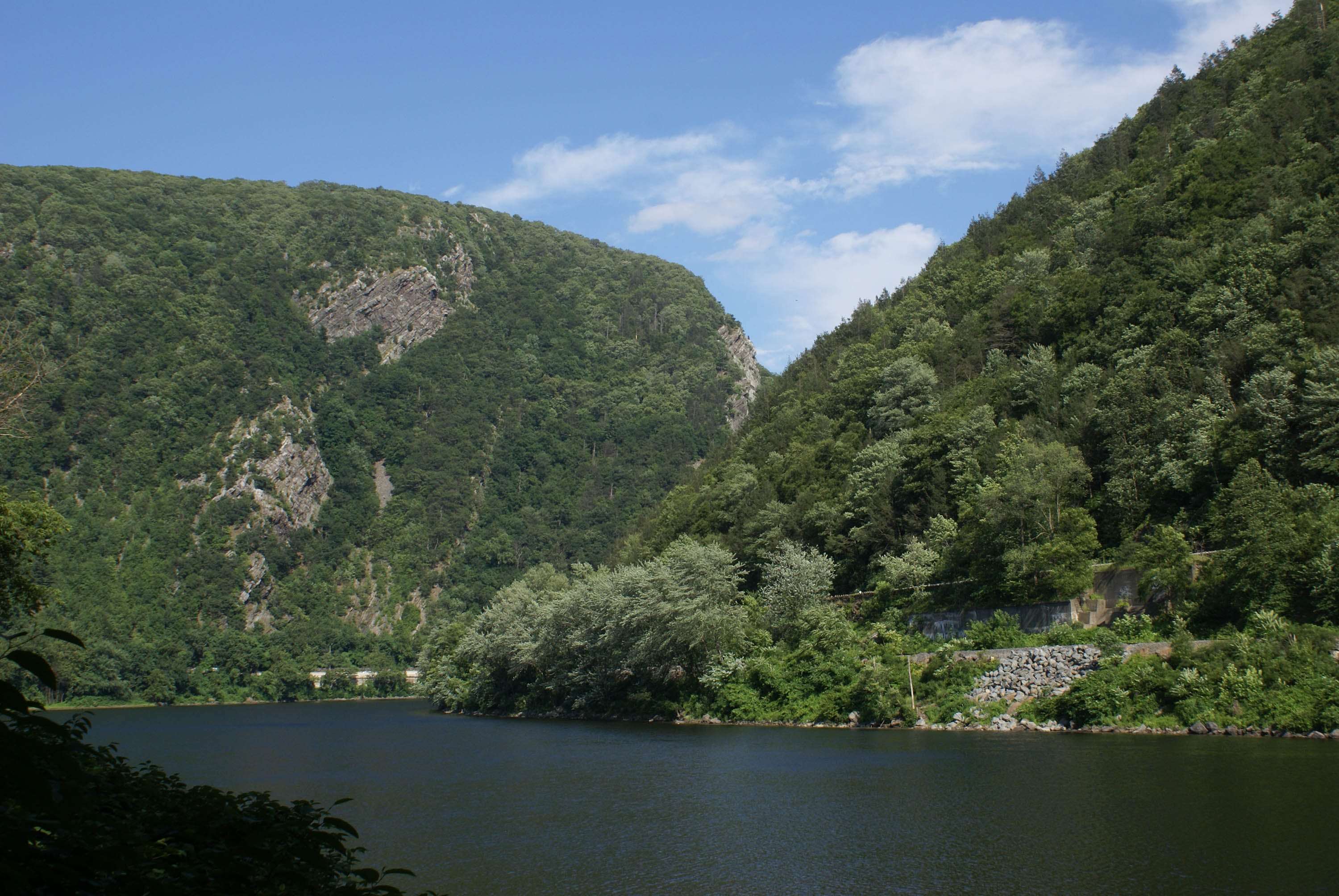
Delaware Water Gap National Recreation Area — Courtesy of James Hicks
Source: NPS API
Culture & Traditions
New Jersey's cultural impact on music alone is staggering — Bruce Springsteen's anthems of working-class life along the Jersey Shore, Frank Sinatra from Hoboken, Whitney Houston from Newark, Bon Jovi from Sayreville, and the Fugees from South Orange have collectively shaped American popular music for decades. The state's food culture is fiercely debated (pork roll versus Taylor ham divides North and South Jersey), and its diners — over 500, more than any other state — are cultural institutions serving everything from disco fries to cheese-stuffed hot dogs. The Stone Pony in Asbury Park, where Springsteen and Southside Johnny played legendary shows, remains one of America's most storied rock clubs. New Jersey is home to the Meadowlands Sports Complex (Giants, Jets, and concerts), and Princeton University's campus includes world-class art at the Princeton University Art Museum. The Jersey Shore itself, from Sandy Hook to Cape May, defines the state's summer identity.
Notable Cities
Trenton
CapitalThe state capital, where George Washington won the Battle of Trenton on Christmas night, 1776. The gold-domed State House sits along the Delaware River.
90,055
Population
$44,444
Median income
$111,200
Home value
$1,177
Median rent
35.8
Median age
10.2%
Unemployment
38.3%
Homeownership
6,552
Bachelor's+
Newark
New Jersey's largest city and home to Newark Liberty International Airport, the Prudential Center, and a growing arts and food scene in the Ironbound district.
Jersey City
Directly across the Hudson from Manhattan, with stunning skyline views, Liberty State Park (gateway to the Statue of Liberty), and a booming residential market.
Princeton
Home to Princeton University, one of the world's most prestigious institutions. Albert Einstein lived here from 1933 until his death in 1955.
Cape May
A Victorian seaside resort at the southern tip of New Jersey, designated a National Historic Landmark for its concentration of Victorian-era homes.
Capital city data: Census Bureau ACS 5-Year (2022)
Intel File · Fun Facts
New Jersey is the most densely populated state, with about 1,263 people per square mile.
Thomas Edison's laboratory in Menlo Park (now Edison) produced the phonograph, the practical incandescent light bulb, and the motion picture camera.
New Jersey has more diners than any other state — the classic American diner is practically the state's unofficial food institution.
The first college football game was played in New Brunswick, NJ in 1869 between Rutgers and Princeton.
In New Jersey, it is illegal to pump your own gas — the state and Oregon are the only two with full-service-only gas stations.
Printable Worksheet
Free, GeoProwl-branded, classroom-ready.
Download the New Jersey Worksheet (PDF)
One page · ready to print at home or in class
Nickname
The Garden State
Motto
Liberty and Prosperity
State Bird
American Goldfinch
State Flower
Common Meadow Violet
State Tree
Northern Red Oak
Also included: fill in what you learned
1. New Jersey is the most densely populated state, with about 1,263 people per square mile.
2. Thomas Edison's laboratory in Menlo Park (now Edison) produced the phonograph, the practical incandescent light bulb, and the motion picture camera.
3. New Jersey has more diners than any other state — the classic American diner is practically the state's unofficial food institution.
4. The first college football game was played in New Brunswick, NJ in 1869 between Rutgers and Princeton.
Want all 50 states?
One PDF packet, every state, ready to print for the whole class.
Pair it with a math worksheet
Four Fours Challenge: build every number 1–100 using exactly four 4s.
Data & Statistics
Demographics
- Population
- 9,249,063
- Median income
- $97,126
- Median age
- 40.0
- Median home value
- $401,400
- Below poverty line
- 879,179
- Bachelor's degree+
- 1,636,308
Source: U.S. Census Bureau, ACS 5-Year Estimates (2022)
Agriculture
- Total farms
- 9,998
- Cropland
- 449,717 acres
- Market value
- $1,488M
Source: USDA NASS, Census of Agriculture (2022)
Public Health
- Obesity rate
- 28.9%
- Diabetes rate
- 10.5%
- Smoking rate
- 9.1%
- High blood pressure
- 33.4%
- Uninsured
- 8.8%
Source: CDC BRFSS Prevalence Data (2023, 2022 fallback)
National Parks & Sites
- National parks
- 0
- Total NPS sites
- 11
- Sites
- Appalachian National Scenic Trail, Delaware Water Gap National Recreation Area, Ellis Island Part of Statue of Liberty National Monument, Gateway National Recreation Area, Great Egg Harbor River, Lower Delaware National Wild and Scenic River, Morristown National Historical Park, New Jersey Pinelands National Reserve, Paterson Great Falls National Historical Park, Thomas Edison National Historical Park, Washington-Rochambeau Revolutionary Route National Historic Trail
Source: National Park Service API
Climate
- Avg temperature
- 53.0°F
- Avg high
- 62.9°F
- Avg low
- 42.4°F
- Annual precipitation
- 47.7 in
- Annual snowfall
- 23.3 in
Source: NOAA Climate Normals (2010)
Frequently Asked Questions
What is the capital of New Jersey?▾
Trenton is the capital of New Jersey. While much smaller than Newark or Jersey City, Trenton played a pivotal role in the American Revolution and has been the state capital since 1790.
Why is New Jersey called the Garden State?▾
New Jersey earned the nickname 'Garden State' for its fertile farmland and agricultural production, which supplied food to the large urban centers of New York and Philadelphia. Despite its dense population, New Jersey still has significant farms producing tomatoes, blueberries, cranberries, and peaches.
What is the Jersey Shore?▾
The Jersey Shore is 130 miles of Atlantic coastline from Sandy Hook to Cape May, featuring diverse beach towns from the boardwalk energy of Wildwood and Seaside Heights to the Victorian charm of Cape May and the exclusivity of Spring Lake. It is one of the most popular summer destinations on the East Coast.
Why can't you pump your own gas in New Jersey?▾
New Jersey has required full-service gas stations since 1949 under the Retail Gasoline Dispensing Safety Act. Originally justified as a safety measure, the law persists partly because it creates jobs and residents have grown to appreciate the convenience.
Data sources
U.S. Census Bureau · USDA NASS · CDC BRFSS · National Park Service · NOAA CDO
This product uses the Census Bureau Data API but is not endorsed or certified by the Census Bureau. This product uses the NASS API but is not endorsed or certified by NASS.
Test your knowledge →
Play today's GeoProwl daily challenge — 10 states, 3 clues each, powered by real data.