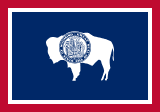
Wyoming
WY · Data from 2022–2023 government sources · West · 50 States Learning Path
Wyoming, the Cowboy State, is the least populous state in the nation — with about 577,000 residents spread across nearly 100,000 square miles. But what Wyoming lacks in people it makes up for in grandeur: Yellowstone, the world's first national park; Grand Teton's jagged peaks; and endless miles of high plains ranching country. Wyoming offers a version of the American West that still feels genuinely wild.
Think you know Wyoming? Test your geography skills.
History
Wyoming was home to the Crow, Arapaho, Shoshone, and other Native American peoples. The Oregon Trail crossed the territory, with Independence Rock and South Pass becoming famous landmarks. Wyoming Territory was established in 1868 and made history by being the first government in the world to grant women the right to vote (1869). Wyoming became the 44th state on July 10, 1890 — the 'Equality State.' The state has maintained its frontier character, with ranching, rodeo, and wide-open spaces defining its identity.
Economy
Mining and energy dominate Wyoming's economy. The state is the nation's top coal producer (from the Powder River Basin), a major oil and natural gas producer, and a growing wind energy state. Tourism, driven by Yellowstone and Grand Teton, generates about $4 billion annually. Ranching (cattle and sheep) covers vast areas of the state. Wyoming has no state income tax and no corporate income tax, funded largely by mineral extraction taxes.
Geography & Landmarks
Wyoming covers 97,813 square miles of high plains, mountain ranges, and volcanic plateaus. The average elevation is 6,700 feet — the second-highest of any state. The Rocky Mountains cross the state, with the Wind River Range, Teton Range, and Absaroka Range among the most dramatic. Yellowstone National Park in the northwest contains half the world's geothermal features, including Old Faithful. Devils Tower, a volcanic rock formation, was the nation's first national monument (1906). The Wind River Range contains Gannett Peak (13,804 feet), the state's highest point, and seven of the ten largest glaciers in the Rocky Mountains. Devils Tower rises 1,267 feet above the Belle Fourche River and is sacred to several Plains Indian tribes.
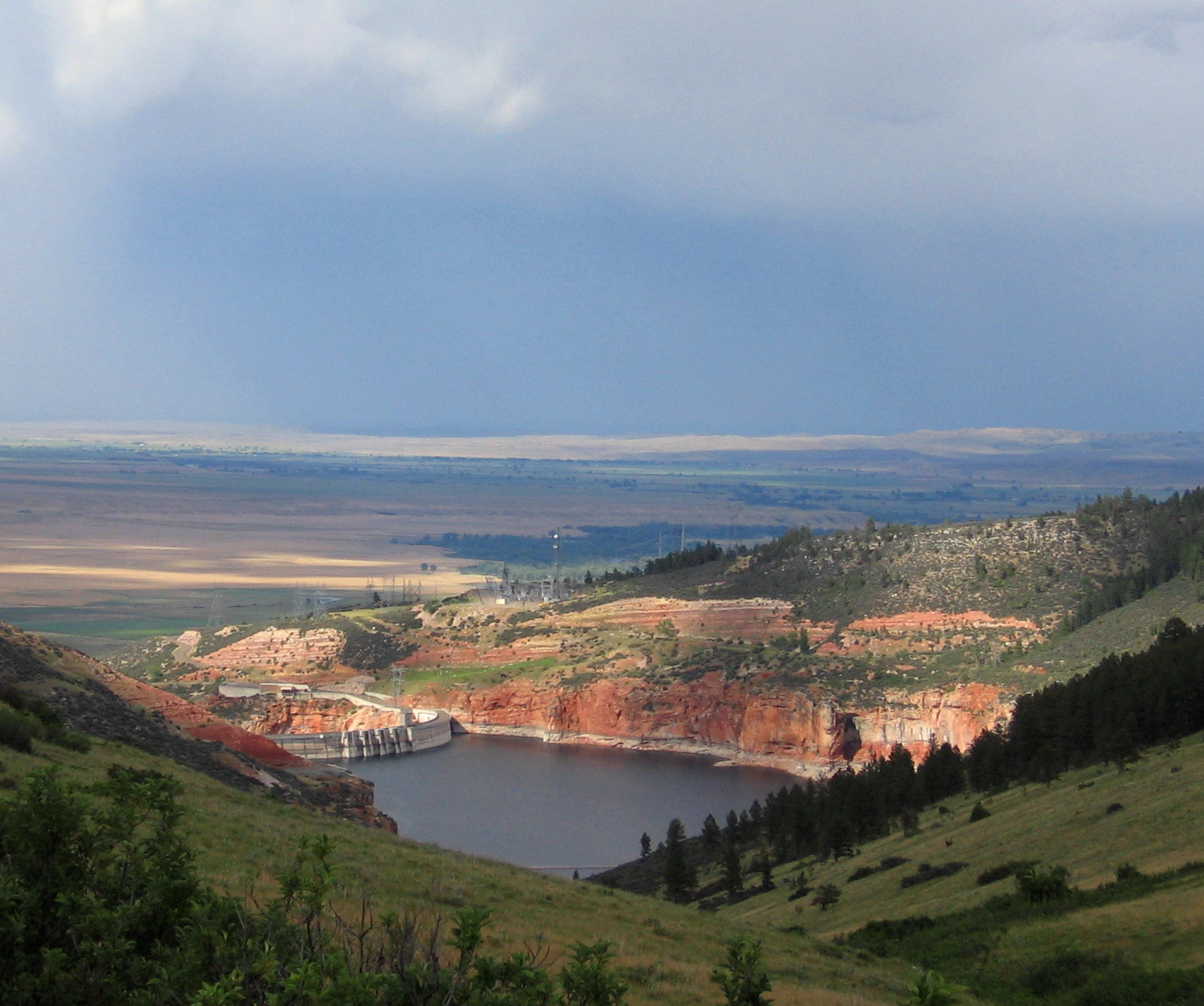
Bighorn Canyon National Recreation Area — Sharron Genaux
Source: NPS API
Culture & Traditions
Wyoming's cultural identity is rooted in its cowboy heritage and wide-open spaces. Cheyenne Frontier Days, held annually since 1897, is the world's largest outdoor rodeo and Western celebration, drawing over 200,000 visitors over 10 days with professional rodeo, concerts, parades, and a pancake breakfast. The Buffalo Bill Center of the West in Cody, comprising five museums under one roof, is the most comprehensive collection of Western Americana in the world. Jackson Hole's arts scene punches well above its weight, with the National Museum of Wildlife Art overlooking the National Elk Refuge and galleries featuring both Western and contemporary works along the Town Square. Wyoming's culinary traditions include elk steaks, bison burgers, and ranch-style cooking, while the state's craft brewing scene has grown steadily, with Snake River Brewing in Jackson winning multiple Great American Beer Festival awards. The state was the first in the nation to grant women the right to vote (1869) and elected the first female governor in U.S. history, Nellie Tayloe Ross, in 1925.
Notable Cities
Cheyenne
CapitalThe state capital and largest city (population ~65,000). Known for Cheyenne Frontier Days, the world's largest outdoor rodeo, held annually since 1897.
64,795
Population
$74,989
Median income
$283,100
Home value
$993
Median rent
38.3
Median age
3.2%
Unemployment
69.2%
Homeownership
8,800
Bachelor's+
Jackson
Gateway to Grand Teton and Yellowstone national parks. A resort town with world-class skiing at Jackson Hole Mountain Resort and a famous town square with elk antler arches.
Cody
Founded by Buffalo Bill Cody in 1896. The Buffalo Bill Center of the West is one of the finest Western museums in the country. East entrance to Yellowstone.
Laramie
Home to the University of Wyoming, the state's only four-year university. A high-plains college town at 7,200 feet elevation.
Sheridan
A historic cattle town near the Bighorn Mountains, known for King Ropes saddlery, polo matches, and a downtown that feels like the Old West.
Capital city data: Census Bureau ACS 5-Year (2022)
Intel File · Fun Facts
Yellowstone National Park (1872) was the first national park in the world.
Wyoming has roughly 2 people per square mile — the second-lowest population density of any state (after Alaska).
Wyoming was the first government in the world to grant women the right to vote (1869) and the first state to elect a female governor (Nellie Tayloe Ross, 1925).
Devils Tower in northeastern Wyoming was the first U.S. National Monument, designated by Theodore Roosevelt in 1906.
Wyoming has only two escalators in the entire state — both in banks in Casper.
Printable Worksheet
Free, GeoProwl-branded, classroom-ready.
Download the Wyoming Worksheet (PDF)
One page · ready to print at home or in class
Nickname
The Equality State
Motto
Equal Rights
State Bird
Western Meadowlark
State Flower
Indian Paintbrush
State Tree
Plains Cottonwood
Also included: fill in what you learned
1. Yellowstone National Park (1872) was the first national park in the world.
2. Wyoming has roughly 2 people per square mile — the second-lowest population density of any state (after Alaska).
3. Wyoming was the first government in the world to grant women the right to vote (1869) and the first state to elect a female governor (Nellie Tayloe Ross, 1925).
4. Devils Tower in northeastern Wyoming was the first U.S. National Monument, designated by Theodore Roosevelt in 1906.
Want all 50 states?
One PDF packet, every state, ready to print for the whole class.
Pair it with a math worksheet
Four Fours Challenge: build every number 1–100 using exactly four 4s.
Data & Statistics
Demographics
- Population
- 577,929
- Median income
- $72,495
- Median age
- 38.5
- Median home value
- $269,900
- Below poverty line
- 60,134
- Bachelor's degree+
- 71,313
Source: U.S. Census Bureau, ACS 5-Year Estimates (2022)
Agriculture
- Total farms
- 10,544
- Cropland
- 2,326,105 acres
- Market value
- $1,600M
Source: USDA NASS, Census of Agriculture (2022)
Public Health
- Obesity rate
- 33.3%
- Diabetes rate
- 10.8%
- Smoking rate
- 14.0%
- High blood pressure
- 31.5%
- Uninsured
- 10.9%
Source: CDC BRFSS Prevalence Data (2023, 2022 fallback)
National Parks & Sites
- National parks
- 2
- Total NPS sites
- 10
- Sites
- Bighorn Canyon National Recreation Area, California National Historic Trail, Devils Tower National Monument, Fort Laramie National Historic Site, Fossil Butte National Monument, Grand Teton National Park, Mormon Pioneer National Historic Trail, Oregon National Historic Trail, Pony Express National Historic Trail, Yellowstone National Park
Source: National Park Service API
Climate
- Avg temperature
- 44.5°F
- Avg high
- 58.2°F
- Avg low
- 30.8°F
- Annual precipitation
- 13.2 in
- Annual snowfall
- 47.9 in
Source: NOAA Climate Normals (2010)
Frequently Asked Questions
What is the capital of Wyoming?▾
Cheyenne is the capital of Wyoming and the state's largest city. With a population of about 65,000, it is also known for Cheyenne Frontier Days, the world's largest outdoor rodeo.
What is Yellowstone National Park?▾
Yellowstone, established in 1872, was the world's first national park. Located mostly in northwestern Wyoming, it contains over 10,000 geothermal features (including Old Faithful geyser), the Grand Prismatic Spring, the Yellowstone Grand Canyon, and abundant wildlife including grizzly bears, wolves, bison, and elk.
Why is Wyoming called the Equality State?▾
Wyoming was the first territory or state to grant women full voting rights (1869), the first to have a female justice of the peace (Esther Hobart Morris, 1870), and the first state to elect a female governor (Nellie Tayloe Ross, 1925). This pioneering stance on women's rights earned it the nickname 'The Equality State.'
What is Jackson Hole?▾
Jackson Hole is the valley in western Wyoming where the town of Jackson is located, ringed by the Teton Range and the Gros Ventre Range. It is a world-class ski destination (Jackson Hole Mountain Resort has over 4,100 feet of vertical drop) and the gateway to Grand Teton and Yellowstone national parks.
Data sources
U.S. Census Bureau · USDA NASS · CDC BRFSS · National Park Service · NOAA CDO
This product uses the Census Bureau Data API but is not endorsed or certified by the Census Bureau. This product uses the NASS API but is not endorsed or certified by NASS.
Test your knowledge →
Play today's GeoProwl daily challenge — 10 states, 3 clues each, powered by real data.