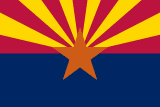
Arizona
AZ · Data from 2022–2023 government sources · Southwest · 50 States Learning Path
Arizona, the Grand Canyon State, is a land of striking contrasts — from the Sonoran Desert's saguaro cacti to the pine forests of Flagstaff and the red rock formations of Sedona. The state is home to one of the Seven Natural Wonders of the World, the Grand Canyon, which draws millions of visitors each year. Arizona's blend of Native American, Hispanic, and Western heritage gives it a distinctive cultural identity.
Think you know Arizona? Test your geography skills.
History
Arizona's human history stretches back over 12,000 years. The Ancestral Puebloans, Hohokam, and other Indigenous peoples built sophisticated civilizations in the region. Spain claimed the area in the 16th century, and it became part of Mexico after independence in 1821. The United States acquired most of present-day Arizona through the Treaty of Guadalupe Hidalgo in 1848 and the Gadsden Purchase in 1853. Arizona became the 48th state — the last of the contiguous states — on February 14, 1912. Today, the state is home to 22 federally recognized Native American tribes, more than any other state except California.
Economy
Arizona's economy is driven by technology, aerospace, healthcare, and tourism. The Phoenix metropolitan area is a major tech hub, hosting semiconductor manufacturers like Intel and a growing number of data centers. Raytheon and other defense contractors maintain significant operations in Tucson. Tourism generates over $25 billion annually, anchored by the Grand Canyon, Sedona, and Monument Valley. Agriculture, particularly cotton, lettuce, and citrus, remains important in the state's irrigated valleys.
Geography & Landmarks
Arizona covers 113,990 square miles across the Basin and Range region, the Colorado Plateau, and the Transition Zone between them. The Grand Canyon, carved by the Colorado River over millions of years, is up to 18 miles wide and more than a mile deep. The state's elevation ranges from 70 feet at the Colorado River near Yuma to 12,633 feet at Humphreys Peak near Flagstaff. Despite its desert reputation, northern Arizona receives significant snowfall. The Painted Desert stretches across approximately 120 miles in northeastern Arizona, displaying vivid bands of red, orange, and purple sedimentary layers. The Sonoran Desert, which covers much of southern Arizona, is the only place in the world where the giant saguaro cactus grows naturally.
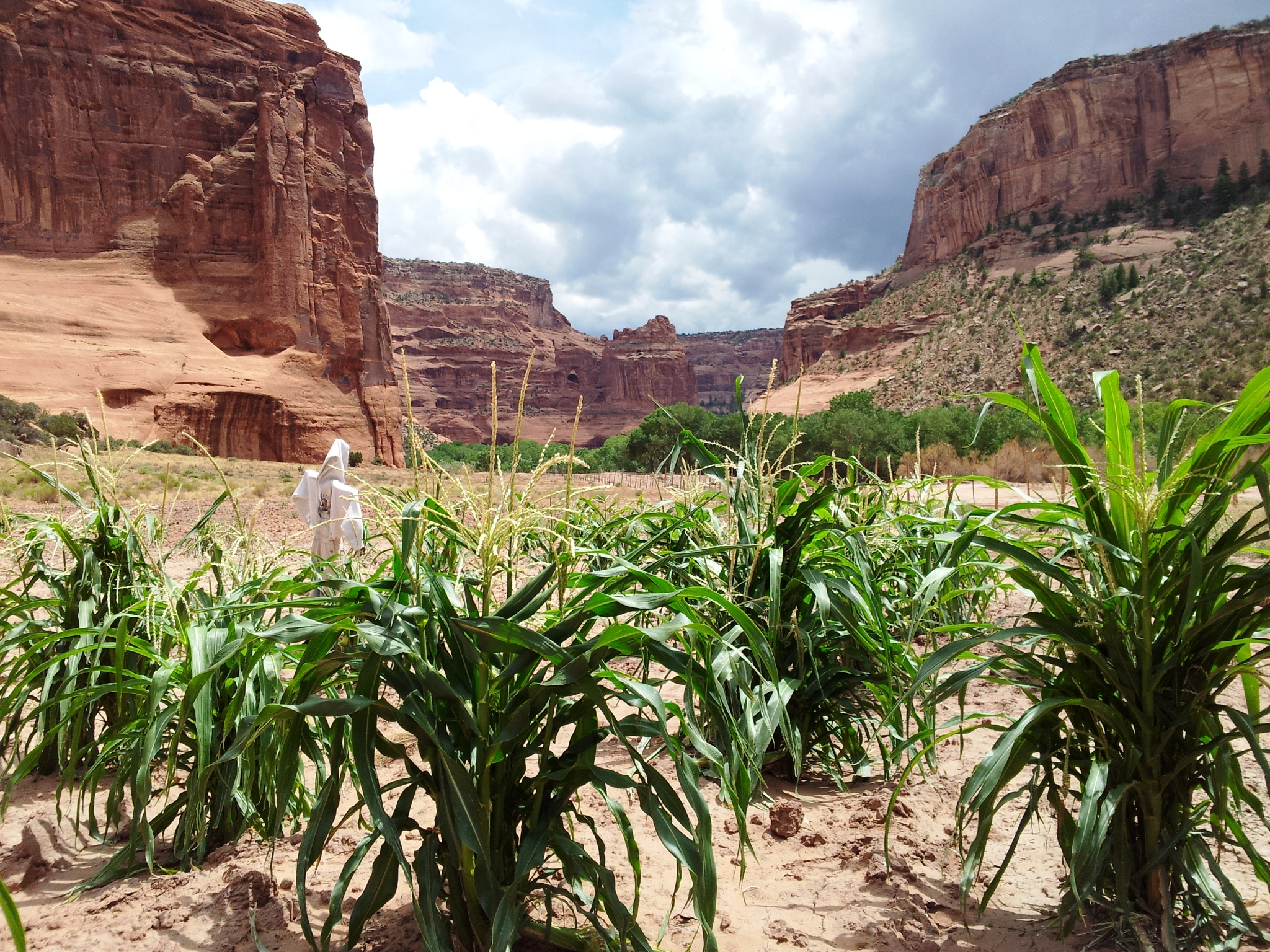
Canyon de Chelly National Monument — Ravis Henry
Source: NPS API
Culture & Traditions
Arizona's cultural identity blends Native American, Mexican, and Western traditions into a distinctive Southwestern character. Tucson was designated a UNESCO City of Gastronomy in 2015, recognizing over 4,000 years of continuous food cultivation by the Tohono O'odham and other Indigenous peoples, alongside Sonoran-style Mexican cuisine featuring flour tortillas, carne asada, and Sonoran hot dogs. The state's art scene thrives in Scottsdale's gallery district and Sedona's plein-air painting community, while Heard Museum in Phoenix houses one of the world's finest collections of Native American art. Arizona hosts the Fiesta Bowl annually at State Farm Stadium in Glendale, and the Phoenix Suns, Arizona Cardinals, and Arizona Diamondbacks form a passionate professional sports scene. The Navajo Nation Fair, held each September in Window Rock, is the largest Native American fair in the country.
Notable Cities
Phoenix
CapitalThe state capital and fifth-largest city in the U.S. by population. Known for year-round sunshine, sprawling suburbs, and a rapidly growing tech sector.
1,609,456
Population
$72,092
Median income
$340,200
Home value
$1,322
Median rent
34.4
Median age
5.1%
Unemployment
56.4%
Homeownership
203,364
Bachelor's+
Tucson
Arizona's second-largest city, designated a UNESCO City of Gastronomy. Home to the University of Arizona and the Saguaro National Park.
Sedona
Famous for its stunning red sandstone formations and vibrant arts community. A popular destination for hiking, wellness retreats, and spiritual tourism.
Flagstaff
A mountain town at 7,000 feet elevation, gateway to the Grand Canyon's South Rim. Home to Northern Arizona University and the historic Lowell Observatory.
Scottsdale
Known for luxury resorts, golf courses, a vibrant Old Town arts district, and the annual Scottsdale Arabian Horse Show.
Capital city data: Census Bureau ACS 5-Year (2022)
Intel File · Fun Facts
The Grand Canyon is 277 miles long, up to 18 miles wide, and over a mile deep — its exposed rock layers span nearly 2 billion years of geological history.
Arizona has the largest percentage of land designated as Native American territory of any state — about 27% of its total area.
The saguaro cactus, iconic to the Sonoran Desert, can live for over 200 years and grow up to 50 feet tall.
Meteor Crater near Winslow, Arizona is one of the best-preserved meteorite impact sites on Earth, nearly a mile wide and 550 feet deep.
Arizona does not observe daylight saving time (except for the Navajo Nation within its borders), making it one of only two states to opt out.
Printable Worksheet
Free, GeoProwl-branded, classroom-ready.
Download the Arizona Worksheet (PDF)
One page · ready to print at home or in class
Nickname
The Grand Canyon State
Motto
Ditat Deus (God Enriches)
State Bird
Cactus Wren
State Flower
Saguaro Cactus Blossom
State Tree
Palo Verde
Also included: fill in what you learned
1. The Grand Canyon is 277 miles long, up to 18 miles wide, and over a mile deep — its exposed rock layers span nearly 2 billion years of geological history.
2. Arizona has the largest percentage of land designated as Native American territory of any state — about 27% of its total area.
3. The saguaro cactus, iconic to the Sonoran Desert, can live for over 200 years and grow up to 50 feet tall.
4. Meteor Crater near Winslow, Arizona is one of the best-preserved meteorite impact sites on Earth, nearly a mile wide and 550 feet deep.
Want all 50 states?
One PDF packet, every state, ready to print for the whole class.
Pair it with a math worksheet
Four Fours Challenge: build every number 1–100 using exactly four 4s.
Data & Statistics
Demographics
- Population
- 7,172,282
- Median income
- $72,581
- Median age
- 38.4
- Median home value
- $321,400
- Below poverty line
- 916,876
- Bachelor's degree+
- 958,447
Source: U.S. Census Bureau, ACS 5-Year Estimates (2022)
Agriculture
- Total farms
- 16,710
- Cropland
- 1,221,799 acres
- Market value
- $5,203M
Source: USDA NASS, Census of Agriculture (2022)
Public Health
- Obesity rate
- 31.9%
- Diabetes rate
- 11.4%
- Smoking rate
- 10.0%
- High blood pressure
- 33.4%
- Uninsured
- 10.0%
Source: CDC BRFSS Prevalence Data (2023, 2022 fallback)
National Parks & Sites
- National parks
- 3
- Total NPS sites
- 25
- Sites
- Butterfield Overland National Historic Trail, Canyon de Chelly National Monument, Casa Grande Ruins National Monument, Chiricahua National Monument, Coronado National Memorial, Fort Bowie National Historic Site, Glen Canyon National Recreation Area, Grand Canyon National Park, Grand Canyon-Parashant National Monument, Hubbell Trading Post National Historic Site, Juan Bautista de Anza National Historic Trail, Lake Mead National Recreation Area, Montezuma Castle National Monument, Navajo National Monument, Old Spanish National Historic Trail, Organ Pipe Cactus National Monument, Petrified Forest National Park, Pipe Spring National Monument, Saguaro National Park, Sunset Crater Volcano National Monument, Tonto National Monument, Tumacácori National Historical Park, Tuzigoot National Monument, Walnut Canyon National Monument, Wupatki National Monument
Source: National Park Service API
Climate
- Avg temperature
- 63.0°F
- Avg high
- 79.4°F
- Avg low
- 47.7°F
- Annual precipitation
- 12.8 in
- Annual snowfall
- 0.9 in
Source: NOAA Climate Normals (2010)
Frequently Asked Questions
What is the capital of Arizona?▾
Phoenix is the capital of Arizona and the most populous state capital in the United States, with a metro area population exceeding 4.8 million people.
When is the best time to visit the Grand Canyon?▾
The best time to visit the Grand Canyon is spring (March to May) or fall (September to November) for mild temperatures and smaller crowds. The South Rim is open year-round, while the North Rim is typically open mid-May through mid-October.
Why doesn't Arizona observe daylight saving time?▾
Arizona opted out of daylight saving time in 1968 because the extra hour of evening daylight would increase cooling costs in the already hot desert climate. The exception is the Navajo Nation, which does observe DST to stay aligned with its territory in neighboring states.
How many Native American tribes are in Arizona?▾
Arizona is home to 22 federally recognized Native American tribes, including the Navajo Nation (the largest reservation in the U.S.), the Hopi Tribe, and the Tohono O'odham Nation.
Data sources
U.S. Census Bureau · USDA NASS · CDC BRFSS · National Park Service · NOAA CDO
This product uses the Census Bureau Data API but is not endorsed or certified by the Census Bureau. This product uses the NASS API but is not endorsed or certified by NASS.
Test your knowledge →
Play today's GeoProwl daily challenge — 10 states, 3 clues each, powered by real data.