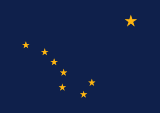
Alaska
AK · Data from 2022–2023 government sources · West · 50 States Learning Path
Alaska, the Last Frontier, is the largest state in the United States by area — more than twice the size of Texas. Purchased from Russia in 1867 for $7.2 million, Alaska is a land of extremes: towering mountain ranges, vast tundra, dense temperate rainforests, and over 6,600 miles of coastline. Its wilderness is home to grizzly bears, moose, caribou, bald eagles, and migrating whales.
Think you know Alaska? Test your geography skills.
History
Alaska was inhabited by Indigenous peoples — including the Inuit, Yupik, Aleut, Tlingit, and Athabascan — for thousands of years before Russian explorers arrived in the 18th century. Russia sold the territory to the United States in 1867 in what critics initially called 'Seward's Folly' after Secretary of State William Seward. The discovery of gold in the late 1890s brought waves of settlers. Alaska became the 49th state on January 3, 1959. The 1968 discovery of oil at Prudhoe Bay transformed the state's economy and led to the construction of the Trans-Alaska Pipeline.
Economy
Oil and gas dominate Alaska's economy, with the Prudhoe Bay oil field being the largest in North America. The Alaska Permanent Fund, established in 1976 from oil revenues, pays annual dividends to every eligible state resident. Commercial fishing is the second-largest industry, with Alaska producing more seafood than any other U.S. state. Tourism, mining, and federal government spending also contribute significantly to the economy.
Geography & Landmarks
Alaska encompasses 663,300 square miles of dramatic terrain. Denali (formerly Mount McKinley) rises to 20,310 feet, making it the highest peak in North America. The state contains more than 100,000 glaciers, three million lakes, and the largest national park in the country — Wrangell-St. Elias. Alaska's Arctic coast faces the Beaufort Sea, while its southern coast is warmed by Pacific currents. The state sits on the Pacific Ring of Fire, with numerous active volcanoes in the Aleutian Islands. The Tongass National Forest in southeast Alaska is the largest national forest in the United States at nearly 17 million acres, encompassing temperate rainforest, fjords, and icefields. The Yukon River, one of the longest rivers in North America, flows nearly 1,400 miles through the heart of Alaska.
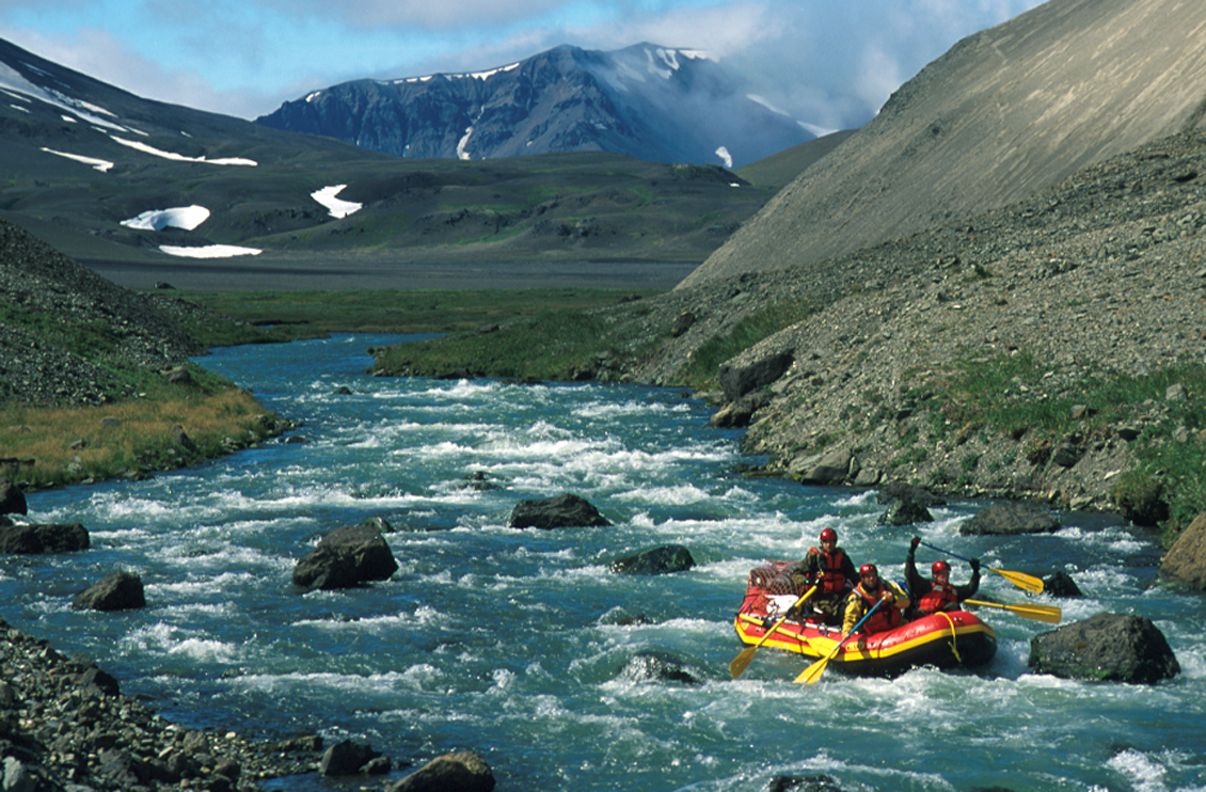
Aniakchak National Monument & Preserve — NPS Photo/Troy Hamon
Source: NPS API
Culture & Traditions
Alaska's cultural landscape is shaped by its Indigenous heritage, with Alaska Native peoples maintaining vibrant traditions in art, dance, storytelling, and subsistence living across more than 200 villages. The Iditarod Trail Sled Dog Race, covering roughly 1,000 miles from Anchorage to Nome, is the state's most iconic sporting event and has been held annually since 1973. The Alaska State Fair in Palmer features giant vegetables, including world-record cabbages exceeding 100 pounds, grown under the midnight sun. Totem pole carving remains a living art form among the Tlingit, Haida, and Tsimshian peoples of Southeast Alaska, with master carvers creating works displayed in parks, cultural centers, and museums across the state.
Notable Cities
Juneau
CapitalThe state capital is uniquely inaccessible by road — reachable only by air or sea. Nestled between mountains and the Gastineau Channel, it is one of the most scenic capitals in the U.S.
32,108
Population
$95,711
Median income
$404,600
Home value
$1,464
Median rent
39.0
Median age
4.4%
Unemployment
64.3%
Homeownership
5,922
Bachelor's+
Anchorage
Alaska's largest city, home to about 40% of the state's population. A gateway to wilderness adventures and host of the ceremonial start of the Iditarod sled dog race.
Fairbanks
Located in Interior Alaska, Fairbanks is known for extreme temperature swings, the Northern Lights, and its proximity to Denali National Park.
Sitka
The former Russian colonial capital, rich in Tlingit and Russian heritage. Sitka National Historical Park preserves totem poles and the site of the 1804 Battle of Sitka.
Nome
A remote western Alaska town famous for the 1925 serum run (which inspired the Iditarod) and the historic gold rush.
Capital city data: Census Bureau ACS 5-Year (2022)
Intel File · Fun Facts
Alaska has more coastline than all other U.S. states combined — roughly 33,904 miles including islands.
Denali, at 20,310 feet, is the tallest mountain in North America and has a base-to-peak rise greater than Mount Everest's.
Alaska has 17 of the 20 highest peaks in the United States.
The state has about 100,000 glaciers, covering roughly 5% of its total area.
Alaska's Permanent Fund Dividend has paid annual checks to every qualifying resident since 1982, funded by oil revenues.
Printable Worksheet
Free, GeoProwl-branded, classroom-ready.
Download the Alaska Worksheet (PDF)
One page · ready to print at home or in class
Nickname
The Last Frontier
Motto
North to the Future
State Bird
Willow Ptarmigan
State Flower
Alpine Forget-me-not
State Tree
Sitka Spruce
Also included: fill in what you learned
1. Alaska has more coastline than all other U.S. states combined — roughly 33,904 miles including islands.
2. Denali, at 20,310 feet, is the tallest mountain in North America and has a base-to-peak rise greater than Mount Everest's.
3. Alaska has 17 of the 20 highest peaks in the United States.
4. The state has about 100,000 glaciers, covering roughly 5% of its total area.
Want all 50 states?
One PDF packet, every state, ready to print for the whole class.
Pair it with a math worksheet
Four Fours Challenge: build every number 1–100 using exactly four 4s.
Data & Statistics
Demographics
- Population
- 734,821
- Median income
- $86,370
- Median age
- 35.3
- Median home value
- $318,000
- Below poverty line
- 75,227
- Bachelor's degree+
- 93,744
Source: U.S. Census Bureau, ACS 5-Year Estimates (2022)
Agriculture
- Total farms
- 1,173
- Cropland
- 72,708 acres
- Market value
- $91M
Source: USDA NASS, Census of Agriculture (2022)
Public Health
- Obesity rate
- 35.2%
- Diabetes rate
- 8.7%
- Smoking rate
- 15.3%
- High blood pressure
- 33.8%
- Uninsured
- 7.6%
Source: CDC BRFSS Prevalence Data (2023, 2022 fallback)
National Parks & Sites
- National parks
- 8
- Total NPS sites
- 19
- Sites
- Alagnak Wild River, Alaska Public Lands, Aleutian Islands World War II National Historic Area, Aniakchak National Monument & Preserve, Bering Land Bridge National Preserve, Cape Krusenstern National Monument, Denali National Park & Preserve, Gates Of The Arctic National Park & Preserve, Glacier Bay National Park & Preserve, Iñupiat Heritage Center, Katmai National Park & Preserve, Kenai Fjords National Park, Klondike Gold Rush National Historical Park, Kobuk Valley National Park, Lake Clark National Park & Preserve, Noatak National Preserve, Sitka National Historical Park, Wrangell - St Elias National Park & Preserve, Yukon - Charley Rivers National Preserve
Source: National Park Service API
Climate
- Avg temperature
- 35.0°F
- Avg high
- 43.4°F
- Avg low
- 25.9°F
- Annual precipitation
- 18.3 in
- Annual snowfall
- 69.4 in
Source: NOAA Climate Normals (2010)
Frequently Asked Questions
What is the capital of Alaska?▾
Juneau is the capital of Alaska. It is the only U.S. state capital that cannot be reached by road — visitors must arrive by plane or ferry.
Why did the U.S. buy Alaska?▾
The U.S. purchased Alaska from Russia in 1867 for $7.2 million (about 2 cents per acre). Secretary of State William Seward negotiated the deal, believing the territory held strategic and natural resource value — a judgment vindicated by later gold and oil discoveries.
What is Alaska's nickname?▾
Alaska is nicknamed 'The Last Frontier' due to its vast, largely undeveloped wilderness. It is also sometimes called 'The Land of the Midnight Sun' because areas above the Arctic Circle experience 24 hours of daylight during summer.
How big is Alaska compared to Texas?▾
Alaska is about 2.5 times the size of Texas, covering 663,300 square miles compared to Texas's 268,596 square miles. If Alaska were split in two, each half would still be larger than Texas.
Data sources
U.S. Census Bureau · USDA NASS · CDC BRFSS · National Park Service · NOAA CDO
This product uses the Census Bureau Data API but is not endorsed or certified by the Census Bureau. This product uses the NASS API but is not endorsed or certified by NASS.
Test your knowledge →
Play today's GeoProwl daily challenge — 10 states, 3 clues each, powered by real data.