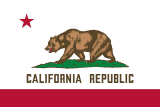
California
CA · Data from 2022–2023 government sources · West · 50 States Learning Path
California, the Golden State, is the most populous state in the nation and the world's fifth-largest economy if measured as a country. From the redwood forests of the north to the sun-drenched beaches of the south, California encompasses an extraordinary range of landscapes, climates, and cultures. It is the birthplace of the American tech industry, the global entertainment capital, and a leader in agriculture, innovation, and environmental policy.
Think you know California? Test your geography skills.
History
California's Indigenous peoples lived in the region for at least 13,000 years before Spanish missionaries established a chain of 21 missions along the coast beginning in 1769. Mexico gained independence from Spain in 1821, and California became a Mexican territory. After the Mexican-American War and the 1848 Treaty of Guadalupe Hidalgo, California was ceded to the United States. The discovery of gold at Sutter's Mill in 1848 triggered the Gold Rush, bringing hundreds of thousands of settlers and leading to California's admission as the 31st state in 1850.
Economy
California's GDP exceeds $3.6 trillion, driven by technology (Silicon Valley), entertainment (Hollywood), agriculture (the nation's top-producing state), aerospace, and international trade through its Pacific ports. The state produces over one-third of U.S. vegetables and two-thirds of its fruits and nuts. California is also the nation's leading producer of wine, almonds, strawberries, and dairy products.
Geography & Landmarks
California covers 163,696 square miles, making it the third-largest state. Its geography includes the Sierra Nevada mountain range (with 14,505-foot Mount Whitney, the tallest peak in the contiguous U.S.), the Central Valley (one of the most productive agricultural regions on Earth), Death Valley (the lowest and hottest point in North America at 282 feet below sea level), the volcanic Cascade Range, and over 840 miles of Pacific coastline. The San Andreas Fault runs approximately 800 miles through California, marking the boundary between the Pacific and North American tectonic plates. Lake Tahoe, straddling the California-Nevada border at 6,225 feet elevation, is the largest alpine lake in North America and reaches depths of over 1,600 feet.
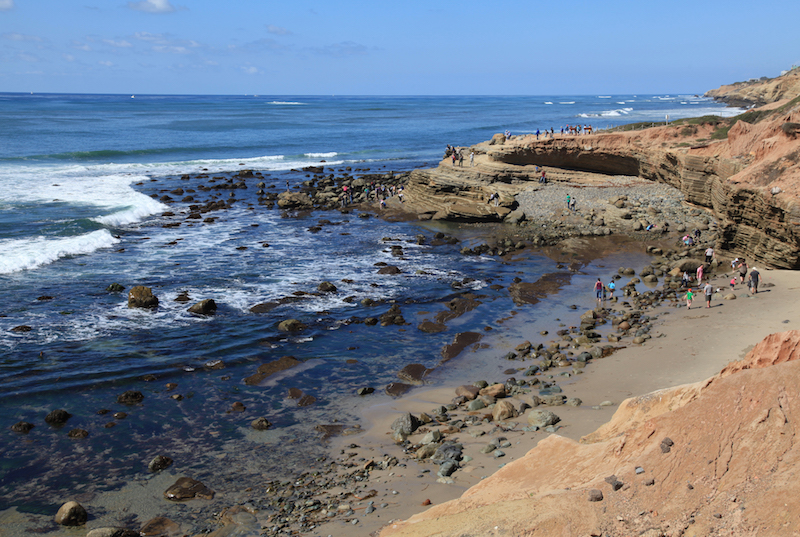
Cabrillo National Monument — NPS Photo / Dan Zeller
Source: NPS API
Culture & Traditions
California's cultural influence is unmatched in the United States, from Hollywood's century-long dominance of global entertainment to Silicon Valley's transformation of how the world communicates. The state's culinary scene pioneered the farm-to-table movement through Alice Waters' Chez Panisse in Berkeley (opened 1971) and now encompasses everything from Michelin-starred restaurants in San Francisco to the taco trucks of East Los Angeles. California wine country in Napa and Sonoma produces world-class vintages that famously defeated French wines in the 1976 Judgment of Paris blind tasting. Professional sports thrive with iconic franchises like the Los Angeles Lakers, San Francisco 49ers, and Los Angeles Dodgers, while the state's surf culture, born in the 1950s and 1960s, has shaped global fashion and lifestyle. The Coachella Valley Music and Arts Festival and Outside Lands are among the most influential music festivals in the world.
Notable Cities
Sacramento
CapitalThe state capital, located at the confluence of the Sacramento and American Rivers. Once the endpoint of the Pony Express and the western terminus of the Transcontinental Railroad.
523,600
Population
$78,954
Median income
$450,500
Home value
$1,592
Median rent
35.2
Median age
6.3%
Unemployment
50.7%
Homeownership
81,609
Bachelor's+
Los Angeles
The entertainment capital of the world and second-largest U.S. city. Home to Hollywood, a sprawling metro of nearly 13 million people, and iconic beaches from Malibu to Venice.
San Francisco
Known for the Golden Gate Bridge, cable cars, Alcatraz Island, and a thriving tech scene. Its diverse neighborhoods like Chinatown and the Mission District give it a cosmopolitan character.
San Diego
A border city with a mild climate, world-famous zoo, and major naval presence. The Gaslamp Quarter and Balboa Park are cultural hubs.
San Jose
The self-proclaimed Capital of Silicon Valley and the third-largest city in California. Headquarters to many of the world's largest technology companies.
Capital city data: Census Bureau ACS 5-Year (2022)
Intel File · Fun Facts
If California were a country, its economy would be the fifth-largest in the world, ahead of the United Kingdom and India.
California's General Sherman Tree in Sequoia National Park is the world's largest tree by volume, at over 52,500 cubic feet.
Death Valley holds the record for the highest reliably recorded air temperature on Earth: 134°F (56.7°C) on July 10, 1913.
California produces over 80% of the world's almonds, nearly all grown in the Central Valley.
The Hollywood sign was originally erected in 1923 as 'Hollywoodland' to advertise a real estate development.
Printable Worksheet
Free, GeoProwl-branded, classroom-ready.
Download the California Worksheet (PDF)
One page · ready to print at home or in class
Nickname
The Golden State
Motto
Eureka (I Have Found It)
State Bird
California Quail
State Flower
California Poppy
State Tree
Coast Redwood
Also included: fill in what you learned
1. If California were a country, its economy would be the fifth-largest in the world, ahead of the United Kingdom and India.
2. California's General Sherman Tree in Sequoia National Park is the world's largest tree by volume, at over 52,500 cubic feet.
3. Death Valley holds the record for the highest reliably recorded air temperature on Earth: 134°F (56.7°C) on July 10, 1913.
4. California produces over 80% of the world's almonds, nearly all grown in the Central Valley.
Want all 50 states?
One PDF packet, every state, ready to print for the whole class.
Pair it with a math worksheet
Four Fours Challenge: build every number 1–100 using exactly four 4s.
Data & Statistics
Demographics
- Population
- 39,356,104
- Median income
- $91,905
- Median age
- 37.3
- Median home value
- $659,300
- Below poverty line
- 4,685,272
- Bachelor's degree+
- 5,935,292
Source: U.S. Census Bureau, ACS 5-Year Estimates (2022)
Agriculture
- Total farms
- 63,134
- Cropland
- 10,049,618 acres
- Market value
- $59,006M
Source: USDA NASS, Census of Agriculture (2022)
Public Health
- Obesity rate
- 27.7%
- Diabetes rate
- 11.5%
- Smoking rate
- 8.5%
- High blood pressure
- 30.6%
- Uninsured
- 7.1%
Source: CDC BRFSS Prevalence Data (2023, 2022 fallback)
National Parks & Sites
- National parks
- 8
- Total NPS sites
- 34
- Sites
- Alcatraz Island, Butterfield Overland National Historic Trail, Cabrillo National Monument, California National Historic Trail, Castle Mountains National Monument, Channel Islands National Park, César E. Chávez National Monument, Death Valley National Park, Devils Postpile National Monument, Eugene O'Neill National Historic Site, Fort Point National Historic Site, Golden Gate National Recreation Area, John Muir National Historic Site, Joshua Tree National Park, Juan Bautista de Anza National Historic Trail, Lassen Volcanic National Park, Lava Beds National Monument, Manzanar National Historic Site, Mojave National Preserve, Muir Woods National Monument, Old Spanish National Historic Trail, Pinnacles National Park, Point Reyes National Seashore, Pony Express National Historic Trail, Port Chicago Naval Magazine National Memorial, Presidio of San Francisco, Redwood National and State Parks, Rosie the Riveter WWII Home Front National Historical Park, San Francisco Maritime National Historical Park, Santa Monica Mountains National Recreation Area, Sequoia & Kings Canyon National Parks, Tule Lake National Monument, Whiskeytown National Recreation Area, Yosemite National Park
Source: National Park Service API
Climate
- Avg temperature
- 59.9°F
- Avg high
- 72.2°F
- Avg low
- 47.6°F
- Annual precipitation
- 20.9 in
- Annual snowfall
- 0.1 in
Source: NOAA Climate Normals (2010)
Frequently Asked Questions
What is the capital of California?▾
Sacramento is the capital of California. Despite being less famous than Los Angeles or San Francisco, it has been the state capital since 1854 and is the cultural and political center of the state.
Why is California called the Golden State?▾
California earned the nickname 'The Golden State' from the Gold Rush of 1848-1855, which brought over 300,000 people to the territory. The name also references the state's golden poppies, golden sunsets, and golden hills.
What are California's biggest industries?▾
California's biggest industries include technology (Silicon Valley companies like Apple, Google, and Meta), entertainment (Hollywood film and TV), agriculture (the nation's #1 farm state), aerospace and defense, and international trade.
What are the best national parks in California?▾
California has nine national parks — more than any other state. The most popular include Yosemite (granite cliffs, waterfalls), Joshua Tree (desert landscapes), Sequoia and Kings Canyon (giant trees), Death Valley (extreme desert), and Redwood (tallest trees on Earth).
Data sources
U.S. Census Bureau · USDA NASS · CDC BRFSS · National Park Service · NOAA CDO
This product uses the Census Bureau Data API but is not endorsed or certified by the Census Bureau. This product uses the NASS API but is not endorsed or certified by NASS.
Test your knowledge →
Play today's GeoProwl daily challenge — 10 states, 3 clues each, powered by real data.