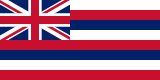
Hawaii
HI · Data from 2022–2023 government sources · West · 50 States Learning Path
Hawaii, the Aloha State, is the only U.S. state located in the Pacific Ocean and the only one made up entirely of islands. The archipelago of 137 islands — eight main islands — sits 2,400 miles from the U.S. mainland, making it the most geographically isolated population center on Earth. Hawaii's volcanic landscapes, tropical climate, and rich Polynesian heritage make it one of the most distinctive places in America.
Think you know Hawaii? Test your geography skills.
History
Hawaii was settled by Polynesian voyagers from the Marquesas Islands and Tahiti between 1000 and 1200 AD. King Kamehameha I unified the Hawaiian Islands into a single kingdom in 1810. American missionaries and sugar planters arrived in the 19th century, gaining increasing economic and political influence. In 1893, the Hawaiian monarchy was overthrown with the support of U.S. Marines. Hawaii was annexed by the United States in 1898 and became the 50th state on August 21, 1959. The attack on Pearl Harbor on December 7, 1941, drew the United States into World War II.
Economy
Tourism is the backbone of Hawaii's economy, generating over $20 billion annually and supporting roughly one in five jobs. The U.S. military is the second-largest economic driver, with major installations on Oahu including Pearl Harbor and Schofield Barracks. Agriculture — particularly coffee (Kona), macadamia nuts, pineapple, and sugar — has declined but remains culturally significant. Renewable energy is a growing sector; Hawaii aims to be 100% renewable by 2045.
Geography & Landmarks
Hawaii's eight main islands span 1,500 miles across the central Pacific. The Big Island (Hawaii Island) is the largest and home to Mauna Kea (13,796 feet) and Kilauea, one of the world's most active volcanoes. The islands were formed by a volcanic hotspot, with the Big Island being the youngest and most volcanically active. Hawaii Volcanoes National Park showcases active lava flows and volcanic craters. The islands feature diverse microclimates — from tropical rainforests on windward slopes to arid leeward coasts. The Hawaiian archipelago stretches over 1,500 miles across the central Pacific, though the eight main islands occupy just the southeastern end of the chain. Papahanaumokuakea Marine National Monument, extending northwest from the main islands, protects 582,578 square miles of ocean, making it one of the largest marine conservation areas on Earth.
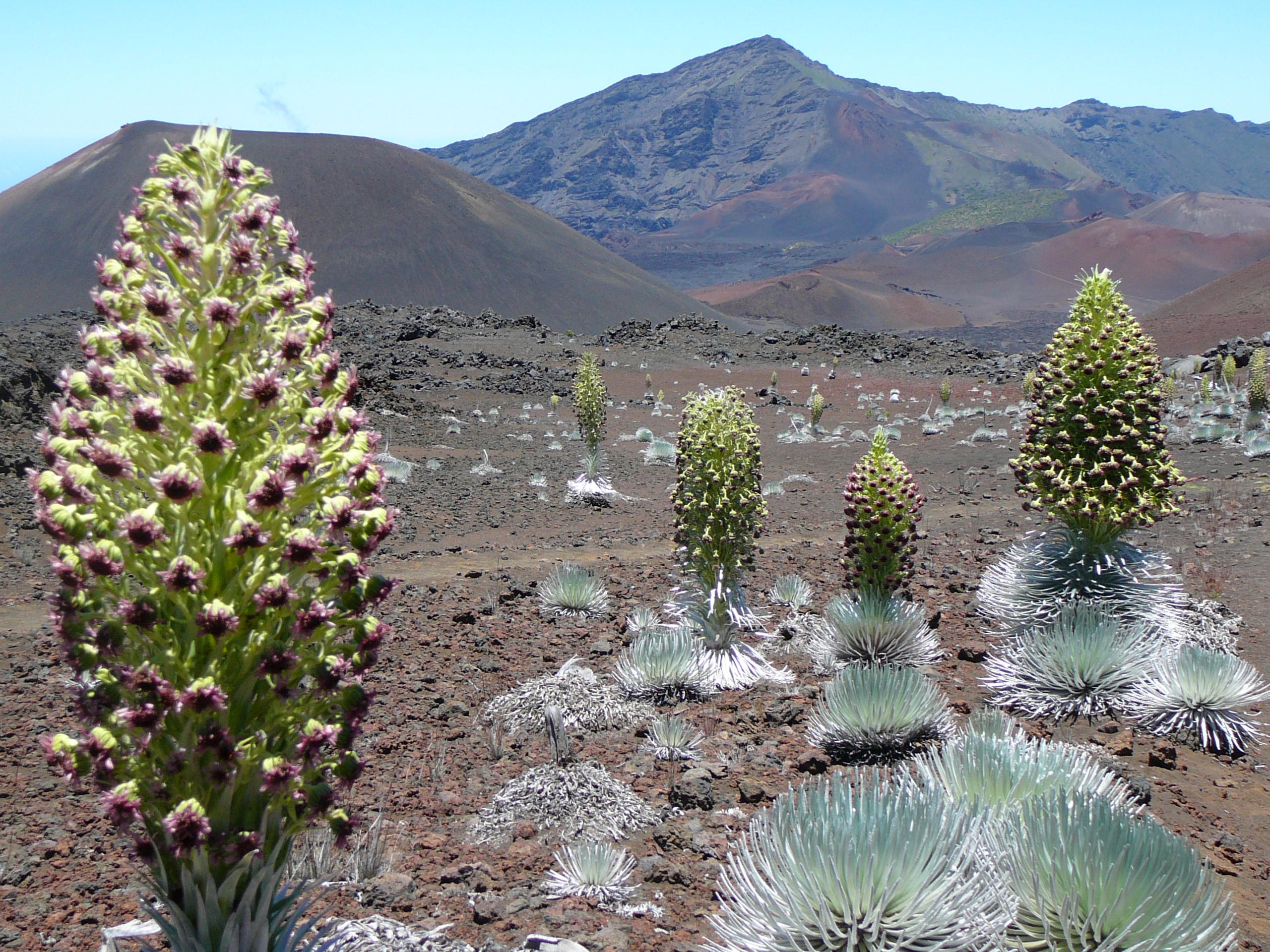
Haleakalā National Park — NPS
Source: NPS API
Culture & Traditions
Hawaiian culture is rooted in Polynesian traditions that have endured for over 1,500 years, with hula dance, oli (chanting), and the Hawaiian language experiencing a powerful renaissance since the 1970s. The Merrie Monarch Festival in Hilo, held annually since 1964, is the world's most prestigious hula competition and a celebration of Hawaiian arts and crafts. Hawaiian cuisine reflects the islands' multicultural heritage, from traditional poi and kalua pig cooked in underground imu ovens to plate lunches combining Japanese, Filipino, Korean, and Portuguese influences. Surfing, which originated in ancient Hawaii and was revived by Duke Kahanamoku in the early 1900s, remains central to the islands' identity, with the North Shore of Oahu hosting the Triple Crown of Surfing each winter. The ukulele, brought by Portuguese immigrants in the 1880s, was adopted and transformed by Hawaiian musicians into the instrument most associated with the islands worldwide.
Notable Cities
Honolulu
CapitalThe state capital on Oahu, home to about 70% of Hawaii's population. Waikiki Beach, Pearl Harbor, and Diamond Head are iconic landmarks.
348,547
Population
$82,772
Median income
$805,500
Home value
$1,734
Median rent
42.5
Median age
4.8%
Unemployment
48.0%
Homeownership
64,090
Bachelor's+
Hilo
The largest city on the Big Island, gateway to Hawaii Volcanoes National Park. Known for its rainforest setting, waterfalls, and farmers markets.
Kailua-Kona
A resort town on the Big Island's sunny western coast, center of the Kona coffee district and host of the Ironman World Championship triathlon.
Lahaina
A historic whaling town on Maui that served as the capital of the Hawaiian Kingdom from 1820 to 1845. Devastated by wildfire in August 2023, it is now rebuilding.
Lihue
The main town on Kauai, the Garden Isle. Gateway to the Na Pali Coast and Waimea Canyon, often called the Grand Canyon of the Pacific.
Capital city data: Census Bureau ACS 5-Year (2022)
Intel File · Fun Facts
Hawaii is the only U.S. state that grows coffee commercially — Kona coffee from the Big Island is among the most expensive in the world.
Mauna Kea, measured from its base on the ocean floor, rises over 33,000 feet — taller than Mount Everest from base to summit.
Hawaii has its own time zone (Hawaii-Aleutian Standard Time) and does not observe daylight saving time.
The Hawaiian alphabet has only 13 letters: 5 vowels (a, e, i, o, u) and 8 consonants (h, k, l, m, n, p, w, and the okina).
Hawaii is the widest state in the United States when measured from east to west, spanning about 1,500 miles across the island chain.
Printable Worksheet
Free, GeoProwl-branded, classroom-ready.
Download the Hawaii Worksheet (PDF)
One page · ready to print at home or in class
Nickname
The Aloha State
Motto
Ua Mau ke Ea o ka ʻĀina i ka Pono (The Life of the Land Is Perpetuated in Righteousness)
State Bird
Nene (Hawaiian Goose)
State Flower
Hawaiian Hibiscus
State Tree
Kukui (Candlenut Tree)
Also included: fill in what you learned
1. Hawaii is the only U.S. state that grows coffee commercially — Kona coffee from the Big Island is among the most expensive in the world.
2. Mauna Kea, measured from its base on the ocean floor, rises over 33,000 feet — taller than Mount Everest from base to summit.
3. Hawaii has its own time zone (Hawaii-Aleutian Standard Time) and does not observe daylight saving time.
4. The Hawaiian alphabet has only 13 letters: 5 vowels (a, e, i, o, u) and 8 consonants (h, k, l, m, n, p, w, and the okina).
Want all 50 states?
One PDF packet, every state, ready to print for the whole class.
Pair it with a math worksheet
Four Fours Challenge: build every number 1–100 using exactly four 4s.
Data & Statistics
Demographics
- Population
- 1,450,589
- Median income
- $94,814
- Median age
- 39.9
- Median home value
- $764,800
- Below poverty line
- 135,941
- Bachelor's degree+
- 227,243
Source: U.S. Census Bureau, ACS 5-Year Estimates (2022)
Agriculture
- Total farms
- 6,569
- Cropland
- 158,053 acres
- Market value
- $674M
Source: USDA NASS, Census of Agriculture (2022)
Public Health
- Obesity rate
- 26.1%
- Diabetes rate
- 11.3%
- Smoking rate
- 9.0%
- High blood pressure
- 32.4%
- Uninsured
- 2.4%
Source: CDC BRFSS Prevalence Data (2023, 2022 fallback)
National Parks & Sites
- National parks
- 2
- Total NPS sites
- 9
- Sites
- Ala Kahakai National Historic Trail, Haleakalā National Park, Hawaiʻi Volcanoes National Park, Honouliuli National Historic Site, Kalaupapa National Historical Park, Kaloko-Honokōhau National Historical Park, Pearl Harbor National Memorial, Puʻuhonua o Hōnaunau National Historical Park, Puʻukoholā Heiau National Historic Site
Source: National Park Service API
Climate
- Avg temperature
- 74.2°F
- Avg high
- 80.5°F
- Avg low
- 67.0°F
- Annual precipitation
- 36.1 in
- Annual snowfall
- 0.0 in
Source: NOAA Climate Normals (2010)
Frequently Asked Questions
What is the capital of Hawaii?▾
Honolulu, located on the island of Oahu, is the capital of Hawaii. It is the state's largest city and the main gateway for visitors arriving by air.
How many islands make up Hawaii?▾
Hawaii has 137 islands, but only 8 main islands: Hawaii (the Big Island), Maui, Oahu, Kauai, Molokai, Lanai, Niihau, and Kahoolawe. Only 7 are inhabited — Kahoolawe is uninhabited and was formerly used for military training.
When did Hawaii become a state?▾
Hawaii became the 50th state on August 21, 1959. It was the last state admitted to the Union and the only state that was once an independent kingdom.
What is the best time to visit Hawaii?▾
Hawaii has pleasant weather year-round, but the best time to visit is April to June or September to November for lower prices and fewer crowds. Winter (December to March) brings bigger waves on the North Shore and whale-watching opportunities.
Data sources
U.S. Census Bureau · USDA NASS · CDC BRFSS · National Park Service · NOAA CDO
This product uses the Census Bureau Data API but is not endorsed or certified by the Census Bureau. This product uses the NASS API but is not endorsed or certified by NASS.
Test your knowledge →
Play today's GeoProwl daily challenge — 10 states, 3 clues each, powered by real data.