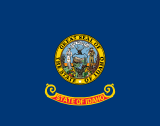
Idaho
ID · Data from 2022–2023 government sources · West · 50 States Learning Path
Idaho, the Gem State, is a rugged mountain state in the Pacific Northwest known for its vast wilderness, pristine rivers, and, of course, its famous potatoes. With over 60% of its land managed by the federal government, Idaho offers some of the most unspoiled natural landscapes in the lower 48 states. The Frank Church-River of No Return Wilderness is the largest contiguous wilderness area in the contiguous United States.
Think you know Idaho? Test your geography skills.
History
Idaho's earliest inhabitants include the Nez Perce, Shoshone-Bannock, and Coeur d'Alene peoples. The Lewis and Clark Expedition crossed through Idaho in 1805. Gold was discovered in the 1860s, attracting miners and settlers. Idaho Territory was established in 1863, and Idaho became the 43rd state on July 3, 1890. The state has a complex labor history — the violent mining conflicts in the Coeur d'Alene region in the 1890s led to the formation of the Western Federation of Miners.
Economy
Agriculture dominates Idaho's economy, with the state producing about one-third of the nation's potatoes. Other major crops include wheat, barley, sugar beets, and dairy products. The technology sector has grown significantly, with Boise becoming a hub for companies like Micron Technology (a global semiconductor leader headquartered there) and Hewlett-Packard's printer division. Tourism, timber, and mining also contribute to the economy.
Geography & Landmarks
Idaho covers 83,569 square miles of dramatic terrain. The Rocky Mountains dominate central Idaho, with Borah Peak reaching 12,662 feet. The Snake River Plain arcs across southern Idaho, carved by ancient lava flows. Hells Canyon on the Oregon border is the deepest river gorge in North America at 7,993 feet. The Salmon River, known as the River of No Return, cuts through some of the most remote wilderness in the contiguous states. The Frank Church-River of No Return Wilderness is the largest contiguous wilderness area in the lower 48 states at 2.4 million acres. Shoshone Falls on the Snake River near Twin Falls drops 212 feet, 45 feet higher than Niagara Falls, earning it the nickname Niagara of the West.
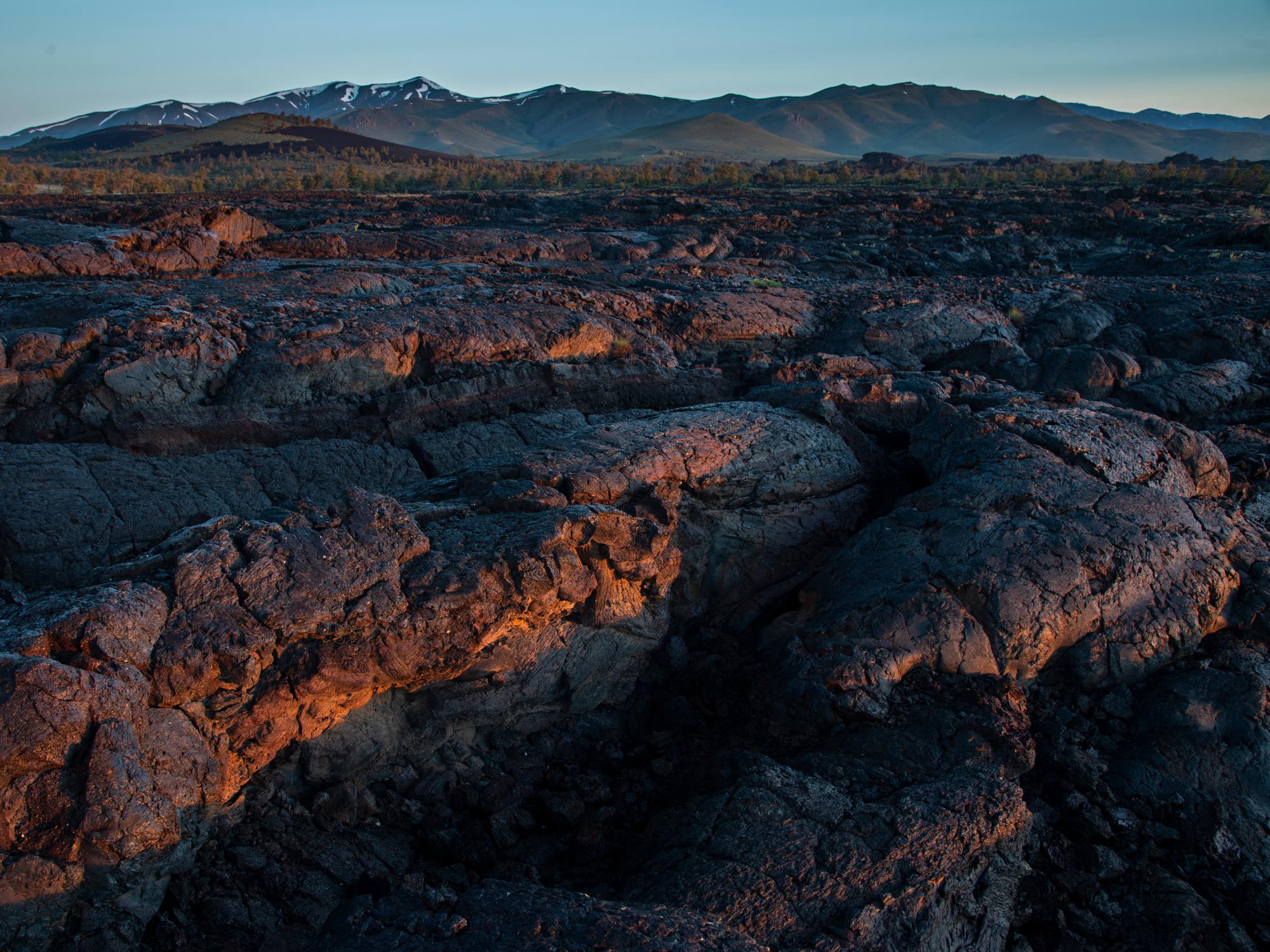
Craters Of The Moon National Monument & Preserve — NPS / David Hunter
Source: NPS API
Culture & Traditions
Idaho's cultural identity is shaped by its rugged outdoor lifestyle and small-town Western character. Sun Valley, established in 1936, was the first destination ski resort in the United States and attracted literary luminaries including Ernest Hemingway, who wrote parts of For Whom the Bell Tolls at the Sun Valley Lodge and is buried in Ketchum. The Lionel Hampton Jazz Festival at the University of Idaho in Moscow has been one of the largest university-hosted jazz festivals in the world since 1967. Boise's Basque Block preserves the heritage of Idaho's significant Basque community — one of the largest outside of Spain — with restaurants serving pintxos, chorizo, and lamb dishes. The state's culinary fame rests on the Idaho potato, with the state producing roughly one-third of all potatoes grown in the United States, celebrated annually at the Idaho Spud Day festival in Shelley.
Notable Cities
Boise
CapitalThe state capital and largest city, nestled in the foothills along the Boise River. A fast-growing metro known for its outdoor lifestyle, tech industry, and the famous blue turf of Boise State's Albertsons Stadium.
234,192
Population
$76,402
Median income
$401,800
Home value
$1,223
Median rent
37.9
Median age
3.8%
Unemployment
62.9%
Homeownership
47,440
Bachelor's+
Idaho Falls
Eastern Idaho's largest city, gateway to Yellowstone and Grand Teton national parks. Home to Idaho National Laboratory, a leading nuclear energy research center.
Coeur d'Alene
A resort city on the shores of Lake Coeur d'Alene in the Idaho panhandle, consistently ranked among the most beautiful lakes in the world.
Sun Valley
America's first destination ski resort, opened in 1936 by Union Pacific Railroad. A playground for celebrities and outdoor enthusiasts in the Sawtooth Mountains.
Twin Falls
Located along the Snake River Canyon, where Evel Knievel attempted his famous rocket-powered jump in 1974. Shoshone Falls nearby is taller than Niagara Falls.
Capital city data: Census Bureau ACS 5-Year (2022)
Intel File · Fun Facts
Idaho produces roughly one-third of all potatoes grown in the United States — about 13 billion pounds annually.
Hells Canyon, on the Idaho-Oregon border, is the deepest river gorge in North America — deeper than the Grand Canyon.
Shoshone Falls near Twin Falls is 212 feet tall, 36 feet higher than Niagara Falls.
The Frank Church-River of No Return Wilderness covers 2.4 million acres, the largest contiguous wilderness in the lower 48 states.
Idaho's state gemstone is the star garnet, found in only two places in the world — Idaho and India.
Printable Worksheet
Free, GeoProwl-branded, classroom-ready.
Download the Idaho Worksheet (PDF)
One page · ready to print at home or in class
Nickname
The Gem State
Motto
Esto Perpetua (Let It Be Perpetual)
State Bird
Mountain Bluebird
State Flower
Syringa (Mock Orange)
State Tree
Western White Pine
Also included: fill in what you learned
1. Idaho produces roughly one-third of all potatoes grown in the United States — about 13 billion pounds annually.
2. Hells Canyon, on the Idaho-Oregon border, is the deepest river gorge in North America — deeper than the Grand Canyon.
3. Shoshone Falls near Twin Falls is 212 feet tall, 36 feet higher than Niagara Falls.
4. The Frank Church-River of No Return Wilderness covers 2.4 million acres, the largest contiguous wilderness in the lower 48 states.
Want all 50 states?
One PDF packet, every state, ready to print for the whole class.
Pair it with a math worksheet
Four Fours Challenge: build every number 1–100 using exactly four 4s.
Data & Statistics
Demographics
- Population
- 1,854,109
- Median income
- $70,214
- Median age
- 36.9
- Median home value
- $331,600
- Below poverty line
- 198,788
- Bachelor's degree+
- 244,372
Source: U.S. Census Bureau, ACS 5-Year Estimates (2022)
Agriculture
- Total farms
- 22,877
- Cropland
- 5,623,516 acres
- Market value
- $10,892M
Source: USDA NASS, Census of Agriculture (2022)
Public Health
- Obesity rate
- 31.0%
- Diabetes rate
- 9.8%
- Smoking rate
- 10.4%
- High blood pressure
- 31.2%
- Uninsured
- 8.7%
Source: CDC BRFSS Prevalence Data (2023, 2022 fallback)
National Parks & Sites
- National parks
- 1
- Total NPS sites
- 10
- Sites
- California National Historic Trail, City Of Rocks National Reserve, Craters Of The Moon National Monument & Preserve, Hagerman Fossil Beds National Monument, Ice Age Floods National Geologic Trail, Lewis & Clark National Historic Trail, Minidoka National Historic Site, Nez Perce National Historical Park, Oregon National Historic Trail, Yellowstone National Park
Source: National Park Service API
Climate
- Avg temperature
- 45.8°F
- Avg high
- 58.5°F
- Avg low
- 33.3°F
- Annual precipitation
- 14.8 in
- Annual snowfall
- 41.4 in
Source: NOAA Climate Normals (2010)
Frequently Asked Questions
What is the capital of Idaho?▾
Boise is the capital of Idaho and its most populous city. Located in southwestern Idaho along the Boise River, it has become one of the fastest-growing cities in the United States.
Why is Idaho called the Gem State?▾
Idaho is called the Gem State because nearly every known gemstone has been found within its borders, including the rare star garnet. The state also produces significant quantities of gold, silver, and other minerals.
What is Idaho known for besides potatoes?▾
Beyond potatoes, Idaho is known for its vast wilderness areas, world-class skiing (Sun Valley), whitewater rafting on the Salmon River, Craters of the Moon National Monument, and as the headquarters of Micron Technology.
How much of Idaho is public land?▾
Over 60% of Idaho's land is managed by federal agencies, including the U.S. Forest Service and Bureau of Land Management. This makes Idaho one of the most public-land-rich states, with enormous opportunities for outdoor recreation.
Data sources
U.S. Census Bureau · USDA NASS · CDC BRFSS · National Park Service · NOAA CDO
This product uses the Census Bureau Data API but is not endorsed or certified by the Census Bureau. This product uses the NASS API but is not endorsed or certified by NASS.
Test your knowledge →
Play today's GeoProwl daily challenge — 10 states, 3 clues each, powered by real data.