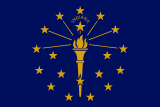
Indiana
IN · Data from 2022–2023 government sources · Midwest · 50 States Learning Path
Indiana, the Hoosier State, occupies the heart of the American Midwest. Known for the Indianapolis 500, basketball, and vast stretches of fertile farmland, Indiana blends small-town charm with big-city ambition. Indianapolis, the state capital, is the largest city in the state and has reinvented itself as a hub for sports, life sciences, and motorsport engineering.
Think you know Indiana? Test your geography skills.
History
Indiana's name means 'Land of the Indians,' reflecting the many Native American peoples — including the Miami, Potawatomi, and Delaware — who lived in the region. The state became the 19th state on December 11, 1816. Indiana played a significant role in the Underground Railroad, with routes running through many Hoosier towns. The state's industrial growth accelerated in the early 20th century, with steel mills in Gary and automotive manufacturing in Indianapolis and surrounding cities.
Economy
Indiana's economy is driven by advanced manufacturing, logistics, agriculture, and life sciences. The state is the second-largest auto-producing state in the nation, with assembly plants for Toyota, Subaru, Honda, and GM. Indianapolis is a major life sciences hub, with Eli Lilly headquarters and a growing biotech corridor. Indiana's central location and extensive highway system make it a logistics powerhouse — more interstate highways intersect in Indiana than in any other state.
Geography & Landmarks
Indiana covers 36,420 square miles of mostly flat to gently rolling terrain. The northern third features glacial lakes and moraines, the central region is flat agricultural prairie, and the southern portion is characterized by limestone hills, caves, and the scenic Ohio River valley. Indiana Dunes National Park on Lake Michigan's shore protects 15 miles of sandy beaches and diverse ecosystems within sight of the Chicago skyline. The Wabash River, Indiana's official state river, flows 475 miles and drains about two-thirds of the state before joining the Ohio River. The dunes along Lake Michigan reach heights of nearly 200 feet and contain over 350 species of nesting and migratory birds.
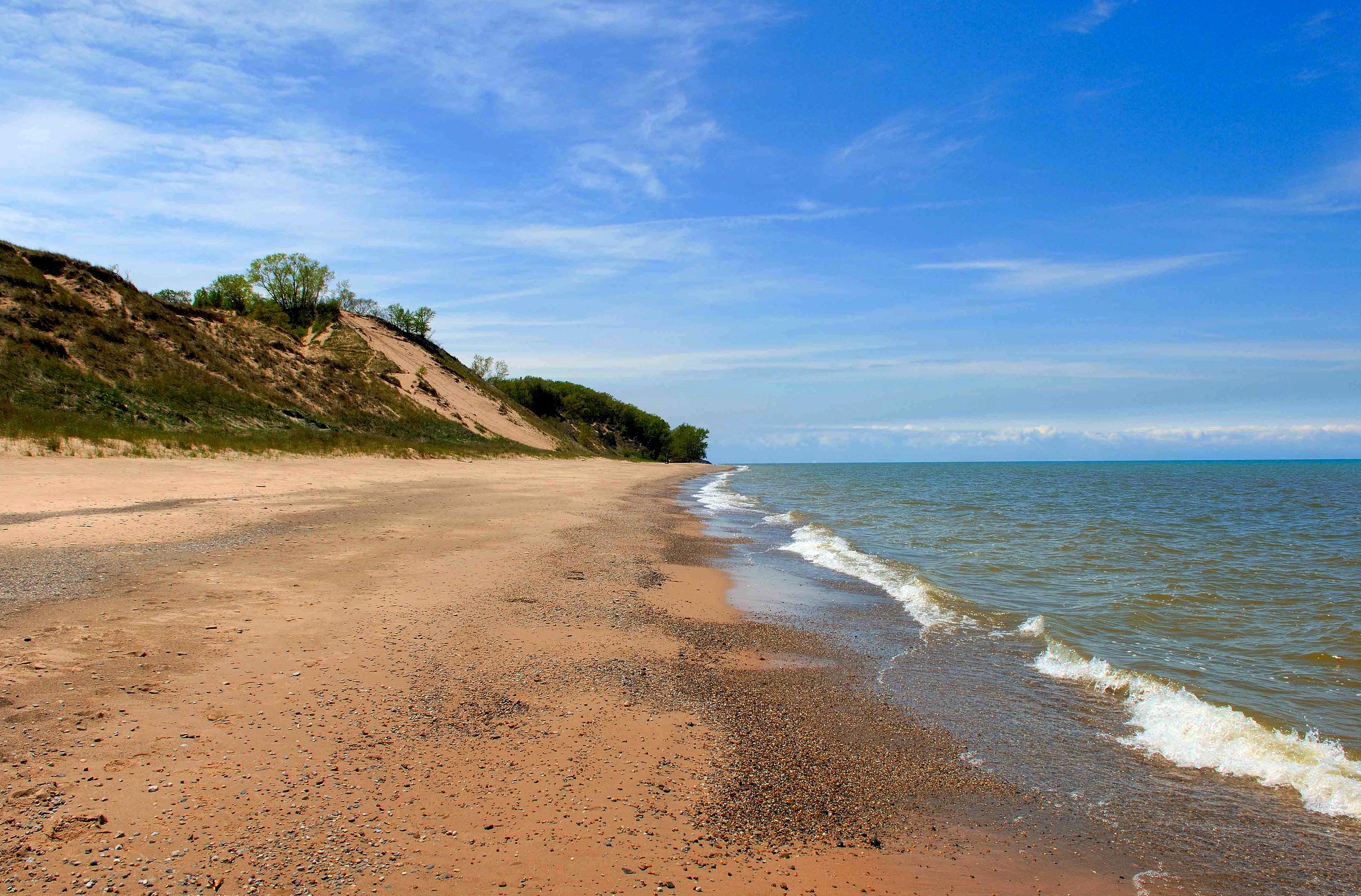
Indiana Dunes National Park — NPS Photo
Source: NPS API
Culture & Traditions
Indiana is synonymous with auto racing — the Indianapolis 500, first run in 1911, is the world's largest single-day sporting event, with the Indianapolis Motor Speedway seating over 250,000 spectators. Basketball is deeply embedded in the state's identity, immortalized in the 1986 film Hoosiers; Indiana has more basketball courts per capita than any other state, and the state high school tournament remains a beloved tradition. The literary landscape includes Kurt Vonnegut (born in Indianapolis), whose novels Slaughterhouse-Five and Cat's Cradle are American classics. Indiana's culinary traditions feature the breaded pork tenderloin sandwich, sugar cream pie (the official state pie), and popcorn — Indiana was once the nation's leading popcorn-producing state. The Newfields art campus in Indianapolis, home to the Indianapolis Museum of Art, includes the 100-acre Virginia B. Fairbanks Art & Nature Park.
Notable Cities
Indianapolis
CapitalThe state capital and 'Crossroads of America,' home to the Indianapolis Motor Speedway (the world's largest spectator sporting venue) and a thriving downtown anchored by Monument Circle.
882,006
Population
$59,110
Median income
$184,600
Home value
$1,046
Median rent
34.3
Median age
5.6%
Unemployment
54.9%
Homeownership
124,103
Bachelor's+
Fort Wayne
Indiana's second-largest city, located at the confluence of three rivers. Known for affordable living, a revitalized downtown, and the historic Fort Wayne Children's Zoo.
Bloomington
Home to Indiana University, known for its vibrant arts scene, the Little 500 bicycle race (immortalized in the film Breaking Away), and limestone quarries.
South Bend
Home to the University of Notre Dame and its legendary Fighting Irish football program. A former industrial city undergoing significant revitalization.
Gary
A Lake Michigan city known as the birthplace of Michael Jackson and the Jackson 5. Once a steel industry powerhouse, now undergoing redevelopment.
Capital city data: Census Bureau ACS 5-Year (2022)
Intel File · Fun Facts
The Indianapolis 500, first run in 1911, is the largest single-day sporting event in the world, with over 300,000 spectators.
Indiana's official nickname is the Hoosier State, though no one knows for certain where the term 'Hoosier' originated.
More interstate highways pass through Indiana than any other state, earning it the motto 'Crossroads of America.'
The first professional baseball game was played in Fort Wayne, Indiana on May 4, 1871.
Indiana limestone, quarried from the Bedford-Bloomington area, was used to build the Empire State Building, the Pentagon, and many other iconic structures.
Printable Worksheet
Free, GeoProwl-branded, classroom-ready.
Download the Indiana Worksheet (PDF)
One page · ready to print at home or in class
Nickname
The Hoosier State
Motto
The Crossroads of America
State Bird
Northern Cardinal
State Flower
Peony
State Tree
Tulip Tree (Yellow Poplar)
Also included: fill in what you learned
1. The Indianapolis 500, first run in 1911, is the largest single-day sporting event in the world, with over 300,000 spectators.
2. Indiana's official nickname is the Hoosier State, though no one knows for certain where the term 'Hoosier' originated.
3. More interstate highways pass through Indiana than any other state, earning it the motto 'Crossroads of America.'
4. The first professional baseball game was played in Fort Wayne, Indiana on May 4, 1871.
Want all 50 states?
One PDF packet, every state, ready to print for the whole class.
Pair it with a math worksheet
Four Fours Challenge: build every number 1–100 using exactly four 4s.
Data & Statistics
Demographics
- Population
- 6,784,403
- Median income
- $67,173
- Median age
- 38.0
- Median home value
- $183,600
- Below poverty line
- 810,702
- Bachelor's degree+
- 815,853
Source: U.S. Census Bureau, ACS 5-Year Estimates (2022)
Agriculture
- Total farms
- 53,599
- Cropland
- 12,531,737 acres
- Market value
- $18,029M
Source: USDA NASS, Census of Agriculture (2022)
Public Health
- Obesity rate
- 37.8%
- Diabetes rate
- 13.2%
- Smoking rate
- 14.4%
- High blood pressure
- 37.6%
- Uninsured
- 7.1%
Source: CDC BRFSS Prevalence Data (2023, 2022 fallback)
National Parks & Sites
- National parks
- 1
- Total NPS sites
- 4
- Sites
- George Rogers Clark National Historical Park, Indiana Dunes National Park, Lewis & Clark National Historic Trail, Lincoln Boyhood National Memorial
Source: National Park Service API
Climate
- Avg temperature
- 51.4°F
- Avg high
- 61.5°F
- Avg low
- 41.4°F
- Annual precipitation
- 42.4 in
- Annual snowfall
- 18.3 in
Source: NOAA Climate Normals (2010)
Frequently Asked Questions
What is the capital of Indiana?▾
Indianapolis is the capital of Indiana. It is the most populous city in the state and is centrally located, earning the state its motto 'Crossroads of America.'
What does Hoosier mean?▾
The origin of 'Hoosier' is one of the great mysteries of American English. Theories range from frontier greetings ('Who's here?') to a contractor named Hoosier who preferred hiring Indiana workers. The term has been in use since the 1830s and is now a beloved state identity.
What is Indiana known for?▾
Indiana is known for the Indianapolis 500, basketball (both college and the Pacers), Hoosier hospitality, corn and soybean farming, the limestone industry, and being a major manufacturing and logistics hub.
What is Indiana Dunes National Park?▾
Indiana Dunes National Park, designated in 2019, protects 15 miles of Lake Michigan shoreline in northwestern Indiana. It features towering sand dunes, wetlands, prairies, and forests — one of the most biodiverse areas in the Great Lakes region, with over 1,100 plant species.
Data sources
U.S. Census Bureau · USDA NASS · CDC BRFSS · National Park Service · NOAA CDO
This product uses the Census Bureau Data API but is not endorsed or certified by the Census Bureau. This product uses the NASS API but is not endorsed or certified by NASS.
Test your knowledge →
Play today's GeoProwl daily challenge — 10 states, 3 clues each, powered by real data.