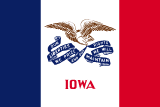
Iowa
IA · Data from 2022–2023 government sources · Midwest · 50 States Learning Path
Iowa, the Hawkeye State, is the agricultural heartland of America. Situated between the Mississippi and Missouri Rivers, Iowa's rich black soil produces more corn and hogs than any other state. But Iowa is more than farms — it is also known for its strong education system, the first-in-the-nation presidential caucuses, and a growing insurance and financial services sector centered in Des Moines.
Think you know Iowa? Test your geography skills.
History
Iowa's name comes from the Ioway people, a Siouan nation. The territory was part of the Louisiana Purchase in 1803, and Iowa became the 29th state on December 28, 1846. Iowa was a free state and played an important role in the abolition movement and the Underground Railroad. The state's agricultural identity was cemented in the 19th century as settlers transformed the tallgrass prairie into some of the most productive farmland in the world.
Economy
Agriculture is Iowa's economic foundation — the state is the nation's top producer of corn, hogs, and eggs, and second in soybeans. Ethanol and biofuels are major industries, with Iowa producing more ethanol than any other state. Des Moines is a national insurance and financial services hub, home to Principal Financial Group and EMC Insurance. Wind energy is booming — Iowa generates over 60% of its electricity from wind, the highest percentage of any state.
Geography & Landmarks
Iowa covers 56,273 square miles of gently rolling prairie between the Mississippi River (east) and the Missouri River (west). The landscape was shaped by glaciers, leaving behind incredibly fertile loess soil. The Loess Hills along the Missouri River are a rare geological formation found in only two places on Earth — Iowa and China. The Driftless Area in the northeast features dramatic bluffs, caves, and cold-water streams untouched by the last glaciation. Effigy Mounds National Monument in northeastern Iowa preserves over 200 prehistoric mounds built by Indigenous peoples, including 31 shaped as bears and birds. The Loess Hills were formed by windblown glacial sediment deposited 14,000 to 24,000 years ago.
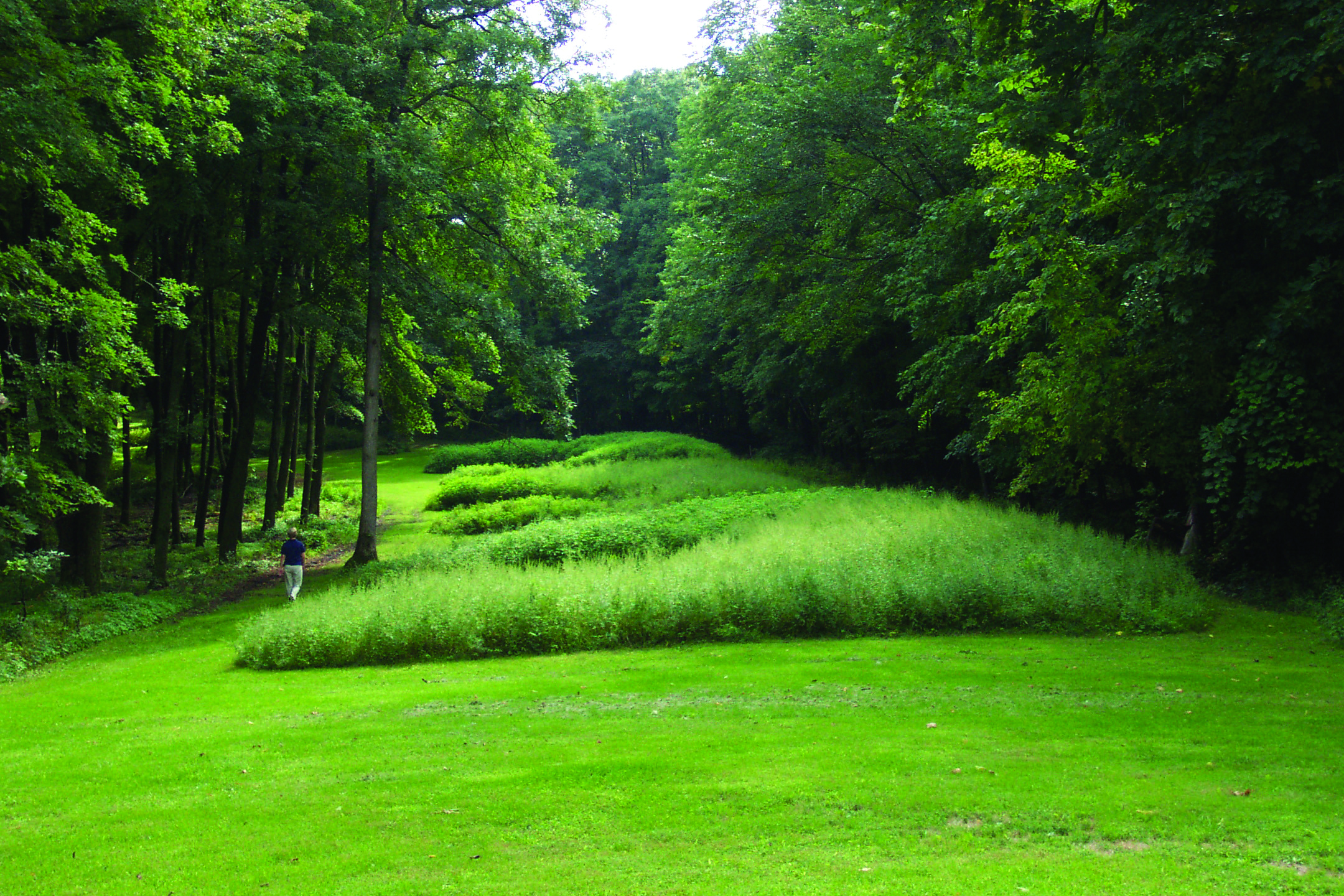
Effigy Mounds National Monument — NPS Photo
Source: NPS API
Culture & Traditions
Iowa's cultural contributions belie its quiet rural reputation. The Iowa Writers' Workshop at the University of Iowa, founded in 1936, is the most prestigious creative writing program in the United States and has produced 17 Pulitzer Prize winners including Flannery O'Connor, John Irving, and Marilynne Robinson. The Field of Dreams movie site near Dyersville, built for the 1989 Kevin Costner film, remains a pilgrimage destination for baseball fans and hosted its first MLB game in 2021. Iowa's food traditions center on pork (the state produces more hogs than any other), sweet corn, and the loose-meat Maid-Rite sandwich, served since 1926. RAGBRAI (Register's Annual Great Bicycle Ride Across Iowa), launched in 1973, is the oldest and largest multi-day recreational bicycle touring event in the world, drawing 10,000+ riders each July.
Notable Cities
Des Moines
CapitalThe state capital and largest city, a thriving insurance and financial services center. Known for the Iowa State Fair, the Pappajohn Sculpture Park, and the East Village neighborhood.
213,164
Population
$62,378
Median income
$170,700
Home value
$995
Median rent
34.4
Median age
5.9%
Unemployment
60.3%
Homeownership
27,602
Bachelor's+
Cedar Rapids
Iowa's second-largest city and a major center for cereal processing — Quaker Oats has operated here since 1873.
Iowa City
Home to the University of Iowa and designated a UNESCO City of Literature. The Iowa Writers' Workshop is the most prestigious creative writing program in America.
Dubuque
A picturesque Mississippi River town with Victorian architecture, the National Mississippi River Museum, and a revitalized riverfront district.
Ames
Home to Iowa State University, a leading research institution in agriculture and engineering. The birthplace of the first electronic digital computer (the Atanasoff-Berry Computer).
Capital city data: Census Bureau ACS 5-Year (2022)
Intel File · Fun Facts
Iowa produces more corn than most countries — over 2.5 billion bushels annually, enough to fill roughly 14 million semi-trucks.
The Iowa caucuses have been the first major electoral event in the U.S. presidential nominating process since 1972.
Iowa generates over 60% of its electricity from wind power, the highest percentage of any U.S. state.
The Loess Hills in western Iowa are one of only two extensive loess formations in the world (the other is in China along the Yellow River).
The first electronic digital computer, the Atanasoff-Berry Computer, was built at Iowa State University in Ames between 1937 and 1942.
Printable Worksheet
Free, GeoProwl-branded, classroom-ready.
Download the Iowa Worksheet (PDF)
One page · ready to print at home or in class
Nickname
The Hawkeye State
Motto
Our Liberties We Prize and Our Rights We Will Maintain
State Bird
American Goldfinch
State Flower
Wild Rose
State Tree
Oak
Also included: fill in what you learned
1. Iowa produces more corn than most countries — over 2.5 billion bushels annually, enough to fill roughly 14 million semi-trucks.
2. The Iowa caucuses have been the first major electoral event in the U.S. presidential nominating process since 1972.
3. Iowa generates over 60% of its electricity from wind power, the highest percentage of any U.S. state.
4. The Loess Hills in western Iowa are one of only two extensive loess formations in the world (the other is in China along the Yellow River).
Want all 50 states?
One PDF packet, every state, ready to print for the whole class.
Pair it with a math worksheet
Four Fours Challenge: build every number 1–100 using exactly four 4s.
Data & Statistics
Demographics
- Population
- 3,188,836
- Median income
- $70,571
- Median age
- 38.4
- Median home value
- $181,600
- Below poverty line
- 343,141
- Bachelor's degree+
- 433,380
Source: U.S. Census Bureau, ACS 5-Year Estimates (2022)
Agriculture
- Total farms
- 86,911
- Cropland
- 25,881,597 acres
- Market value
- $43,935M
Source: USDA NASS, Census of Agriculture (2022)
Public Health
- Obesity rate
- 37.8%
- Diabetes rate
- 11.3%
- Smoking rate
- 13.7%
- High blood pressure
- 34.5%
- Uninsured
- 5.5%
Source: CDC BRFSS Prevalence Data (2023, 2022 fallback)
National Parks & Sites
- National parks
- 0
- Total NPS sites
- 4
- Sites
- Effigy Mounds National Monument, Herbert Hoover National Historic Site, Lewis & Clark National Historic Trail, Mormon Pioneer National Historic Trail
Source: National Park Service API
Climate
- Avg temperature
- 48.2°F
- Avg high
- 58.8°F
- Avg low
- 37.4°F
- Annual precipitation
- 35.7 in
- Annual snowfall
- 30.3 in
Source: NOAA Climate Normals (2010)
Frequently Asked Questions
What is the capital of Iowa?▾
Des Moines is the capital of Iowa. It is the state's largest city and serves as a major center for insurance, finance, and government.
Why are the Iowa caucuses important?▾
The Iowa caucuses are the first major contest in the U.S. presidential primary process, giving Iowa outsized influence in narrowing the field of candidates. Their first-in-the-nation status dates to 1972 and has made retail politics — meeting voters face-to-face — a hallmark of Iowa campaigning.
What crops does Iowa produce?▾
Iowa is the nation's top producer of corn and the second-largest producer of soybeans. The state also leads in hog and egg production. Ethanol production from corn is a major industry, with Iowa producing about 30% of the nation's ethanol.
What is the Driftless Area?▾
The Driftless Area in northeast Iowa (extending into Wisconsin, Minnesota, and Illinois) is a region that was never covered by glaciers during the last ice age. It features dramatic bluffs, deep valleys, caves, and cold-water trout streams — very different from Iowa's typically flat farmland.
Data sources
U.S. Census Bureau · USDA NASS · CDC BRFSS · National Park Service · NOAA CDO
This product uses the Census Bureau Data API but is not endorsed or certified by the Census Bureau. This product uses the NASS API but is not endorsed or certified by NASS.
Test your knowledge →
Play today's GeoProwl daily challenge — 10 states, 3 clues each, powered by real data.