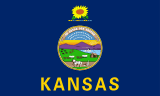
Kansas
KS · Data from 2022–2023 government sources · Midwest · 50 States Learning Path
Kansas, the Sunflower State, lies at the geographic center of the contiguous United States. Known for its sweeping prairies, dramatic thunderstorms, and deep ties to the American West, Kansas has been a crossroads of American history — from Bleeding Kansas and the fight over slavery to the cattle drives of Dodge City and the dust storms of the 1930s. Today it balances a strong agricultural economy with a growing aerospace industry.
Think you know Kansas? Test your geography skills.
History
Kansas Territory was the site of violent conflict between pro-slavery and anti-slavery settlers in the 1850s, earning the name 'Bleeding Kansas.' The state entered the Union as a free state on January 29, 1861, just months before the Civil War began. After the war, Kansas became the endpoint of the great cattle drives from Texas, with towns like Dodge City and Abilene gaining legendary (and often exaggerated) Wild West reputations. In the 1930s, Kansas was hit hard by the Dust Bowl, which devastated the agricultural economy and displaced thousands of families.
Economy
Aviation and agriculture are the twin engines of Kansas's economy. Wichita is known as the Air Capital of the World — major manufacturers including Cessna, Beechcraft, Learjet, and Spirit AeroSystems are based there. Agriculture remains vital, with Kansas ranking first nationally in wheat production and among the top states in cattle and sorghum. The state also has significant oil and natural gas production, particularly in the south-central region.
Geography & Landmarks
Kansas covers 82,278 square miles of mostly flat to gently rolling terrain, rising gradually from about 700 feet in the east to over 4,000 feet at the Colorado border. Despite its flat reputation, the Flint Hills in east-central Kansas contain the largest remaining tallgrass prairie ecosystem in North America. The Arikaree Breaks in the northwest feature dramatic canyons and chalk formations. Mount Sunflower, at 4,039 feet, is the highest point — though it barely rises above the surrounding plains. Monument Rocks, also called the Chalk Pyramids, are towering Niobrara Chalk formations in western Kansas that were designated the state's first National Natural Landmark in 1968. The Flint Hills' tallgrass prairie grasses can grow over eight feet tall during summer.
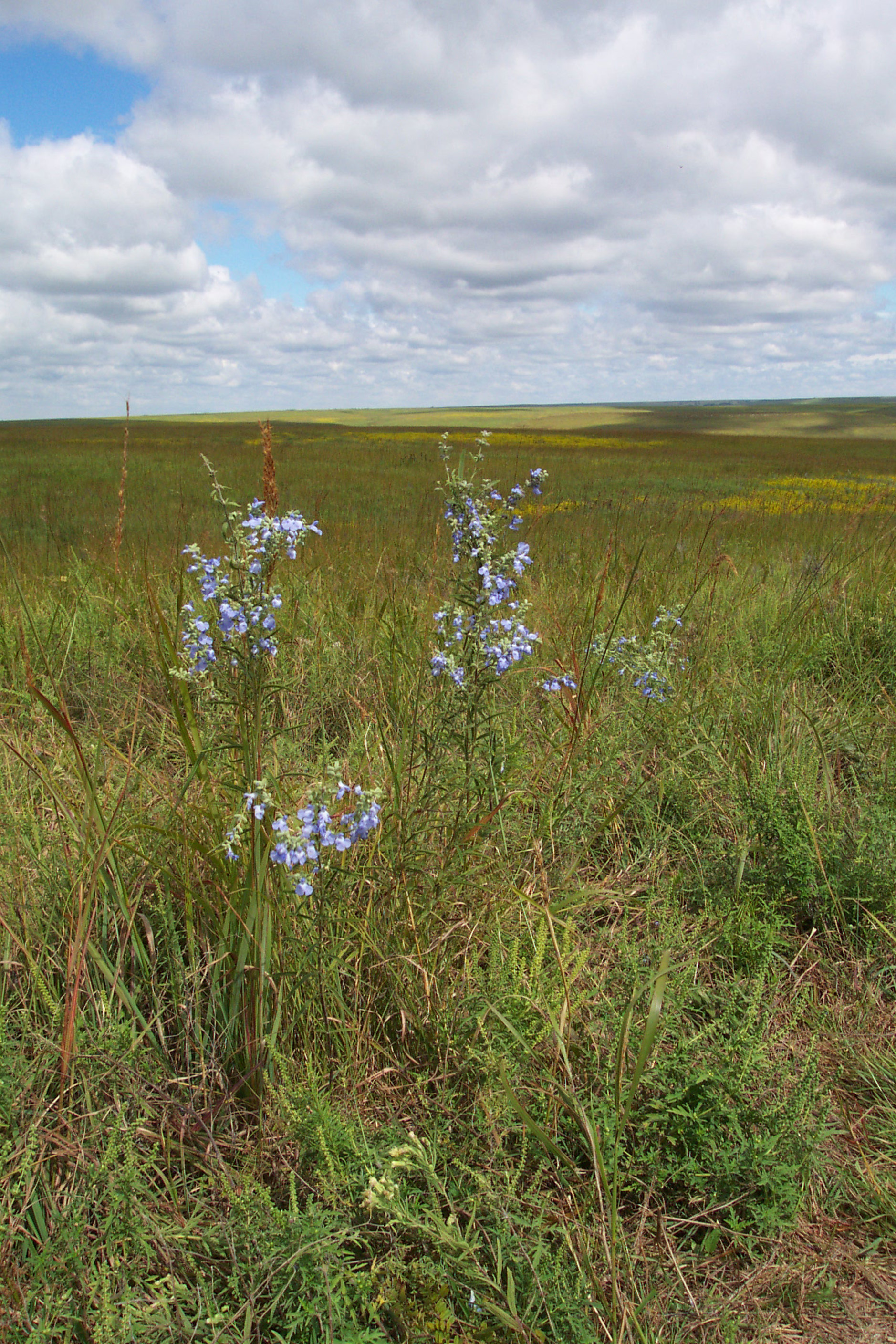
Tallgrass Prairie National Preserve — NPS
Source: NPS API
Culture & Traditions
Kansas has a richer cultural tapestry than its flyover-state reputation suggests. The state's musical heritage includes Charlie Parker, the Kansas City jazz saxophone pioneer born in Kansas City, Kansas, and the band Kansas, whose 1976 hit Carry On Wayward Son remains an arena rock staple. Dodge City's Boot Hill Museum and the town of Abilene preserve the mythology and reality of the Wild West cattle drive era. Kansas barbecue, part of the broader Kansas City BBQ tradition, features slow-smoked meats with thick, sweet tomato-based sauces and burnt ends that have become a national obsession. The University of Kansas Jayhawks basketball program, where James Naismith (the inventor of basketball) served as the first coach, has won four national championships and plays at the legendary Allen Fieldhouse, one of the most raucous venues in college sports.
Notable Cities
Topeka
CapitalThe state capital, known for the landmark Brown v. Board of Education Supreme Court case that ended school segregation. The Brown v. Board National Historic Site preserves this legacy.
126,431
Population
$54,052
Median income
$124,700
Home value
$926
Median rent
37.9
Median age
5.0%
Unemployment
59.0%
Homeownership
15,842
Bachelor's+
Wichita
Kansas's largest city and the Air Capital of the World. Home to major aircraft manufacturers and the quirky Keeper of the Plains sculpture at the river confluence.
Kansas City
The Kansas side of the KC metro, sharing its famous barbecue, jazz heritage, and sports culture with its Missouri neighbor.
Dodge City
The legendary Wild West town on the Santa Fe Trail. Boot Hill Museum and the Long Branch Saloon preserve the cowboy era.
Lawrence
Home to the University of Kansas and a vibrant arts and music scene. Site of the Quantrill's Raid massacre during the Civil War.
Capital city data: Census Bureau ACS 5-Year (2022)
Intel File · Fun Facts
Kansas produces more wheat than any other state — enough to bake 36 billion loaves of bread per year.
The geographic center of the contiguous United States is near Lebanon, Kansas.
Dodge City, Kansas is one of the windiest cities in the United States, averaging 14 mph winds.
The world's largest ball of twine (by a single person) is in Cawker City, Kansas, weighing over 20,000 pounds.
Kansas was the first state to ratify the 15th Amendment, granting African American men the right to vote.
Printable Worksheet
Free, GeoProwl-branded, classroom-ready.
Download the Kansas Worksheet (PDF)
One page · ready to print at home or in class
Nickname
The Sunflower State
Motto
Ad Astra per Aspera (To the Stars Through Difficulties)
State Bird
Western Meadowlark
State Flower
Sunflower
State Tree
Eastern Cottonwood
Also included: fill in what you learned
1. Kansas produces more wheat than any other state — enough to bake 36 billion loaves of bread per year.
2. The geographic center of the contiguous United States is near Lebanon, Kansas.
3. Dodge City, Kansas is one of the windiest cities in the United States, averaging 14 mph winds.
4. The world's largest ball of twine (by a single person) is in Cawker City, Kansas, weighing over 20,000 pounds.
Want all 50 states?
One PDF packet, every state, ready to print for the whole class.
Pair it with a math worksheet
Four Fours Challenge: build every number 1–100 using exactly four 4s.
Data & Statistics
Demographics
- Population
- 2,935,922
- Median income
- $69,747
- Median age
- 37.1
- Median home value
- $189,300
- Below poverty line
- 329,870
- Bachelor's degree+
- 417,263
Source: U.S. Census Bureau, ACS 5-Year Estimates (2022)
Agriculture
- Total farms
- 55,734
- Cropland
- 28,340,827 acres
- Market value
- $23,985M
Source: USDA NASS, Census of Agriculture (2022)
Public Health
- Obesity rate
- 35.9%
- Diabetes rate
- 11.4%
- Smoking rate
- 13.9%
- High blood pressure
- 34.7%
- Uninsured
- 8.1%
Source: CDC BRFSS Prevalence Data (2023, 2022 fallback)
National Parks & Sites
- National parks
- 0
- Total NPS sites
- 10
- Sites
- Brown v. Board of Education National Historical Park, California National Historic Trail, Fort Larned National Historic Site, Fort Scott National Historic Site, Lewis & Clark National Historic Trail, Nicodemus National Historic Site, Oregon National Historic Trail, Pony Express National Historic Trail, Santa Fe National Historic Trail, Tallgrass Prairie National Preserve
Source: National Park Service API
Climate
- Avg temperature
- 54.3°F
- Avg high
- 67.0°F
- Avg low
- 42.0°F
- Annual precipitation
- 32.1 in
- Annual snowfall
- 16.0 in
Source: NOAA Climate Normals (2010)
Frequently Asked Questions
What is the capital of Kansas?▾
Topeka is the capital of Kansas. It is best known nationally as the city where the Brown v. Board of Education Supreme Court case originated in 1954, leading to the desegregation of public schools.
Is Kansas really flat?▾
Kansas is flatter than a pancake — literally. A scientific paper compared the topography of Kansas to a pancake and found Kansas to be measurably flatter. However, the eastern Flint Hills have significant rolling terrain, and the state gradually rises 3,300 feet from east to west.
What is the Flint Hills?▾
The Flint Hills is a region of tallgrass prairie in east-central Kansas, containing the largest remaining tract of tallgrass prairie in North America. The rocky flint beneath the soil prevented plowing, preserving the native grassland. The Tallgrass Prairie National Preserve protects part of this ecosystem.
Why is Wichita called the Air Capital?▾
Wichita earned the title 'Air Capital of the World' because more aircraft are manufactured there than in any other city. Companies like Cessna, Beechcraft, Learjet, Bombardier, and Spirit AeroSystems all have major operations in Wichita.
Data sources
U.S. Census Bureau · USDA NASS · CDC BRFSS · National Park Service · NOAA CDO
This product uses the Census Bureau Data API but is not endorsed or certified by the Census Bureau. This product uses the NASS API but is not endorsed or certified by NASS.
Test your knowledge →
Play today's GeoProwl daily challenge — 10 states, 3 clues each, powered by real data.