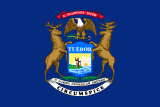
Michigan
MI · Data from 2022–2023 government sources · Midwest · 50 States Learning Path
Michigan, the Great Lakes State, is the only state that touches four of the five Great Lakes. Divided into two distinct peninsulas — the Lower Peninsula (the 'Mitten') and the Upper Peninsula (the 'UP') — Michigan offers an incredible variety of landscapes, from industrial cities to vast wilderness. The state is the birthplace of the American automotive industry and Motown music.
Think you know Michigan? Test your geography skills.
History
Michigan's name comes from the Ojibwe word 'mishigamaa,' meaning large lake. French explorers and fur traders were among the first Europeans in the region. Michigan became the 26th state on January 26, 1837. The state's fortunes soared with the rise of the automobile industry — Henry Ford's moving assembly line in Highland Park (1913) revolutionized manufacturing worldwide. Detroit became the Motor City, producing vehicles that put America on wheels. The Motown sound, born in a small Detroit studio in the 1960s, became one of the most influential music movements in history.
Economy
While the auto industry remains central to Michigan's identity, the economy has diversified significantly. The state is still the top U.S. producer of automobiles, with GM, Ford, and Stellantis headquartered in the Detroit metro. Advanced manufacturing, healthcare, IT, and agriculture are major sectors. Michigan is the nation's leading producer of tart cherries, blueberries, and dry beans. Tourism, particularly in the Upper Peninsula and along the Great Lakes coast, generates over $25 billion annually.
Geography & Landmarks
Michigan covers 96,714 square miles across two peninsulas connected by the 5-mile-long Mackinac Bridge. The state has 3,288 miles of Great Lakes shoreline — more freshwater coastline than any other state. The Lower Peninsula is more populated and includes the auto industry cities. The Upper Peninsula is sparsely populated wilderness, with dense forests, waterfalls (including Tahquamenon Falls), and Pictured Rocks National Lakeshore. Isle Royale National Park, in Lake Superior, is one of the most remote and least visited national parks in the contiguous U.S. Pictured Rocks National Lakeshore on the Upper Peninsula's Lake Superior coast features multicolored sandstone cliffs rising up to 200 feet above the water. The Mackinac Bridge, opened in 1957, spans the Straits of Mackinac between Lake Michigan and Lake Huron.
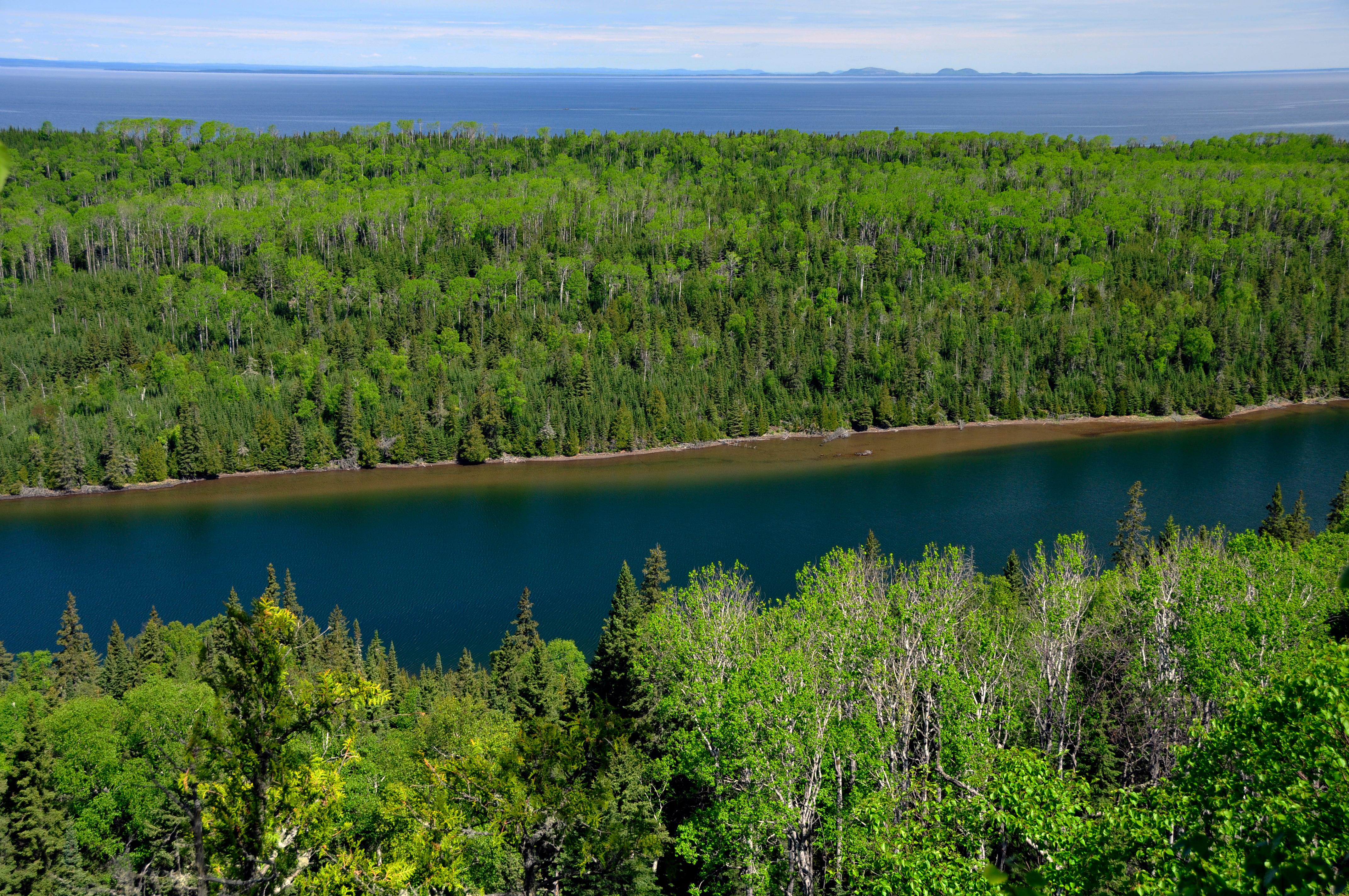
Isle Royale National Park — NPS / Paul Brown
Source: NPS API
Culture & Traditions
Michigan's cultural identity is inseparable from the automobile industry and Motown Records, which Berry Gordy Jr. founded in a small Detroit house in 1959, launching the careers of Stevie Wonder, The Supremes, Marvin Gaye, and The Temptations. Detroit's musical legacy extends to Eminem, Jack White, and the proto-punk of Iggy Pop and the MC5. The state's sports culture revolves around the University of Michigan-Michigan State rivalry, the Detroit Lions on Thanksgiving (an NFL tradition since 1934), and the Red Wings' hockey dynasty that won four Stanley Cups between 1997 and 2008. Michigan is also the Cherry Capital of the nation, with Traverse City hosting the National Cherry Festival each July and producing 75% of the country's tart cherry crop. The Detroit Institute of Arts houses Diego Rivera's Detroit Industry Murals, considered among the finest examples of Mexican muralism in the United States.
Notable Cities
Lansing
CapitalThe state capital, located in the center of the Lower Peninsula. Home to Michigan State University in neighboring East Lansing.
112,986
Population
$50,747
Median income
$112,200
Home value
$954
Median rent
32.9
Median age
8.3%
Unemployment
53.3%
Homeownership
13,448
Bachelor's+
Detroit
The Motor City and birthplace of the American auto industry and Motown music. A city undergoing a dramatic renaissance after decades of decline.
Ann Arbor
Home to the University of Michigan, one of the nation's top public universities. A vibrant college town known for culture, dining, and Big Ten athletics.
Grand Rapids
Michigan's second-largest city and the Beer City USA — home to dozens of craft breweries and a thriving arts scene anchored by the ArtPrize festival.
Traverse City
The Cherry Capital of the World, located on Grand Traverse Bay. A year-round destination for wine, beaches, and the National Cherry Festival.
Capital city data: Census Bureau ACS 5-Year (2022)
Intel File · Fun Facts
No point in Michigan is more than 85 miles from a Great Lake, and no point is more than 6 miles from an inland lake or stream.
The Mackinac Bridge, connecting Michigan's two peninsulas, is 5 miles long — one of the longest suspension bridges in the world.
Motown Records was founded by Berry Gordy in a small house at 2648 West Grand Boulevard in Detroit in 1959.
Michigan has more lighthouses than any other state — over 120 along its Great Lakes coastline.
Battle Creek, Michigan is known as the Cereal Capital of the World — Kellogg's and Post cereals both originated there.
Printable Worksheet
Free, GeoProwl-branded, classroom-ready.
Download the Michigan Worksheet (PDF)
One page · ready to print at home or in class
Nickname
The Great Lakes State
Motto
Si Quaeris Peninsulam Amoenam Circumspice (If You Seek a Pleasant Peninsula, Look About You)
State Bird
American Robin
State Flower
Apple Blossom
State Tree
Eastern White Pine
Also included: fill in what you learned
1. No point in Michigan is more than 85 miles from a Great Lake, and no point is more than 6 miles from an inland lake or stream.
2. The Mackinac Bridge, connecting Michigan's two peninsulas, is 5 miles long — one of the longest suspension bridges in the world.
3. Motown Records was founded by Berry Gordy in a small house at 2648 West Grand Boulevard in Detroit in 1959.
4. Michigan has more lighthouses than any other state — over 120 along its Great Lakes coastline.
Want all 50 states?
One PDF packet, every state, ready to print for the whole class.
Pair it with a math worksheet
Four Fours Challenge: build every number 1–100 using exactly four 4s.
Data & Statistics
Demographics
- Population
- 10,057,921
- Median income
- $68,505
- Median age
- 39.9
- Median home value
- $201,100
- Below poverty line
- 1,293,164
- Bachelor's degree+
- 1,311,608
Source: U.S. Census Bureau, ACS 5-Year Estimates (2022)
Agriculture
- Total farms
- 45,581
- Cropland
- 7,515,740 acres
- Market value
- $12,213M
Source: USDA NASS, Census of Agriculture (2022)
Public Health
- Obesity rate
- 35.4%
- Diabetes rate
- 12.4%
- Smoking rate
- 13.6%
- High blood pressure
- 37.0%
- Uninsured
- 4.4%
Source: CDC BRFSS Prevalence Data (2023, 2022 fallback)
National Parks & Sites
- National parks
- 1
- Total NPS sites
- 6
- Sites
- Isle Royale National Park, Keweenaw National Historical Park, North Country National Scenic Trail, Pictured Rocks National Lakeshore, River Raisin National Battlefield Park, Sleeping Bear Dunes National Lakeshore
Source: National Park Service API
Climate
- Avg temperature
- 46.0°F
- Avg high
- 56.0°F
- Avg low
- 36.5°F
- Annual precipitation
- 33.1 in
- Annual snowfall
- 64.2 in
Source: NOAA Climate Normals (2010)
Frequently Asked Questions
What is the capital of Michigan?▾
Lansing is the capital of Michigan — not Detroit, as many assume. Lansing was chosen as a compromise capital in 1847, partly because its inland location was less vulnerable to British invasion from the Canadian border.
What is the Upper Peninsula?▾
The Upper Peninsula (UP) is the northern landmass of Michigan, separated from the Lower Peninsula by the Straits of Mackinac. Connected by the Mackinac Bridge since 1957, the UP is known for vast forests, waterfalls, iron and copper mining heritage, and a distinct regional identity — residents call themselves 'Yoopers.'
What happened to Detroit?▾
Detroit's population declined from 1.8 million in 1950 to about 640,000 today due to auto industry restructuring, suburbanization, racial tensions, and the 2013 bankruptcy. However, the city is experiencing a significant revival, with reinvestment in downtown, tech startups, and cultural institutions.
Why is Michigan shaped like a mitten?▾
The Lower Peninsula's resemblance to a mitten is a coincidence of glacial geology — the Great Lakes were carved by ice age glaciers that happened to leave a hand-shaped landmass. Michiganders use their hands as maps, pointing to locations on their 'mitten.'
Data sources
U.S. Census Bureau · USDA NASS · CDC BRFSS · National Park Service · NOAA CDO
This product uses the Census Bureau Data API but is not endorsed or certified by the Census Bureau. This product uses the NASS API but is not endorsed or certified by NASS.
Test your knowledge →
Play today's GeoProwl daily challenge — 10 states, 3 clues each, powered by real data.