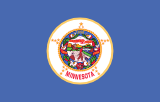
Minnesota
MN · Data from 2022–2023 government sources · Midwest · 50 States Learning Path
Minnesota, the Land of 10,000 Lakes (actually 11,842), is a state of natural beauty, cultural vitality, and Midwestern warmth. From the Boundary Waters canoe wilderness to the Twin Cities' world-class arts scene, Minnesota offers a compelling blend of outdoor adventure and urban sophistication. The state is known for its strong Scandinavian heritage, progressive politics, and some of the coldest temperatures in the lower 48.
Think you know Minnesota? Test your geography skills.
History
Minnesota's name comes from the Dakota word 'mnisota,' meaning cloudy water. The region was home to the Dakota and Ojibwe peoples for centuries. France claimed the area in the 17th century, and it passed to Britain and then the United States. Minnesota became the 32nd state on May 11, 1858. The U.S.-Dakota War of 1862 resulted in the largest mass execution in U.S. history (38 Dakota men hanged in Mankato). The state's iron ranges fueled America's industrial growth, and Scandinavian immigrants shaped its cultural identity.
Economy
Minnesota has a diverse, high-performing economy. Minneapolis-St. Paul is home to 16 Fortune 500 companies — more per capita than any other metro — including Target, UnitedHealth Group, 3M, General Mills, and Best Buy. Healthcare (Mayo Clinic in Rochester is world-renowned), agriculture, manufacturing, and financial services are pillars of the economy. Minnesota is a top producer of corn, soybeans, sugar beets, turkeys, and wild rice.
Geography & Landmarks
Minnesota covers 86,936 square miles, with terrain shaped by glacial activity. The state features 11,842 lakes of 10 acres or more, the headwaters of the Mississippi River at Lake Itasca, and the Boundary Waters Canoe Area Wilderness (BWCA) — over a million acres of pristine lakes and forests along the Canadian border. The Iron Range in the northeast holds massive deposits of iron ore. The southeastern corner features dramatic river bluffs along the Mississippi. The Boundary Waters Canoe Area Wilderness encompasses more than 1,100 pristine lakes, making it the most visited wilderness area in the United States. At Lake Itasca, the Mississippi River begins as a stream narrow enough to wade across before flowing 2,340 miles to the Gulf of Mexico.
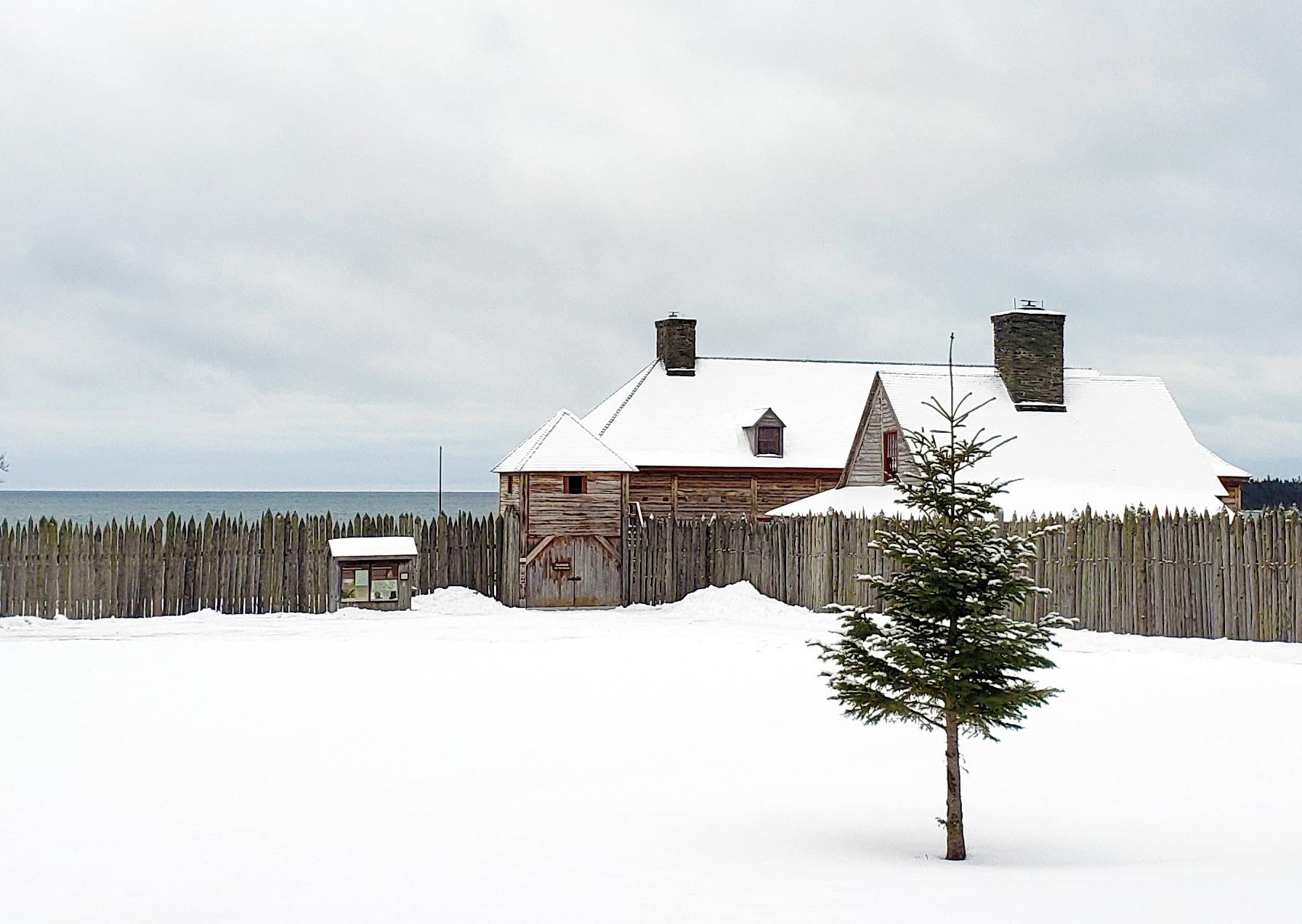
Grand Portage National Monument — NPS Photo / GM Spoto
Source: NPS API
Culture & Traditions
Minnesota's cultural scene is anchored by Minneapolis-Saint Paul, one of the most vibrant arts metro areas in the country per capita. Prince, born and raised in Minneapolis, created his Paisley Park recording studio and performance complex in Chanhassen, and First Avenue, the club featured in Purple Rain, remains a legendary live music venue. The Guthrie Theater, founded in 1963, is one of the premier regional theaters in the United States, and the Walker Art Center houses one of the finest modern art collections in the Midwest. Minnesota's Scandinavian heritage lives on in traditions like lutefisk dinners and the Hjemkomst Viking ship replica in Moorhead. The state is fanatical about hockey — Minnesota produces more Division I college hockey players than any other state — and the Minnesota State Fair, the largest state fair in the U.S. by daily attendance, is famous for its creative foods-on-a-stick.
Notable Cities
St. Paul
CapitalThe state capital and the 'quieter twin,' known for the Cathedral of Saint Paul, Summit Avenue's Victorian mansions, and the annual Winter Carnival (since 1886).
308,806
Population
$69,919
Median income
$264,900
Home value
$1,174
Median rent
33.1
Median age
5.0%
Unemployment
53.0%
Homeownership
50,061
Bachelor's+
Minneapolis
The larger twin city, known for its vibrant arts scene, the Chain of Lakes, the Guthrie Theater, First Avenue music venue (made famous by Prince), and the skyway system.
Rochester
Home to the Mayo Clinic, one of the world's most renowned medical centers. Patients and medical professionals from around the globe visit this southeastern Minnesota city.
Duluth
A port city on the western tip of Lake Superior, gateway to the North Shore. Known for the Aerial Lift Bridge, craft breweries, and dramatic lakeside scenery.
Bloomington
Home to the Mall of America, the largest shopping and entertainment complex in the United States, with over 500 stores and an indoor theme park.
Capital city data: Census Bureau ACS 5-Year (2022)
Intel File · Fun Facts
Minnesota has 11,842 lakes of 10 acres or more — the license plate rounds down to '10,000 Lakes.'
The Mississippi River begins at Lake Itasca in northern Minnesota, where you can walk across it on stepping stones.
The Mall of America in Bloomington has no central heating — body heat from shoppers and energy from lighting keep it warm even in winter.
Minnesota is home to 16 Fortune 500 companies — more per capita than any other state.
Prince was born in Minneapolis and his home studio, Paisley Park, is now a museum open to visitors.
Printable Worksheet
Free, GeoProwl-branded, classroom-ready.
Download the Minnesota Worksheet (PDF)
One page · ready to print at home or in class
Nickname
Land of 10,000 Lakes
Motto
L'Étoile du Nord (The Star of the North)
State Bird
Common Loon
State Flower
Showy Lady's Slipper
State Tree
Red Pine (Norway Pine)
Also included: fill in what you learned
1. Minnesota has 11,842 lakes of 10 acres or more — the license plate rounds down to '10,000 Lakes.'
2. The Mississippi River begins at Lake Itasca in northern Minnesota, where you can walk across it on stepping stones.
3. The Mall of America in Bloomington has no central heating — body heat from shoppers and energy from lighting keep it warm even in winter.
4. Minnesota is home to 16 Fortune 500 companies — more per capita than any other state.
Want all 50 states?
One PDF packet, every state, ready to print for the whole class.
Pair it with a math worksheet
Four Fours Challenge: build every number 1–100 using exactly four 4s.
Data & Statistics
Demographics
- Population
- 5,695,292
- Median income
- $84,313
- Median age
- 38.5
- Median home value
- $286,800
- Below poverty line
- 516,284
- Bachelor's degree+
- 965,593
Source: U.S. Census Bureau, ACS 5-Year Estimates (2022)
Agriculture
- Total farms
- 65,531
- Cropland
- 21,544,060 acres
- Market value
- $28,482M
Source: USDA NASS, Census of Agriculture (2022)
Public Health
- Obesity rate
- 33.2%
- Diabetes rate
- 10.5%
- Smoking rate
- 12.2%
- High blood pressure
- 31.1%
- Uninsured
- 5.4%
Source: CDC BRFSS Prevalence Data (2023, 2022 fallback)
National Parks & Sites
- National parks
- 1
- Total NPS sites
- 6
- Sites
- Grand Portage National Monument, Mississippi National River & Recreation Area, North Country National Scenic Trail, Pipestone National Monument, Saint Croix National Scenic Riverway, Voyageurs National Park
Source: National Park Service API
Climate
- Avg temperature
- 42.5°F
- Avg high
- 53.0°F
- Avg low
- 32.1°F
- Annual precipitation
- 29.5 in
- Annual snowfall
- 44.9 in
Source: NOAA Climate Normals (2010)
Frequently Asked Questions
What is the capital of Minnesota?▾
St. Paul is the capital of Minnesota. It forms the Twin Cities metro with Minneapolis, together creating the 16th-largest metro area in the United States.
How cold does Minnesota get?▾
Minnesota is one of the coldest states in the lower 48. Winter temperatures regularly drop below 0°F, and the record low is -60°F (recorded in Tower in 1996). The International Falls area is sometimes called the Icebox of the Nation.
What is the Boundary Waters?▾
The Boundary Waters Canoe Area Wilderness (BWCA) is a 1.1-million-acre protected wilderness in northeastern Minnesota along the Canadian border. It contains over 1,000 lakes connected by portage trails, offering some of the finest canoe camping in the world. Motors are banned on most lakes.
What is the Twin Cities?▾
The Twin Cities refers to Minneapolis and St. Paul, Minnesota's two largest cities separated by the Mississippi River. Despite their proximity, they have distinct personalities — Minneapolis is known for arts and nightlife, while St. Paul has a more historic, residential feel.
Data sources
U.S. Census Bureau · USDA NASS · CDC BRFSS · National Park Service · NOAA CDO
This product uses the Census Bureau Data API but is not endorsed or certified by the Census Bureau. This product uses the NASS API but is not endorsed or certified by NASS.
Test your knowledge →
Play today's GeoProwl daily challenge — 10 states, 3 clues each, powered by real data.