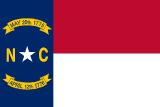
North Carolina
NC · Data from 2022–2023 government sources · Southeast · 50 States Learning Path
North Carolina, the Tar Heel State, stretches from the Great Smoky Mountains to the Outer Banks, offering extraordinary geographic and cultural diversity. The Research Triangle (Raleigh, Durham, Chapel Hill) is one of the nation's leading tech and biotech hubs, while Asheville is a craft beer and arts destination. The Wright Brothers launched the age of flight from the dunes of Kill Devil Hills in 1903.
Think you know North Carolina? Test your geography skills.
History
North Carolina is named after King Charles I of England. The ill-fated Roanoke Colony (1587) — the 'Lost Colony' — was one of the earliest English settlement attempts in America. North Carolina was the 12th state to ratify the Constitution in 1789. The state saw significant Civil War action and was the last Confederate state to secede. The Wright Brothers chose the Outer Banks for their historic flights because of steady winds and soft sand. North Carolina's textile, tobacco, and furniture industries shaped the state's 20th-century economy.
Economy
North Carolina has a dynamic, fast-growing economy. The Research Triangle Park (RTP) is one of the largest research parks in the world, anchored by universities (Duke, UNC, NC State) and major employers in tech, pharma, and biotech. Charlotte is the second-largest banking center in the U.S. after New York, with Bank of America and Truist Financial headquartered there. Agriculture (tobacco, sweet potatoes, hogs), military installations (Fort Liberty, Camp Lejeune), and tourism round out the economy.
Geography & Landmarks
North Carolina covers 53,819 square miles across three distinct regions. The western mountains include the Great Smoky Mountains and the Blue Ridge Parkway. The central Piedmont is rolling hill country with the major cities. The eastern Coastal Plain stretches to the Outer Banks — a 200-mile chain of barrier islands known for wild horses, lighthouses, and the Wright Brothers' historic flight site. Mount Mitchell at 6,684 feet is the highest peak east of the Mississippi. The Great Smoky Mountains along the western border are among the oldest mountains on Earth, formed over 300 million years ago, and their characteristic haze is produced by volatile organic compounds released by dense vegetation. Cape Hatteras is known as the Graveyard of the Atlantic for the more than 600 ships wrecked along its shores.

Cape Hatteras National Seashore — NPS Photo
Source: NPS API
Culture & Traditions
North Carolina's cultural identity spans mountain music, coastal traditions, and a booming urban arts scene. The Blue Ridge Parkway, which runs through western North Carolina, passes through communities where old-time Appalachian fiddle music and flatfoot dancing have been practiced for generations. The state's barbecue tradition is legendary and divisive — eastern-style uses a whole-hog vinegar-based sauce, while western (Lexington-style) uses a tomato-vinegar sauce on pork shoulder. Charlotte has emerged as a cultural hub, while Asheville's eclectic arts community and craft brewery density draw visitors year-round. The Research Triangle (Raleigh, Durham, Chapel Hill) fuels both tech innovation and a vibrant literary and theater scene. North Carolina claims both college basketball royalty (UNC, Duke, NC State) and NASCAR's historic roots — Charlotte's speedway corridor is the sport's spiritual home.
Notable Cities
Raleigh
CapitalThe state capital and one corner of the Research Triangle. Known for NC State University, a growing food scene, and access to Research Triangle Park.
465,517
Population
$78,631
Median income
$347,000
Home value
$1,371
Median rent
34.6
Median age
4.5%
Unemployment
51.1%
Homeownership
103,293
Bachelor's+
Charlotte
North Carolina's largest city and the second-largest banking center in the U.S. Home to the NASCAR Hall of Fame and a booming population.
Asheville
A mountain city known for its arts scene, craft breweries (more per capita than most U.S. cities), and the Biltmore Estate — America's largest private home.
Durham
Home to Duke University and a revitalized downtown centered on the American Tobacco Campus. A hub for biotech startups and culinary innovation.
Wilmington
A coastal city with a historic riverfront, nearby beaches, and EUE/Screen Gems Studios — one of the largest full-service film studios in the U.S. outside of Hollywood.
Capital city data: Census Bureau ACS 5-Year (2022)
Intel File · Fun Facts
The Wright Brothers' first powered flight at Kill Devil Hills lasted just 12 seconds and covered 120 feet — less than the wingspan of a Boeing 747.
Mount Mitchell (6,684 feet) is the highest peak east of the Mississippi River.
The Biltmore Estate in Asheville has 250 rooms, making it the largest privately owned house in the United States.
North Carolina produces more sweet potatoes than any other state — about 60% of the national crop.
Pepsi-Cola was invented by pharmacist Caleb Bradham in New Bern, North Carolina in 1893.
Printable Worksheet
Free, GeoProwl-branded, classroom-ready.
Download the North Carolina Worksheet (PDF)
One page · ready to print at home or in class
Nickname
The Tar Heel State
Motto
Esse Quam Videri (To Be, Rather Than to Seem)
State Bird
Northern Cardinal
State Flower
Flowering Dogwood
State Tree
Longleaf Pine
Also included: fill in what you learned
1. The Wright Brothers' first powered flight at Kill Devil Hills lasted just 12 seconds and covered 120 feet — less than the wingspan of a Boeing 747.
2. Mount Mitchell (6,684 feet) is the highest peak east of the Mississippi River.
3. The Biltmore Estate in Asheville has 250 rooms, making it the largest privately owned house in the United States.
4. North Carolina produces more sweet potatoes than any other state — about 60% of the national crop.
Want all 50 states?
One PDF packet, every state, ready to print for the whole class.
Pair it with a math worksheet
Four Fours Challenge: build every number 1–100 using exactly four 4s.
Data & Statistics
Demographics
- Population
- 10,470,214
- Median income
- $66,186
- Median age
- 39.1
- Median home value
- $234,900
- Below poverty line
- 1,357,418
- Bachelor's degree+
- 1,533,552
Source: U.S. Census Bureau, ACS 5-Year Estimates (2022)
Agriculture
- Total farms
- 42,817
- Cropland
- 4,880,656 acres
- Market value
- $18,693M
Source: USDA NASS, Census of Agriculture (2022)
Public Health
- Obesity rate
- 34.0%
- Diabetes rate
- 12.4%
- Smoking rate
- 13.2%
- High blood pressure
- 37.5%
- Uninsured
- 9.2%
Source: CDC BRFSS Prevalence Data (2023, 2022 fallback)
National Parks & Sites
- National parks
- 1
- Total NPS sites
- 12
- Sites
- Appalachian National Scenic Trail, Blue Ridge Parkway, Cape Hatteras National Seashore, Cape Lookout National Seashore, Carl Sandburg Home National Historic Site, Fort Raleigh National Historic Site, Great Smoky Mountains National Park, Guilford Courthouse National Military Park, Moores Creek National Battlefield, Overmountain Victory National Historic Trail, Trail Of Tears National Historic Trail, Wright Brothers National Memorial
Source: National Park Service API
Climate
- Avg temperature
- 59.5°F
- Avg high
- 70.6°F
- Avg low
- 48.2°F
- Annual precipitation
- 47.7 in
- Annual snowfall
- 3.3 in
Source: NOAA Climate Normals (2010)
Frequently Asked Questions
What is the capital of North Carolina?▾
Raleigh is the capital of North Carolina. It forms part of the Research Triangle with Durham and Chapel Hill, creating one of the most education-rich and tech-driven regions in the country.
What is the Research Triangle?▾
The Research Triangle refers to the region anchored by three major universities: NC State (Raleigh), Duke (Durham), and UNC-Chapel Hill. Research Triangle Park (RTP), located between them, is one of the largest research parks in the world, with over 300 companies and 50,000+ workers.
What are the Outer Banks?▾
The Outer Banks (OBX) are a 200-mile chain of barrier islands off the North Carolina coast. They feature wide beaches, wild horses on Corolla, historic lighthouses (Cape Hatteras is the tallest brick lighthouse in the U.S.), and the Wright Brothers National Memorial at Kill Devil Hills.
Why is North Carolina called the Tar Heel State?▾
The nickname 'Tar Heel' dates to the Civil War and refers either to North Carolina soldiers who 'stuck to their position like they had tar on their heels' or to the state's historic tar and turpentine industry from its vast pine forests.
Data sources
U.S. Census Bureau · USDA NASS · CDC BRFSS · National Park Service · NOAA CDO
This product uses the Census Bureau Data API but is not endorsed or certified by the Census Bureau. This product uses the NASS API but is not endorsed or certified by NASS.
Test your knowledge →
Play today's GeoProwl daily challenge — 10 states, 3 clues each, powered by real data.