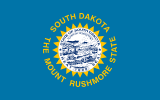
South Dakota
SD · Data from 2022–2023 government sources · Midwest · 50 States Learning Path
South Dakota, the Mount Rushmore State, is a Great Plains state that draws visitors to its western Black Hills, where the carved faces of four presidents gaze across the prairie. But South Dakota is more than its most famous landmark — it encompasses the otherworldly Badlands, the living culture of the Lakota Sioux, and miles of open grassland under enormous skies.
Think you know South Dakota? Test your geography skills.
History
South Dakota was the homeland of the Lakota (Sioux), Nakota, and Dakota peoples. The 1868 Treaty of Fort Laramie guaranteed the Black Hills to the Lakota, but the discovery of gold by Custer's expedition in 1874 led to their seizure by the U.S. government — a dispute that continues today. South Dakota became the 40th state on November 2, 1889. The Wounded Knee Massacre of 1890, where U.S. troops killed an estimated 250-300 Lakota men, women, and children, remains one of the darkest events in American history.
Economy
South Dakota's economy is built on agriculture, tourism, finance, and healthcare. The state is a leading producer of corn, soybeans, sunflowers, and beef cattle. Tourism generates about $4 billion annually, anchored by Mount Rushmore, the Badlands, and the Sturgis Motorcycle Rally. Sioux Falls has become a financial services hub — South Dakota's lack of corporate income tax, personal income tax, and personal property tax attracted credit card companies like Citibank in the 1980s.
Geography & Landmarks
South Dakota covers 77,116 square miles divided by the Missouri River into 'West River' and 'East River' regions. The eastern half is fertile prairie farmland. The western half features the Black Hills — an isolated mountain range sacred to the Lakota — and the Badlands, with their dramatically eroded buttes and spires. Badlands National Park is one of the richest fossil beds in the world. Harney Peak (now Black Elk Peak) at 7,244 feet is the highest point east of the Rockies. The Badlands' layered sedimentary formations contain one of the richest fossil deposits in the world, with paleontologists having recovered ancient horses, saber-toothed cats, and rhinoceroses from beds dating back 28 to 37 million years. The Black Hills are considered sacred by the Lakota Sioux and contain the highest point between the Rockies and the Pyrenees.
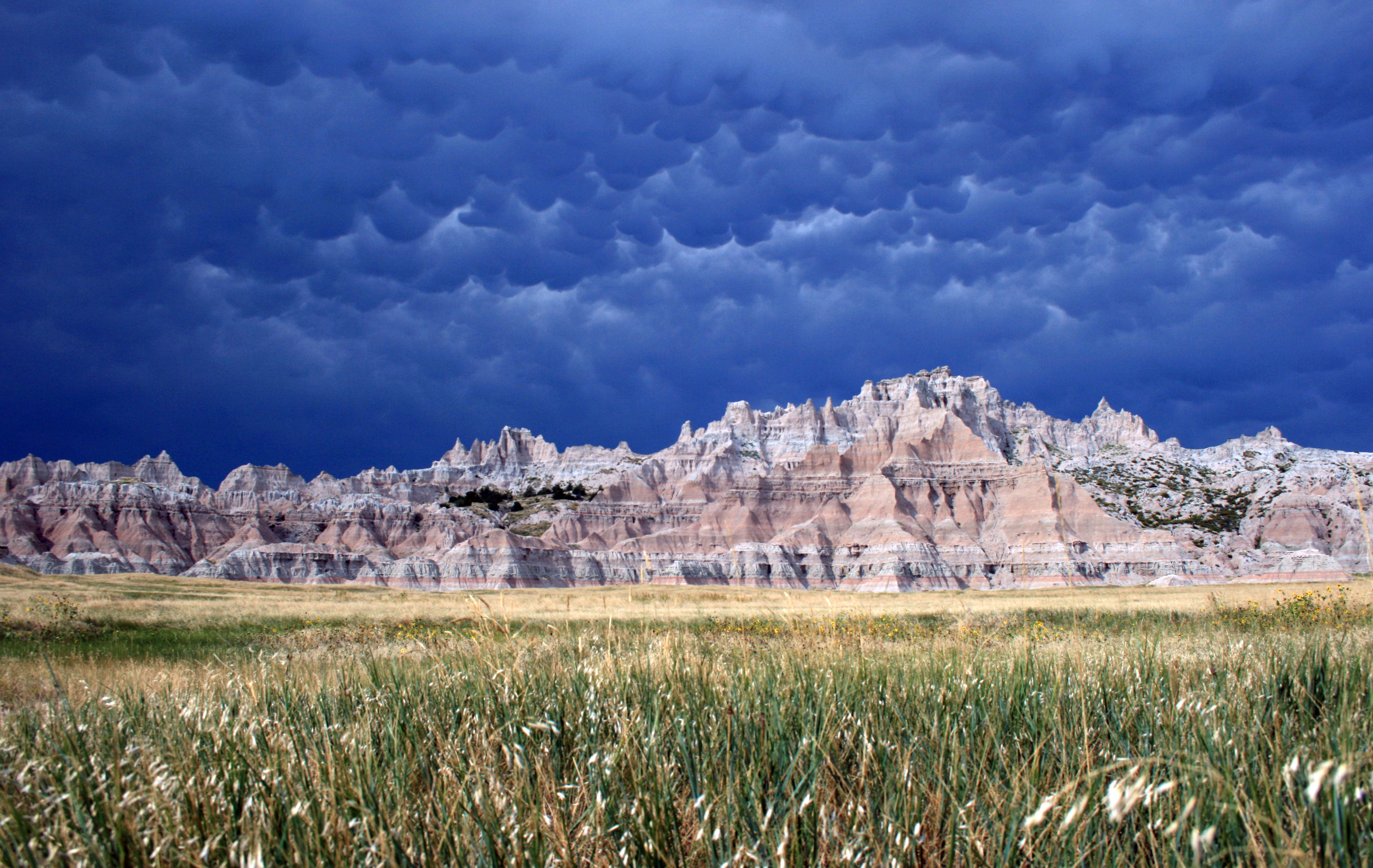
Badlands National Park — NPS Photo
Source: NPS API
Culture & Traditions
South Dakota's cultural identity is shaped by its Native American heritage, frontier history, and iconic monuments. The Lakota, Dakota, and Nakota Sioux nations maintain strong cultural traditions across nine reservations, and the Crazy Horse Memorial — the world's largest mountain carving, in progress since 1948 — honors the Oglala Lakota leader. The Sturgis Motorcycle Rally, held annually since 1938, draws over 500,000 bikers and enthusiasts to the Black Hills each August, making it the largest motorcycle rally in the world. South Dakota's culinary traditions include chislic (seasoned, skewered cubes of meat, typically lamb or beef, named the official state nosh in 2018), fry bread tacos, and Indian tacos that reflect Native American culinary traditions. Deadwood, a restored 1870s gold rush town, operates as a legalized gambling destination and preserves the Wild West era of Wild Bill Hickok and Calamity Jane.
Notable Cities
Pierre
CapitalThe state capital and one of the least populous state capitals in the U.S. (population ~14,000). Located on the Missouri River in the geographic center of the state.
14,105
Population
$80,473
Median income
$216,700
Home value
$914
Median rent
39.6
Median age
0.5%
Unemployment
70.5%
Homeownership
2,315
Bachelor's+
Sioux Falls
South Dakota's largest city and a growing regional hub. Named for the cascading falls of the Big Sioux River in Falls Park, the city has a thriving food and arts scene.
Rapid City
Gateway to the Black Hills, Mount Rushmore, and Badlands National Park. Downtown features life-size bronze statues of all U.S. presidents on street corners.
Deadwood
A legendary Wild West town where Wild Bill Hickok was shot in 1876. Now a National Historic Landmark with legalized gambling and Old West reenactments.
Sturgis
Home to the annual Sturgis Motorcycle Rally, which draws over 500,000 riders each August to this small Black Hills town of 7,000.
Capital city data: Census Bureau ACS 5-Year (2022)
Intel File · Fun Facts
Mount Rushmore took 14 years to carve (1927-1941) and features the 60-foot faces of Washington, Jefferson, Roosevelt, and Lincoln.
The Crazy Horse Memorial, also in the Black Hills, has been under construction since 1948 and will be the world's largest sculpture when complete.
South Dakota has no state personal income tax, no corporate income tax, and no personal property tax.
The Sturgis Motorcycle Rally is the largest motorcycle event in the world, attracting over 500,000 riders annually to a town of 7,000.
Wall Drug in Wall, South Dakota started as a small pharmacy in 1931 that offered free ice water to travelers — now it draws 2 million visitors a year.
Printable Worksheet
Free, GeoProwl-branded, classroom-ready.
Download the South Dakota Worksheet (PDF)
One page · ready to print at home or in class
Nickname
The Mount Rushmore State
Motto
Under God the People Rule
State Bird
Ring-necked Pheasant
State Flower
American Pasque Flower
State Tree
Black Hills Spruce
Also included: fill in what you learned
1. Mount Rushmore took 14 years to carve (1927-1941) and features the 60-foot faces of Washington, Jefferson, Roosevelt, and Lincoln.
2. The Crazy Horse Memorial, also in the Black Hills, has been under construction since 1948 and will be the world's largest sculpture when complete.
3. South Dakota has no state personal income tax, no corporate income tax, and no personal property tax.
4. The Sturgis Motorcycle Rally is the largest motorcycle event in the world, attracting over 500,000 riders annually to a town of 7,000.
Want all 50 states?
One PDF packet, every state, ready to print for the whole class.
Pair it with a math worksheet
Four Fours Challenge: build every number 1–100 using exactly four 4s.
Data & Statistics
Demographics
- Population
- 890,342
- Median income
- $69,457
- Median age
- 37.5
- Median home value
- $219,500
- Below poverty line
- 105,542
- Bachelor's degree+
- 123,313
Source: U.S. Census Bureau, ACS 5-Year Estimates (2022)
Agriculture
- Total farms
- 28,299
- Cropland
- 18,488,619 acres
- Market value
- $12,935M
Source: USDA NASS, Census of Agriculture (2022)
Public Health
- Obesity rate
- 36.0%
- Diabetes rate
- 11.8%
- Smoking rate
- 15.2%
- High blood pressure
- 35.2%
- Uninsured
- 7.6%
Source: CDC BRFSS Prevalence Data (2023, 2022 fallback)
National Parks & Sites
- National parks
- 2
- Total NPS sites
- 7
- Sites
- Badlands National Park, Jewel Cave National Monument, Lewis & Clark National Historic Trail, Minuteman Missile National Historic Site, Missouri National Recreational River, Mount Rushmore National Memorial, Wind Cave National Park
Source: National Park Service API
Climate
- Avg temperature
- 45.6°F
- Avg high
- 58.0°F
- Avg low
- 33.6°F
- Annual precipitation
- 21.4 in
- Annual snowfall
- 38.6 in
Source: NOAA Climate Normals (2010)
Frequently Asked Questions
What is the capital of South Dakota?▾
Pierre (pronounced 'peer') is the capital of South Dakota. With a population of about 14,000, it is one of the smallest and most remote state capitals in the country.
Who is on Mount Rushmore?▾
Mount Rushmore features the faces of four U.S. presidents: George Washington, Thomas Jefferson, Theodore Roosevelt, and Abraham Lincoln. Sculptor Gutzon Borglum chose them to represent the nation's birth, growth, development, and preservation.
What are the Badlands?▾
Badlands National Park in southwestern South Dakota features 244,000 acres of dramatically eroded buttes, pinnacles, and spires in layered bands of color. The park contains one of the world's richest fossil beds and is home to bison, bighorn sheep, and prairie dogs.
What is the Crazy Horse Memorial?▾
The Crazy Horse Memorial is a massive mountain carving in the Black Hills depicting the Lakota warrior Crazy Horse on horseback. When complete, it will be 641 feet long and 563 feet high — far larger than Mount Rushmore. Started in 1948, it is being carved by the nonprofit Crazy Horse Memorial Foundation with no federal funding.
Data sources
U.S. Census Bureau · USDA NASS · CDC BRFSS · National Park Service · NOAA CDO
This product uses the Census Bureau Data API but is not endorsed or certified by the Census Bureau. This product uses the NASS API but is not endorsed or certified by NASS.
Test your knowledge →
Play today's GeoProwl daily challenge — 10 states, 3 clues each, powered by real data.