
Texas
TX · Data from 2022–2023 government sources · Southwest · 50 States Learning Path
Texas, the Lone Star State, is a world unto itself — the second-largest state by both area and population, with an economy that would rank among the top ten nations globally. From the vast deserts of Big Bend to the piney woods of East Texas to the sprawling metros of Houston, Dallas, San Antonio, and Austin, Texas encompasses an extraordinary range of landscapes, cultures, and identities. The state's fierce independence, oil wealth, and cultural bravado have made it an American icon.
Think you know Texas? Test your geography skills.
History
Texas has a history unlike any other state. It was part of Spain's colonial empire, then Mexico after independence in 1821. Anglo-American settlers led by Stephen F. Austin colonized the region in the 1820s. Texas declared independence from Mexico in 1836, famously fighting at the Alamo. The Republic of Texas existed as an independent nation for nearly a decade before joining the United States as the 28th state in 1845. The discovery of oil at Spindletop in 1901 launched the Texas oil boom and transformed the state's economy.
Economy
If Texas were a country, its $2.4 trillion GDP would make it the eighth-largest economy in the world. Oil and gas remain foundational (Texas produces more crude oil than any other state), but the economy has diversified enormously. Houston is the energy capital of the world and home to the Texas Medical Center, the world's largest. Austin has become a major tech hub (Tesla, Oracle, Samsung). Dallas-Fort Worth is a financial and telecommunications center. Agriculture includes cattle (Texas has the most of any state), cotton, and citrus.
Geography & Landmarks
Texas covers 268,596 square miles — larger than any European country except Russia. The landscape includes Gulf Coast beaches, Hill Country limestone hills, Chihuahuan Desert, Rio Grande river valley, pine forests, and the flat High Plains of the Panhandle. Big Bend National Park in the remote Trans-Pecos region is one of the least-visited and most spectacular national parks. Guadalupe Peak (8,751 feet) is the state's highest point. Big Bend encompasses over 800,000 acres where the Chihuahuan Desert meets the Chisos Mountains and the Rio Grande carves canyons up to 1,500 feet deep. The Texas Hill Country, a region of limestone hills, spring-fed rivers, and oak savannas between San Antonio and Austin, is one of the most geologically distinctive regions in the state.
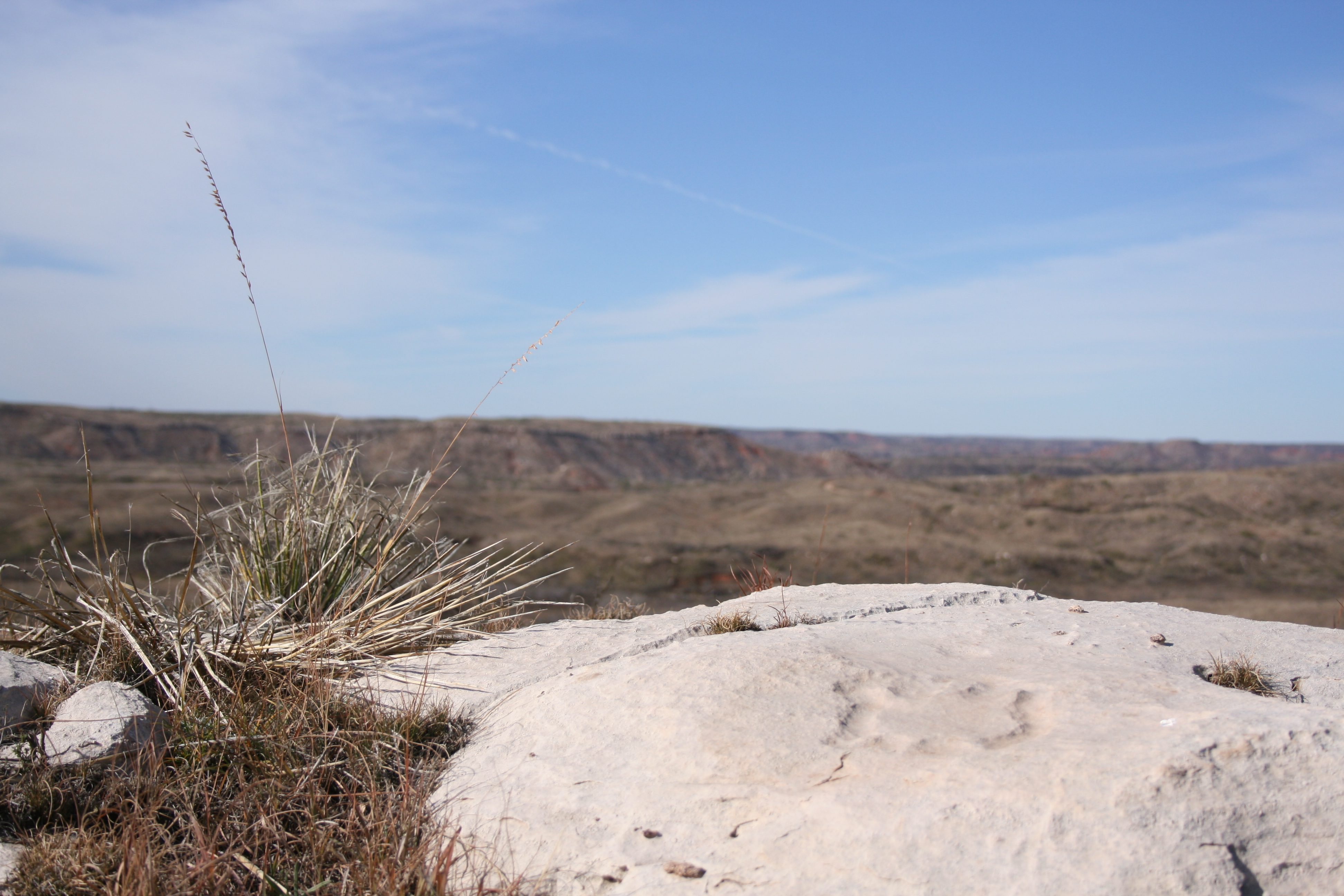
Alibates Flint Quarries National Monument — NPS Photo
Source: NPS API
Culture & Traditions
Texas culture is a force unto itself, defined by an independent spirit, outsized pride, and genuine hospitality. Texas barbecue is a religion, with Central Texas-style brisket (salt, pepper, post oak smoke, no sauce needed) perfected at institutions like Franklin Barbecue in Austin, Snow's BBQ in Lexington, and Kreuz Market in Lockhart, the official Barbecue Capital of Texas. The state's music scene is equally legendary — Austin calls itself the Live Music Capital of the World, hosting South by Southwest (SXSW) and Austin City Limits, while Houston's hip-hop scene and San Antonio's conjunto and Tejano traditions add depth. Friday Night Lights high school football is a cultural phenomenon, and the Dallas Cowboys, Houston Texans, and University of Texas Longhorns command massive followings. The Houston Museum District contains 19 institutions including the Museum of Fine Arts and the Menil Collection, one of the most significant private art collections open to the public in the world.
Notable Cities
Austin
CapitalThe state capital and Live Music Capital of the World. Home to the University of Texas, a booming tech scene (dubbed 'Silicon Hills'), SXSW, and a fiercely independent culture.
958,202
Population
$86,556
Median income
$461,500
Home value
$1,549
Median rent
34.2
Median age
4.4%
Unemployment
44.4%
Homeownership
236,239
Bachelor's+
Houston
The fourth-largest city in the U.S., the energy capital of the world, and home to NASA's Johnson Space Center. One of the most ethnically diverse cities in America.
San Antonio
Home of the Alamo and the scenic River Walk. A deeply historic city with strong Mexican and German cultural influences.
Dallas
A major business and cultural hub known for its skyline, the Dallas Cowboys, the JFK assassination site, and the Arts District — the largest contiguous urban arts district in the country.
El Paso
A border city on the Rio Grande across from Ciudad Juarez, Mexico. One of the safest large cities in the U.S. with a rich bicultural heritage.
Capital city data: Census Bureau ACS 5-Year (2022)
Intel File · Fun Facts
Texas was an independent republic from 1836 to 1845 — the only U.S. state that was previously a sovereign nation (Hawaii was a kingdom but not a republic).
King Ranch in South Texas covers 825,000 acres — larger than the state of Rhode Island.
Texas has its own power grid (ERCOT), largely separate from the rest of the United States.
The state capitol building in Austin is taller than the U.S. Capitol in Washington, D.C.
Texas produces more wind energy than any other state — and more than most countries.
Printable Worksheet
Free, GeoProwl-branded, classroom-ready.
Download the Texas Worksheet (PDF)
One page · ready to print at home or in class
Nickname
The Lone Star State
Motto
Friendship
State Bird
Northern Mockingbird
State Flower
Bluebonnet
State Tree
Pecan
Also included: fill in what you learned
1. Texas was an independent republic from 1836 to 1845 — the only U.S. state that was previously a sovereign nation (Hawaii was a kingdom but not a republic).
2. King Ranch in South Texas covers 825,000 acres — larger than the state of Rhode Island.
3. Texas has its own power grid (ERCOT), largely separate from the rest of the United States.
4. The state capitol building in Austin is taller than the U.S. Capitol in Washington, D.C.
Want all 50 states?
One PDF packet, every state, ready to print for the whole class.
Pair it with a math worksheet
Four Fours Challenge: build every number 1–100 using exactly four 4s.
Data & Statistics
Demographics
- Population
- 29,243,342
- Median income
- $73,035
- Median age
- 35.2
- Median home value
- $238,000
- Below poverty line
- 3,990,326
- Bachelor's degree+
- 3,919,003
Source: U.S. Census Bureau, ACS 5-Year Estimates (2022)
Agriculture
- Total farms
- 230,662
- Cropland
- 27,903,626 acres
- Market value
- $32,167M
Source: USDA NASS, Census of Agriculture (2022)
Public Health
- Obesity rate
- 34.4%
- Diabetes rate
- 12.7%
- Smoking rate
- 11.3%
- High blood pressure
- 32.3%
- Uninsured
- 18.1%
Source: CDC BRFSS Prevalence Data (2023, 2022 fallback)
National Parks & Sites
- National parks
- 2
- Total NPS sites
- 18
- Sites
- Alibates Flint Quarries National Monument, Amistad National Recreation Area, Big Bend National Park, Big Thicket National Preserve, Blackwell School National Historic Site, Butterfield Overland National Historic Trail, Chamizal National Memorial, El Camino Real de Tierra Adentro National Historic Trail, El Camino Real de los Tejas National Historic Trail, Fort Davis National Historic Site, Guadalupe Mountains National Park, Lake Meredith National Recreation Area, Lyndon B Johnson National Historical Park, Padre Island National Seashore, Palo Alto Battlefield National Historical Park, Rio Grande Wild & Scenic River, San Antonio Missions National Historical Park, Waco Mammoth National Monument
Source: National Park Service API
Climate
- Avg temperature
- 65.2°F
- Avg high
- 77.5°F
- Avg low
- 53.2°F
- Annual precipitation
- 32.5 in
- Annual snowfall
- 0.7 in
Source: NOAA Climate Normals (2010)
Frequently Asked Questions
What is the capital of Texas?▾
Austin is the capital of Texas. Despite being smaller than Houston, San Antonio, and Dallas, Austin has been the capital since 1839 and is now one of the fastest-growing cities in the nation.
What happened at the Alamo?▾
The Battle of the Alamo (February-March 1836) was a pivotal event in the Texas Revolution. About 200 Texan defenders held the Alamo mission in San Antonio against thousands of Mexican soldiers under General Santa Anna for 13 days before being overrun. 'Remember the Alamo!' became a rallying cry that helped Texas win independence.
How big is Texas?▾
Texas covers 268,596 square miles — larger than France. It takes about 12 hours to drive from Texarkana (northeast corner) to El Paso (western tip), covering roughly 830 miles.
What is Texas BBQ?▾
Texas barbecue centers on beef, particularly brisket, smoked low and slow over post oak wood. Central Texas-style (popularized by places like Franklin Barbecue in Austin and Kreuz Market in Lockhart) emphasizes the meat itself with minimal sauce. Texas is also known for smoked sausage and beef ribs.
Data sources
U.S. Census Bureau · USDA NASS · CDC BRFSS · National Park Service · NOAA CDO
This product uses the Census Bureau Data API but is not endorsed or certified by the Census Bureau. This product uses the NASS API but is not endorsed or certified by NASS.
Test your knowledge →
Play today's GeoProwl daily challenge — 10 states, 3 clues each, powered by real data.