
Utah
UT · Data from 2022–2023 government sources · West · 50 States Learning Path
Utah, the Beehive State, is a landscape of almost otherworldly beauty. Its five national parks — known as the 'Mighty Five' — showcase some of the most dramatic red rock scenery on Earth. Beyond the canyon country, Utah offers world-class skiing in the Wasatch Mountains, the vast Great Salt Lake, and a unique cultural identity shaped by the Church of Jesus Christ of Latter-day Saints (LDS), which founded Salt Lake City in 1847.
Think you know Utah? Test your geography skills.
History
Utah was home to the Ute, Paiute, Goshute, and Shoshone peoples before European contact. Spanish explorers crossed the region in the 18th century. In 1847, Brigham Young led Mormon pioneers to the Salt Lake Valley, declaring 'This is the right place.' The Mormon settlement grew rapidly, but Utah's bid for statehood was complicated by the practice of polygamy. After the LDS Church officially discontinued polygamy in 1890, Utah became the 45th state on January 4, 1896. The 2002 Winter Olympics in Salt Lake City showcased Utah to the world.
Economy
Utah has one of the fastest-growing economies and lowest unemployment rates in the nation. The tech sector, centered along the 'Silicon Slopes' corridor from Salt Lake City to Provo, includes companies like Qualtrics, Pluralsight, and Domo. Outdoor recreation and tourism generate over $12 billion annually. Mining (copper, gold) and energy (oil, gas, coal) are important. Hill Air Force Base is one of the state's largest employers. Utah's young, educated, and growing population fuels economic dynamism.
Geography & Landmarks
Utah covers 84,897 square miles of spectacularly varied terrain. The Wasatch Range divides the state roughly in half — the western Great Basin (including the Great Salt Lake and Bonneville Salt Flats) from the Colorado Plateau's canyon country in the east. The Mighty Five national parks — Arches, Bryce Canyon, Canyonlands, Capitol Reef, and Zion — are all in southern Utah. The Bonneville Salt Flats, where land speed records are set, are remnants of a prehistoric lake. The Mighty Five national parks protect some of the most visually striking landscapes on Earth, from Bryce Canyon's hoodoo spires to the 2,000-foot sandstone walls of Zion Canyon. The Great Salt Lake, the largest saltwater lake in the Western Hemisphere, has shrunk dramatically from 3,300 square miles in 1987 to under 1,000 square miles in 2022, raising serious ecological concerns.
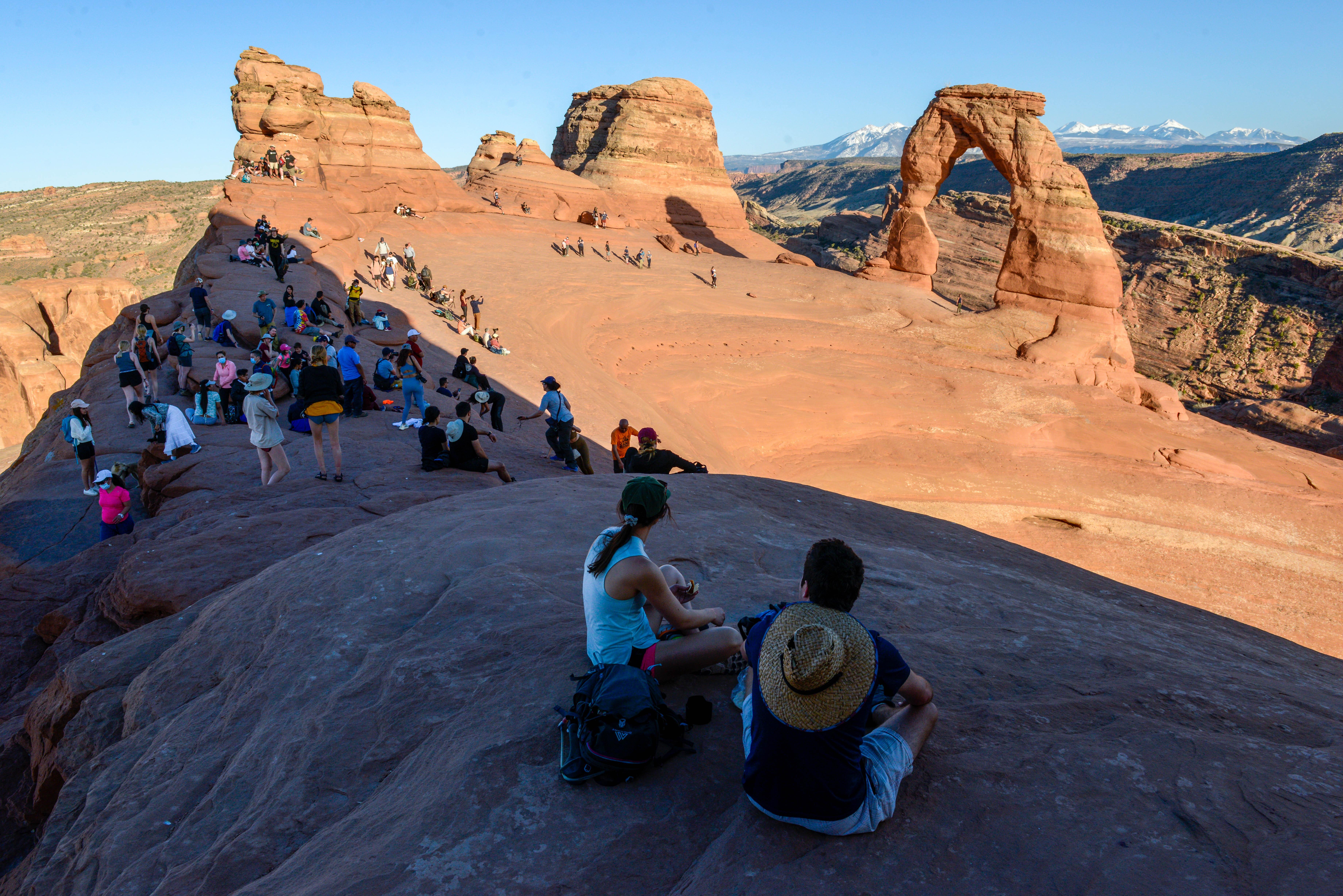
Arches National Park — NPS/Veronica Verdin
Source: NPS API
Culture & Traditions
Utah's cultural landscape is strongly influenced by the Church of Jesus Christ of Latter-day Saints, which founded Salt Lake City in 1847 and continues to shape the state's social fabric, architecture, and community life. The Sundance Film Festival, held each January in Park City, is the most important independent film festival in the world, launched by Robert Redford in 1978 and responsible for introducing directors like Quentin Tarantino, Steven Soderbergh, and the Coen Brothers. Utah's outdoor recreation culture is unmatched — the state's ski resorts (Park City, Alta, Snowbird, and Deer Valley among them) market the Greatest Snow on Earth, and the Bonneville Salt Flats have been the site of land speed records since 1935. The Utah Symphony, founded in 1940, is one of the leading orchestras in the American West, and the state's Pioneer Day celebration each July 24th commemorates the arrival of Mormon settlers in the Salt Lake Valley.
Notable Cities
Salt Lake City
CapitalThe state capital and cultural center, dominated by the LDS Temple Square. A gateway to world-class skiing (Park City, Snowbird) and host of the 2002 Winter Olympics.
201,269
Population
$72,357
Median income
$458,600
Home value
$1,254
Median rent
32.5
Median age
3.6%
Unemployment
47.0%
Homeownership
38,875
Bachelor's+
Park City
A former silver mining town turned world-class ski resort. Home to the Sundance Film Festival, the largest independent film festival in the U.S.
Provo
Home to Brigham Young University and the southern end of the Silicon Slopes tech corridor. Surrounded by dramatic mountain and lake scenery.
Moab
The adventure capital of Utah, gateway to Arches and Canyonlands national parks. A mecca for mountain biking, rock climbing, and off-roading.
St. George
A fast-growing city in Utah's southwestern corner, near Zion National Park. Known for its red rock scenery, golf courses, and warm climate.
Capital city data: Census Bureau ACS 5-Year (2022)
Intel File · Fun Facts
Utah has five national parks — Arches, Bryce Canyon, Canyonlands, Capitol Reef, and Zion — collectively known as the Mighty Five.
The Great Salt Lake is the largest saltwater lake in the Western Hemisphere, roughly 3 to 5 times saltier than the ocean.
The Bonneville Salt Flats are so flat that you can see the curvature of the Earth — land speed records have been set here since 1914.
Arches National Park has over 2,000 natural stone arches, the highest concentration in the world.
Utah's state motto is 'Industry,' and the beehive — a symbol of hard work and cooperation — appears throughout the state's iconography.
Printable Worksheet
Free, GeoProwl-branded, classroom-ready.
Download the Utah Worksheet (PDF)
One page · ready to print at home or in class
Nickname
The Beehive State
Motto
Industry
State Bird
California Gull
State Flower
Sego Lily
State Tree
Quaking Aspen
Also included: fill in what you learned
1. Utah has five national parks — Arches, Bryce Canyon, Canyonlands, Capitol Reef, and Zion — collectively known as the Mighty Five.
2. The Great Salt Lake is the largest saltwater lake in the Western Hemisphere, roughly 3 to 5 times saltier than the ocean.
3. The Bonneville Salt Flats are so flat that you can see the curvature of the Earth — land speed records have been set here since 1914.
4. Arches National Park has over 2,000 natural stone arches, the highest concentration in the world.
Want all 50 states?
One PDF packet, every state, ready to print for the whole class.
Pair it with a math worksheet
Four Fours Challenge: build every number 1–100 using exactly four 4s.
Data & Statistics
Demographics
- Population
- 3,283,809
- Median income
- $86,833
- Median age
- 31.4
- Median home value
- $408,500
- Below poverty line
- 275,188
- Bachelor's degree+
- 468,541
Source: U.S. Census Bureau, ACS 5-Year Estimates (2022)
Agriculture
- Total farms
- 17,386
- Cropland
- 1,444,097 acres
- Market value
- $2,342M
Source: USDA NASS, Census of Agriculture (2022)
Public Health
- Obesity rate
- 30.2%
- Diabetes rate
- 7.8%
- Smoking rate
- 5.9%
- High blood pressure
- 27.3%
- Uninsured
- 8.7%
Source: CDC BRFSS Prevalence Data (2023, 2022 fallback)
National Parks & Sites
- National parks
- 5
- Total NPS sites
- 17
- Sites
- Arches National Park, Bryce Canyon National Park, California National Historic Trail, Canyonlands National Park, Capitol Reef National Park, Cedar Breaks National Monument, Dinosaur National Monument, Glen Canyon National Recreation Area, Golden Spike National Historical Park, Hovenweep National Monument, Mormon Pioneer National Historic Trail, Natural Bridges National Monument, Old Spanish National Historic Trail, Pony Express National Historic Trail, Rainbow Bridge National Monument, Timpanogos Cave National Monument, Zion National Park
Source: National Park Service API
Climate
- Avg temperature
- 49.2°F
- Avg high
- 63.1°F
- Avg low
- 35.1°F
- Annual precipitation
- 13.2 in
- Annual snowfall
- 37.9 in
Source: NOAA Climate Normals (2010)
Frequently Asked Questions
What is the capital of Utah?▾
Salt Lake City is the capital of Utah. Founded by Mormon pioneers in 1847, it is the worldwide headquarters of The Church of Jesus Christ of Latter-day Saints and was the host city for the 2002 Winter Olympics.
What are the Mighty Five?▾
The Mighty Five refers to Utah's five national parks: Arches (natural stone arches), Bryce Canyon (hoodoo rock spires), Canyonlands (vast canyon wilderness), Capitol Reef (Waterpocket Fold geology), and Zion (towering sandstone cliffs). Together they form one of the greatest concentrations of scenic national parks in the world.
Is Utah a good state for skiing?▾
Utah is world-class for skiing. The state's slogan 'The Greatest Snow on Earth' is trademarked. The Wasatch Mountains receive an average of 500 inches of light, dry powder annually. Major resorts include Park City, Deer Valley, Snowbird, Alta, and Brighton, all within an hour of Salt Lake City's airport.
What is the Great Salt Lake?▾
The Great Salt Lake is a terminal lake (no outlet) in northwestern Utah, the largest saltwater lake in the Western Hemisphere. Its salinity ranges from 5% to 27%, supporting brine shrimp and millions of migratory birds. The lake has been shrinking due to drought and water diversion, raising ecological concerns.
Data sources
U.S. Census Bureau · USDA NASS · CDC BRFSS · National Park Service · NOAA CDO
This product uses the Census Bureau Data API but is not endorsed or certified by the Census Bureau. This product uses the NASS API but is not endorsed or certified by NASS.
Test your knowledge →
Play today's GeoProwl daily challenge — 10 states, 3 clues each, powered by real data.