
West Virginia
WV · Data from 2022–2023 government sources · Southeast · 50 States Learning Path
West Virginia, the Mountain State, is the only state located entirely within the Appalachian Mountains. Its rugged terrain, coal mining heritage, and tight-knit communities give it a character distinct from any other state. The New River Gorge — America's newest national park — whitewater rafting, and country roads immortalized by John Denver define a state that is beautiful, complicated, and resilient.
Think you know West Virginia? Test your geography skills.
History
West Virginia's existence is unique — it was created during the Civil War when the western counties of Virginia refused to join the Confederacy. West Virginia became the 35th state on June 20, 1863, the only state formed by seceding from a Confederate state. Coal mining defined the state's identity and economy from the late 1800s onward. The Mine Wars of the early 1900s — including the Battle of Blair Mountain (1921), the largest armed insurrection since the Civil War — were pivotal in the American labor movement.
Economy
West Virginia's economy has historically been dependent on coal, but the industry's decline has created significant economic challenges. The state is diversifying into natural gas (from the Marcellus Shale), tourism, aerospace, and technology. The outdoor recreation economy, centered on the New River Gorge and Appalachian Trail, is growing. Healthcare and government are the largest employment sectors. Despite economic difficulties, West Virginia offers one of the lowest costs of living in the nation.
Geography & Landmarks
West Virginia covers 24,230 square miles of Appalachian terrain with an average elevation of about 1,500 feet — the highest average east of the Mississippi. The state is almost entirely mountainous, with narrow valleys and steep ridges. The New River Gorge Bridge, at 876 feet above the river, was the longest single-span arch bridge in the world when completed in 1977. Spruce Knob at 4,863 feet is the highest point. The Greenbrier River Trail and Seneca Rocks are popular outdoor destinations. The New River, despite its name, is believed to be one of the oldest rivers in the world, predating the Appalachian Mountains through which it flows. The New River Gorge was designated America's newest national park in 2020 and hosts an annual Bridge Day BASE jumping and rappelling event each October.
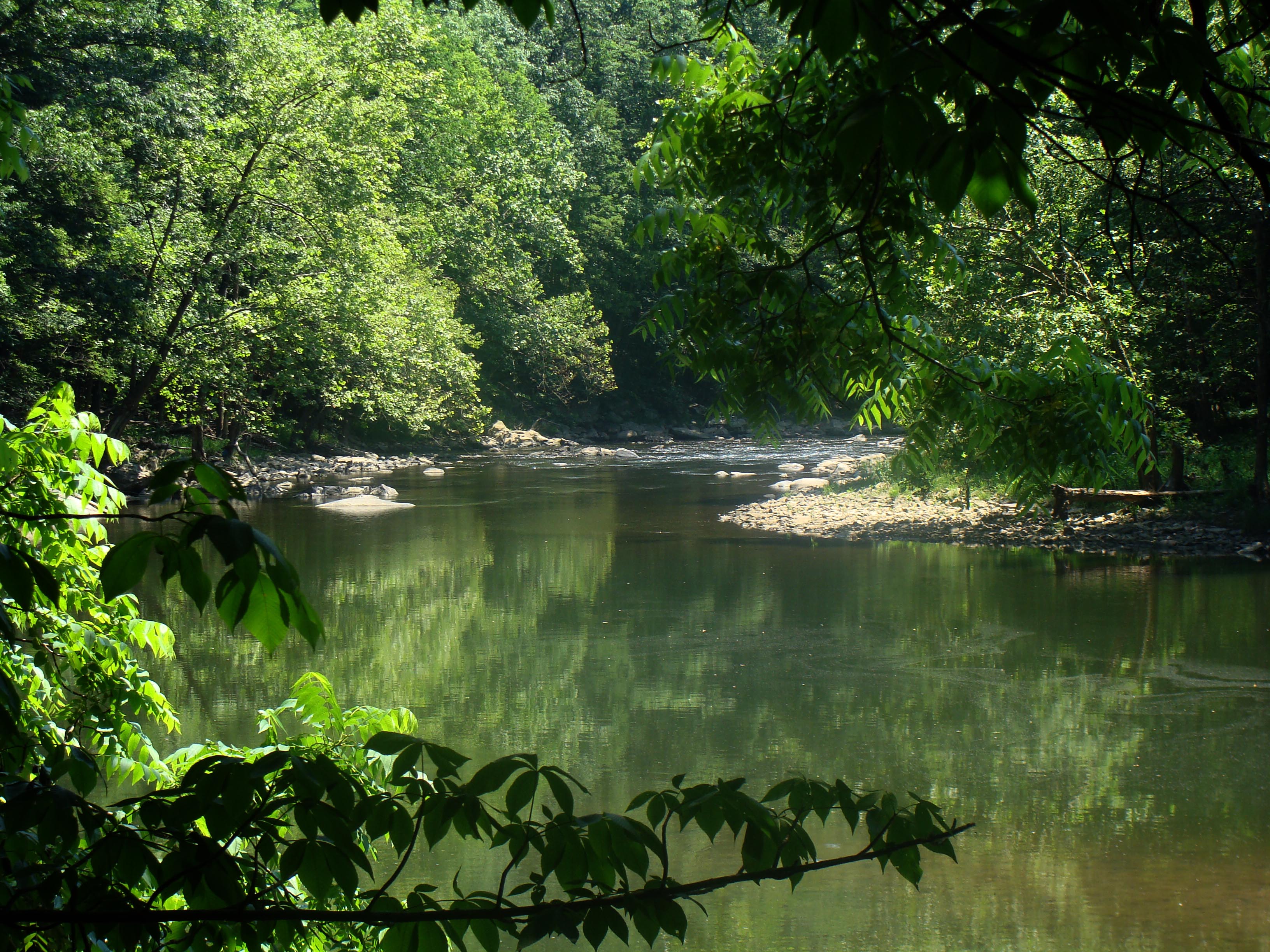
Bluestone National Scenic River — NPS Photo
Source: NPS API
Culture & Traditions
West Virginia's cultural soul is rooted in Appalachian music and mountain traditions. The state's fiddling and old-time string band traditions are preserved at events like the Appalachian String Band Music Festival in Clifftop, considered the premier old-time music gathering in the world. The Mountain State's culinary traditions include ramps (wild leeks harvested each spring and celebrated at festivals across the state), pepperoni rolls (invented by Giuseppe Argiro in Fairmont in 1927 as a portable lunch for coal miners), and golden delicious apples, which were first discovered on a Clay County farm in 1905. The Greenbrier resort in White Sulphur Springs has hosted guests since 1778 and concealed a Cold War-era bunker built to house Congress in case of nuclear attack. West Virginia University's Mountaineers football and basketball programs unite the state, and the burning of a couch on a Morgantown street after a big victory has become an unofficial (if discouraged) tradition.
Notable Cities
Charleston
CapitalThe state capital and largest city, located at the confluence of the Elk and Kanawha Rivers. The gold-domed Capitol building is the tallest in the state.
48,415
Population
$58,902
Median income
$172,800
Home value
$870
Median rent
42.2
Median age
5.8%
Unemployment
60.8%
Homeownership
7,868
Bachelor's+
Huntington
A city on the Ohio River, home to Marshall University. The tragic 1970 Marshall football plane crash was depicted in the film 'We Are Marshall.'
Morgantown
Home to West Virginia University and its passionately loyal Mountaineers fans. A college town with a growing tech presence.
Lewisburg
Named one of the coolest small towns in America, with a thriving arts scene, independent shops, and proximity to the Greenbrier resort.
Fayetteville
Gateway to the New River Gorge, a hub for whitewater rafting, rock climbing, and the annual Bridge Day festival where BASE jumpers leap from the New River Gorge Bridge.
Capital city data: Census Bureau ACS 5-Year (2022)
Intel File · Fun Facts
The New River, despite its name, is one of the oldest rivers in the world — possibly over 300 million years old.
West Virginia is the only state entirely within the Appalachian region.
Bridge Day, held annually at the New River Gorge Bridge, is the largest extreme sports event in the world, with hundreds of BASE jumpers and rappellers.
The first rural free mail delivery in the United States began in Charles Town, West Virginia in 1896.
John Denver's 'Take Me Home, Country Roads' (1971) is the official state anthem, though Denver reportedly never visited West Virginia before writing it.
Printable Worksheet
Free, GeoProwl-branded, classroom-ready.
Download the West Virginia Worksheet (PDF)
One page · ready to print at home or in class
Nickname
The Mountain State
Motto
Montani Semper Liberi (Mountaineers Are Always Free)
State Bird
Northern Cardinal
State Flower
Rhododendron (Great Rhododendron)
State Tree
Sugar Maple
Also included: fill in what you learned
1. The New River, despite its name, is one of the oldest rivers in the world — possibly over 300 million years old.
2. West Virginia is the only state entirely within the Appalachian region.
3. Bridge Day, held annually at the New River Gorge Bridge, is the largest extreme sports event in the world, with hundreds of BASE jumpers and rappellers.
4. The first rural free mail delivery in the United States began in Charles Town, West Virginia in 1896.
Want all 50 states?
One PDF packet, every state, ready to print for the whole class.
Pair it with a math worksheet
Four Fours Challenge: build every number 1–100 using exactly four 4s.
Data & Statistics
Demographics
- Population
- 1,792,967
- Median income
- $55,217
- Median age
- 42.6
- Median home value
- $145,800
- Below poverty line
- 291,860
- Bachelor's degree+
- 171,758
Source: U.S. Census Bureau, ACS 5-Year Estimates (2022)
Agriculture
- Total farms
- 22,787
- Cropland
- 877,701 acres
- Market value
- $948M
Source: USDA NASS, Census of Agriculture (2022)
Public Health
- Obesity rate
- 41.2%
- Diabetes rate
- 18.2%
- Smoking rate
- 20.4%
- High blood pressure
- 45.1%
- Uninsured
- 5.2%
Source: CDC BRFSS Prevalence Data (2023, 2022 fallback)
National Parks & Sites
- National parks
- 1
- Total NPS sites
- 8
- Sites
- Appalachian National Scenic Trail, Bluestone National Scenic River, Chesapeake & Ohio Canal National Historical Park, Chesapeake Bay, Gauley River National Recreation Area, Harpers Ferry National Historical Park, Lewis & Clark National Historic Trail, New River Gorge National Park & Preserve
Source: National Park Service API
Climate
- Avg temperature
- 52.3°F
- Avg high
- 63.9°F
- Avg low
- 40.5°F
- Annual precipitation
- 45.4 in
- Annual snowfall
- 26.3 in
Source: NOAA Climate Normals (2010)
Frequently Asked Questions
What is the capital of West Virginia?▾
Charleston is the capital of West Virginia and the state's most populous city. Located at the confluence of the Elk and Kanawha Rivers, it has been the state capital since 1885.
Why is West Virginia a separate state from Virginia?▾
West Virginia was created during the Civil War. When Virginia seceded from the Union in 1861, the western counties — mountainous, less reliant on slavery, and more Unionist — refused to follow. They organized their own government and were admitted to the Union as the 35th state on June 20, 1863.
What is the New River Gorge?▾
The New River Gorge became America's newest national park in 2020 (redesignated from a national river). The gorge is up to 1,400 feet deep and is known for whitewater rafting, rock climbing, and the iconic New River Gorge Bridge — a 3,030-foot steel arch bridge that was the longest single-span arch in the world when completed in 1977.
Is coal still important to West Virginia?▾
Coal production has declined significantly from its peak, with employment falling from 125,000 miners in the 1940s to about 11,000 today. However, West Virginia is still the second-largest coal-producing state (after Wyoming). The state is working to diversify its economy through natural gas, tourism, and technology.
Data sources
U.S. Census Bureau · USDA NASS · CDC BRFSS · National Park Service · NOAA CDO
This product uses the Census Bureau Data API but is not endorsed or certified by the Census Bureau. This product uses the NASS API but is not endorsed or certified by NASS.
Test your knowledge →
Play today's GeoProwl daily challenge — 10 states, 3 clues each, powered by real data.