Washington
WA · Data from 2022–2023 government sources · West · 50 States Learning Path
Washington, the Evergreen State, is a Pacific Northwest powerhouse that blends breathtaking natural beauty with global economic influence. Home to tech giants Amazon, Microsoft, Boeing, and Starbucks, Washington's economy is one of the most innovative in the nation. The state's landscapes range from the volcanic Cascade Range and lush rainforests of the Olympic Peninsula to the dry wine country of eastern Washington.
Think you know Washington? Test your geography skills.
History
Washington was home to numerous Native American peoples including the Coast Salish, Yakama, and Nez Perce. Lewis and Clark reached the Pacific coast here in 1805. The Oregon Territory was established in 1848, and Washington became a separate territory in 1853. The state was admitted as the 42nd state on November 11, 1889. The 1897 Klondike Gold Rush, with Seattle as the primary outfitting port, transformed the city from a small town into a major metropolis.
Economy
Washington has one of the most dynamic economies in the nation, led by technology (Amazon, Microsoft, T-Mobile), aerospace (Boeing's commercial airplane division), agriculture, and international trade. Seattle's port is a major gateway for trade with Asia. Washington is the nation's top producer of apples, hops, sweet cherries, and pears. The state produces more hydroelectric power than any other, thanks to the Columbia River dams. There is no state income tax.
Geography & Landmarks
Washington covers 71,298 square miles divided by the Cascade Range into two distinct halves. Western Washington has a mild, rainy maritime climate with temperate rainforests and Puget Sound. Eastern Washington is a semi-arid region of farmland and the Columbia Plateau. Mount Rainier (14,411 feet) is the tallest volcano in the Cascades. Olympic National Park contains one of the largest temperate rainforests in the world. The San Juan Islands in Puget Sound are a popular destination for whale watching. The Olympic Peninsula receives over 140 inches of rain annually on its western slopes, supporting the Hoh Rainforest, while the rain shadow effect leaves parts of Sequim, just 60 miles east, receiving only 16 inches per year. The San Juan Islands archipelago contains 172 named islands and is one of the best whale-watching destinations in the world, with resident orca pods.
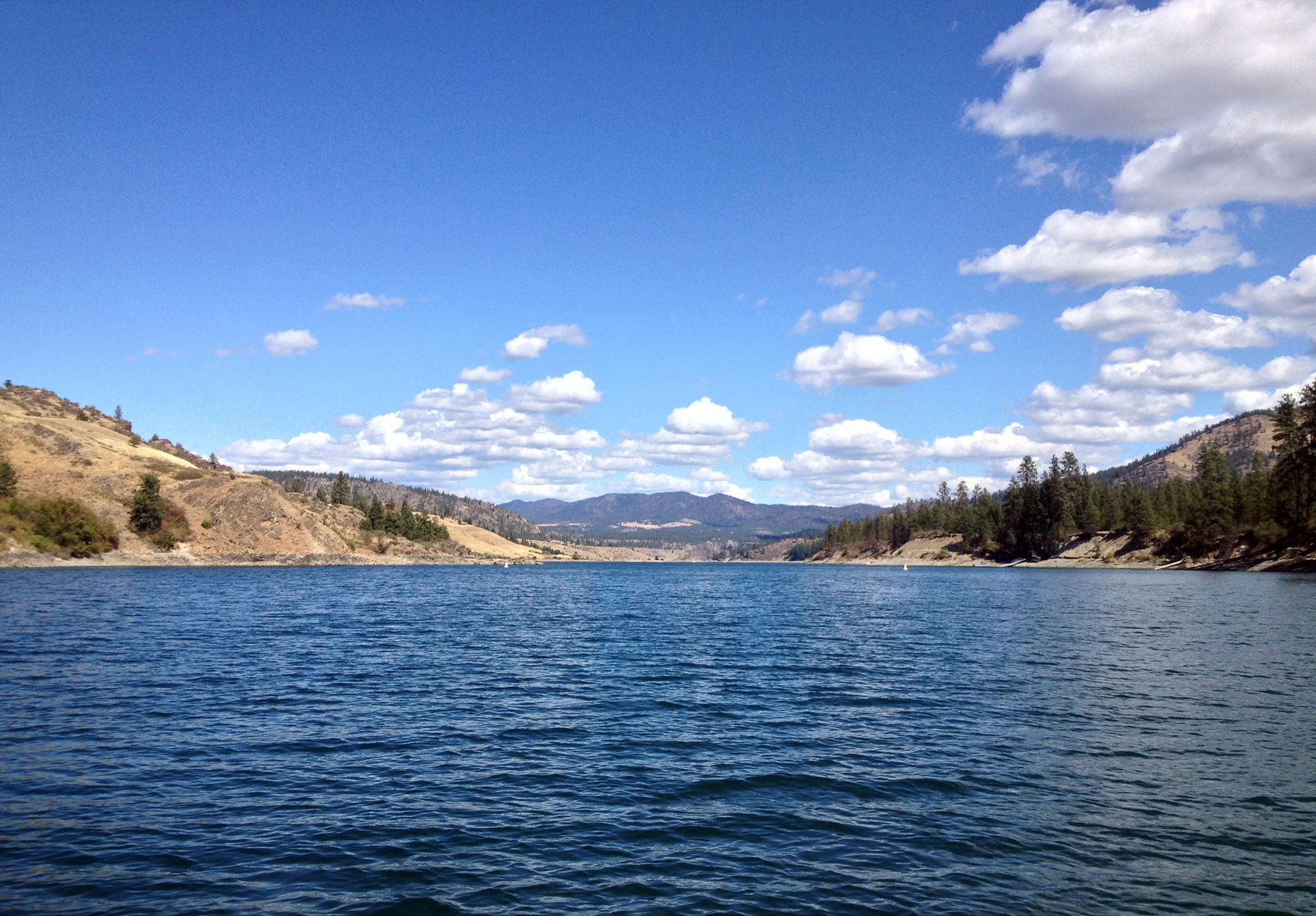
Lake Roosevelt National Recreation Area — NPS Photo
Source: NPS API
Culture & Traditions
Washington State's cultural identity was forever changed by the grunge music explosion of the early 1990s, when Nirvana, Pearl Jam, Soundgarden, and Alice in Chains emerged from Seattle's underground scene to redefine rock music worldwide. Seattle's coffee culture, anchored by Starbucks (founded at Pike Place Market in 1971) and a thriving independent roaster scene, has influenced how the world drinks coffee. The city's food culture ranges from Pike Place Market's fish-throwing vendors to the innovative restaurants of Capitol Hill and the International District's Vietnamese and Chinese cuisines. The Seattle Art Museum and the Museum of Pop Culture (designed by Frank Gehry) are world-class institutions, while the Seattle International Film Festival is the largest film festival in the United States by number of films screened. The Seattle Seahawks' 12th Man fan culture generated a seismically recorded earthquake during a 2011 game, and the Huskies and Cougars maintain a fierce Apple Cup rivalry.
Notable Cities
Olympia
CapitalThe state capital, a small city at the southern tip of Puget Sound. Known for its farmers market, the Evergreen State College, and proximity to Mount Rainier.
55,151
Population
$73,851
Median income
$409,700
Home value
$1,437
Median rent
38.7
Median age
6.7%
Unemployment
48.3%
Homeownership
11,399
Bachelor's+
Seattle
The Emerald City — home to Amazon, Microsoft, Starbucks, Pike Place Market, the Space Needle, and a music scene that gave birth to grunge (Nirvana, Pearl Jam, Soundgarden).
Tacoma
A Puget Sound city south of Seattle with a revitalized waterfront, the Museum of Glass, and stunning views of Mount Rainier.
Spokane
Eastern Washington's largest city, known for Riverfront Park (site of Expo '74), outdoor recreation, and a growing craft food and drink scene.
Walla Walla
A wine destination in southeastern Washington with over 100 wineries. The state's wine industry produces more wine than any state except California.
Capital city data: Census Bureau ACS 5-Year (2022)
Intel File · Fun Facts
Washington produces about 60% of all apples grown in the United States.
Mount Rainier is the most glaciated peak in the contiguous U.S. and is considered one of the most dangerous volcanoes due to the risk of lahars (volcanic mudflows).
Seattle's Pike Place Market, opened in 1907, is one of the oldest continuously operated farmers markets in the U.S. — and home to the original Starbucks.
Washington has no state income tax, relying on sales tax and business taxes for revenue.
Grunge music exploded out of Seattle in the early 1990s, with bands like Nirvana, Pearl Jam, Soundgarden, and Alice in Chains transforming rock music.
Printable Worksheet
Free, GeoProwl-branded, classroom-ready.
Download the Washington Worksheet (PDF)
One page · ready to print at home or in class
Nickname
The Evergreen State
Motto
Al-ki (By and By)
State Bird
American Goldfinch (Willow Goldfinch)
State Flower
Coast Rhododendron
State Tree
Western Hemlock
Also included: fill in what you learned
1. Washington produces about 60% of all apples grown in the United States.
2. Mount Rainier is the most glaciated peak in the contiguous U.S. and is considered one of the most dangerous volcanoes due to the risk of lahars (volcanic mudflows).
3. Seattle's Pike Place Market, opened in 1907, is one of the oldest continuously operated farmers markets in the U.S. — and home to the original Starbucks.
4. Washington has no state income tax, relying on sales tax and business taxes for revenue.
Want all 50 states?
One PDF packet, every state, ready to print for the whole class.
Pair it with a math worksheet
Four Fours Challenge: build every number 1–100 using exactly four 4s.
Data & Statistics
Demographics
- Population
- 7,688,549
- Median income
- $90,325
- Median age
- 38.0
- Median home value
- $473,400
- Below poverty line
- 747,538
- Bachelor's degree+
- 1,244,437
Source: U.S. Census Bureau, ACS 5-Year Estimates (2022)
Agriculture
- Total farms
- 32,076
- Cropland
- 7,368,459 acres
- Market value
- $12,752M
Source: USDA NASS, Census of Agriculture (2022)
Public Health
- Obesity rate
- 30.6%
- Diabetes rate
- 9.6%
- Smoking rate
- 9.0%
- High blood pressure
- 30.6%
- Uninsured
- 6.9%
Source: CDC BRFSS Prevalence Data (2023, 2022 fallback)
National Parks & Sites
- National parks
- 3
- Total NPS sites
- 17
- Sites
- Ebey's Landing National Historical Reserve, Fort Vancouver National Historic Site, Ice Age Floods National Geologic Trail, Klondike Gold Rush - Seattle Unit National Historical Park, Lake Roosevelt National Recreation Area, Lewis & Clark National Historic Trail, Lewis and Clark National Historical Park, Manhattan Project National Historical Park, Minidoka National Historic Site, Mount Rainier National Park, Nez Perce National Historical Park, North Cascades National Park, Olympic National Park, Oregon National Historic Trail, San Juan Island National Historical Park, Whitman Mission National Historic Site, Wing Luke Museum Affiliated Area
Source: National Park Service API
Climate
- Avg temperature
- 50.0°F
- Avg high
- 60.0°F
- Avg low
- 40.3°F
- Annual precipitation
- 31.7 in
- Annual snowfall
- 10.6 in
Source: NOAA Climate Normals (2010)
Frequently Asked Questions
What is the capital of Washington state?▾
Olympia is the capital of Washington state — not Seattle. Olympia is a much smaller city located at the southern end of Puget Sound.
What's the difference between Washington state and Washington D.C.?▾
Washington state is in the Pacific Northwest, bordered by Oregon, Idaho, and Canada. Washington, D.C. (District of Columbia) is the nation's capital on the East Coast between Maryland and Virginia. Locals often say 'Washington state' to avoid confusion.
What is the Space Needle?▾
The Space Needle is a 605-foot observation tower in Seattle, built for the 1962 World's Fair. It has become Seattle's most iconic landmark. The observation deck offers 360-degree views of the city, Puget Sound, Mount Rainier, and the Cascades.
Is Washington a good wine state?▾
Washington is the second-largest wine-producing state in the U.S. after California. The Columbia Valley and Walla Walla AVAs produce world-class Cabernet Sauvignon, Merlot, Syrah, and Riesling. The state has over 1,000 wineries.
Data sources
U.S. Census Bureau · USDA NASS · CDC BRFSS · National Park Service · NOAA CDO
This product uses the Census Bureau Data API but is not endorsed or certified by the Census Bureau. This product uses the NASS API but is not endorsed or certified by NASS.
Test your knowledge →
Play today's GeoProwl daily challenge — 10 states, 3 clues each, powered by real data.