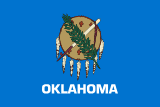
Oklahoma
OK · Data from 2022–2023 government sources · Southwest · 50 States Learning Path
Oklahoma, the Sooner State, sits at the crossroads of the Great Plains and the South. It has a complex identity shaped by the Trail of Tears, the Land Runs of the 1890s, the Oil Boom, and the Dust Bowl. Today, Oklahoma is home to 39 federally recognized tribal nations — more than any other state — and a culture that blends Native American, Western, and Southern influences.
Think you know Oklahoma? Test your geography skills.
History
Oklahoma was designated Indian Territory in the 1830s as the destination for the forced relocation of the Five Civilized Tribes (Cherokee, Chickasaw, Choctaw, Creek, and Seminole) along the Trail of Tears. The Land Run of 1889 opened 'Unassigned Lands' to white settlers, with thousands racing to claim homesteads — those who sneaked in early were called 'Sooners.' Oklahoma became the 46th state on November 16, 1907. The Tulsa Race Massacre of 1921, in which a prosperous Black neighborhood known as 'Black Wall Street' was destroyed, is one of the worst episodes of racial violence in American history.
Economy
Oil and natural gas are Oklahoma's dominant industries — the state is a top-five U.S. producer of both. Oklahoma City and Tulsa are major energy industry centers. Aerospace and defense are significant, with Tinker Air Force Base and major maintenance facilities for American Airlines. Agriculture includes cattle, wheat, and poultry. The state has a growing technology sector, and the Chickasaw Nation and Cherokee Nation are among the largest employers.
Geography & Landmarks
Oklahoma covers 69,899 square miles with terrain that ranges from the flat panhandle in the west to the forested Ouachita Mountains in the southeast. Tornado Alley runs through the state — Oklahoma City experiences more tornadoes per square mile than almost anywhere on Earth. The Wichita Mountains in the southwest harbor one of the oldest mountain ranges in North America and a free-roaming bison herd. The Tallgrass Prairie Preserve near Pawhuska protects 40,000 acres of native grassland. The Wichita Mountains Wildlife Refuge protects approximately 650 American bison on 59,020 acres of mixed-grass prairie and ancient granite mountains. The Tallgrass Prairie Preserve, managed by The Nature Conservancy, is the largest protected remnant of tallgrass prairie on Earth.
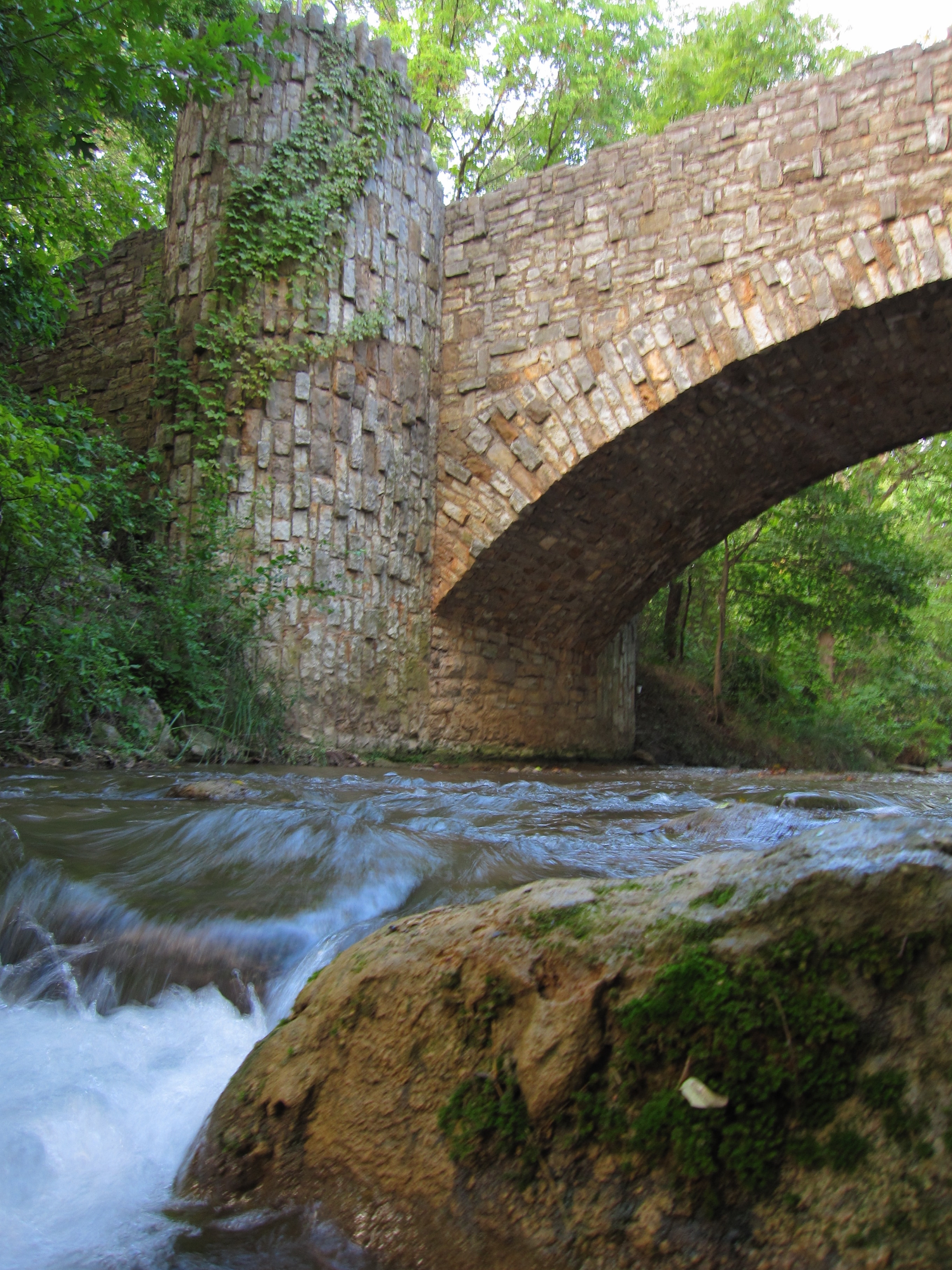
Chickasaw National Recreation Area — NPS Photo
Source: NPS API
Culture & Traditions
Oklahoma's cultural identity weaves together Native American, cowboy, and Dust Bowl traditions into a distinctive tapestry. The state is home to 39 federally recognized tribal nations, more than any other state, and their cultural influence permeates Oklahoma's art, music, and cuisine. The Philbrook Museum of Art in Tulsa, housed in a 1927 Italianate villa, and the Oklahoma City National Memorial & Museum are anchor cultural institutions. Woody Guthrie, born in Okemah, wrote 'This Land Is Your Land' and became the voice of Depression-era America, and Oklahoma's country music tradition runs through Garth Brooks (from Yukon), Reba McEntire (from McAlester), and Carrie Underwood (from Checotah). Oklahoma barbecue features a distinctive smoky style using hickory and pecan wood, while the onion burger — smashed thin with caramelized onions, a Depression-era invention — is the state's signature sandwich.
Notable Cities
Oklahoma City
CapitalThe state capital and largest city, known for the Oklahoma City National Memorial (honoring the 1995 bombing), the Thunder NBA team, and Bricktown entertainment district.
681,088
Population
$64,251
Median income
$196,700
Home value
$1,012
Median rent
34.9
Median age
4.4%
Unemployment
59.5%
Homeownership
94,053
Bachelor's+
Tulsa
The Oil Capital of the World, with Art Deco architecture from the oil boom era. Home to the Gathering Place (one of the nation's best public parks) and the Greenwood District.
Norman
Home to the University of Oklahoma and the National Weather Center — a fitting location given Oklahoma's position in Tornado Alley.
Stillwater
Home to Oklahoma State University, known for its wrestling program (the most dominant in NCAA history) and a welcoming college-town atmosphere.
Bartlesville
Home to Phillips Petroleum (now ConocoPhillips) and the only Frank Lloyd Wright skyscraper ever built — the Price Tower.
Capital city data: Census Bureau ACS 5-Year (2022)
Intel File · Fun Facts
Oklahoma has 39 federally recognized tribal nations — more than any other state.
The parking meter was invented in Oklahoma City in 1935.
Oklahoma's state capitol is the only one in the world with an active oil well on its grounds (Petunia No. 1).
The shopping cart was invented in Oklahoma City by grocer Sylvan Goldman in 1937.
Oklahoma is one of only two states where the panhandle of a neighboring state does not touch it — it IS the panhandle (the other is Florida).
Printable Worksheet
Free, GeoProwl-branded, classroom-ready.
Download the Oklahoma Worksheet (PDF)
One page · ready to print at home or in class
Nickname
The Sooner State
Motto
Labor Omnia Vincit (Labor Conquers All Things)
State Bird
Scissor-tailed Flycatcher
State Flower
Oklahoma Rose
State Tree
Eastern Redbud
Also included: fill in what you learned
1. Oklahoma has 39 federally recognized tribal nations — more than any other state.
2. The parking meter was invented in Oklahoma City in 1935.
3. Oklahoma's state capitol is the only one in the world with an active oil well on its grounds (Petunia No. 1).
4. The shopping cart was invented in Oklahoma City by grocer Sylvan Goldman in 1937.
Want all 50 states?
One PDF packet, every state, ready to print for the whole class.
Pair it with a math worksheet
Four Fours Challenge: build every number 1–100 using exactly four 4s.
Data & Statistics
Demographics
- Population
- 3,970,497
- Median income
- $61,364
- Median age
- 36.9
- Median home value
- $170,500
- Below poverty line
- 585,991
- Bachelor's degree+
- 465,739
Source: U.S. Census Bureau, ACS 5-Year Estimates (2022)
Agriculture
- Total farms
- 70,378
- Cropland
- 10,892,263 acres
- Market value
- $8,541M
Source: USDA NASS, Census of Agriculture (2022)
Public Health
- Obesity rate
- 38.7%
- Diabetes rate
- 12.4%
- Smoking rate
- 15.8%
- High blood pressure
- 38.4%
- Uninsured
- 9.6%
Source: CDC BRFSS Prevalence Data (2023, 2022 fallback)
National Parks & Sites
- National parks
- 0
- Total NPS sites
- 7
- Sites
- Butterfield Overland National Historic Trail, Chickasaw National Recreation Area, Fort Smith National Historic Site, Oklahoma City National Memorial, Santa Fe National Historic Trail, Trail Of Tears National Historic Trail, Washita Battlefield National Historic Site
Source: National Park Service API
Climate
- Avg temperature
- 59.9°F
- Avg high
- 71.6°F
- Avg low
- 47.9°F
- Annual precipitation
- 37.6 in
- Annual snowfall
- 5.4 in
Source: NOAA Climate Normals (2010)
Frequently Asked Questions
What is the capital of Oklahoma?▾
Oklahoma City is the capital of Oklahoma and its largest city. The metro area is home to about 1.4 million people.
What does Sooner mean?▾
A 'Sooner' was someone who entered the Oklahoma Territory before the official start of the 1889 Land Run to stake a claim early (sooner than allowed). The term became a point of pride and is now the nickname for the University of Oklahoma's athletic teams.
Why does Oklahoma have so many tornadoes?▾
Oklahoma sits in the heart of Tornado Alley, where warm, moist air from the Gulf of Mexico collides with cold, dry air from Canada and the Rocky Mountains. This atmospheric clash, combined with flat terrain and wind shear from the jet stream, creates ideal conditions for tornado formation.
What was the Tulsa Race Massacre?▾
The Tulsa Race Massacre of 1921 was an attack by a white mob on the Greenwood District of Tulsa — a prosperous Black neighborhood known as 'Black Wall Street.' Over two days, an estimated 300 people were killed and 10,000 left homeless. The event was largely covered up for decades and is now recognized as one of the worst episodes of racial violence in U.S. history.
Data sources
U.S. Census Bureau · USDA NASS · CDC BRFSS · National Park Service · NOAA CDO
This product uses the Census Bureau Data API but is not endorsed or certified by the Census Bureau. This product uses the NASS API but is not endorsed or certified by NASS.
Test your knowledge →
Play today's GeoProwl daily challenge — 10 states, 3 clues each, powered by real data.