Oregon
OR · Data from 2022–2023 government sources · West · 50 States Learning Path
Oregon, the Beaver State, is a Pacific Northwest gem known for its dramatic coastline, volcanic peaks, old-growth forests, and fiercely independent culture. Portland, the state's largest city, has become a national symbol of craft culture — craft beer, craft coffee, farm-to-table dining, and a DIY ethos that pervades everything. Oregon's landscape ranges from the rainforests of the coast to the high desert of the east.
Think you know Oregon? Test your geography skills.
History
Oregon was home to many Native American peoples, including the Chinook, Modoc, Nez Perce, and Klamath. The Lewis and Clark expedition reached the Oregon coast in 1805. The Oregon Trail, one of the greatest mass migrations in human history, brought over 400,000 settlers to the territory between the 1840s and 1860s. Oregon became the 33rd state on February 14, 1859. The state has a complex racial history — its 1859 constitution excluded Black people from living in the state, a provision not formally repealed until 1926.
Economy
Oregon's economy is led by technology (Intel's largest campus is in Hillsboro; Nike is headquartered in Beaverton), forestry and wood products, agriculture (hazelnuts, berries, wine grapes), and tourism. The state produces 99% of the nation's hazelnuts. Oregon's wine industry, particularly Willamette Valley Pinot Noir, has gained global recognition. Portland is a craft beer capital with over 70 breweries. The state has no sales tax.
Geography & Landmarks
Oregon covers 98,379 square miles with extraordinary diversity. The Cascade Range, including Mount Hood (11,250 feet) and the volcanic remnant of Crater Lake, divides the wet western side from the dry eastern high desert. The Oregon Coast stretches 362 miles, entirely public by law. The Columbia River Gorge, on the Oregon-Washington border, is one of the most scenic river canyons in the country. Crater Lake, at 1,943 feet deep, is the deepest lake in the United States. Crater Lake was formed in the caldera of collapsed Mount Mazama approximately 7,700 years ago and owes its intense blue color to its exceptional clarity and depth. The Columbia River Gorge stretches 80 miles and features over 90 waterfalls on the Oregon side, including the 620-foot Multnomah Falls.
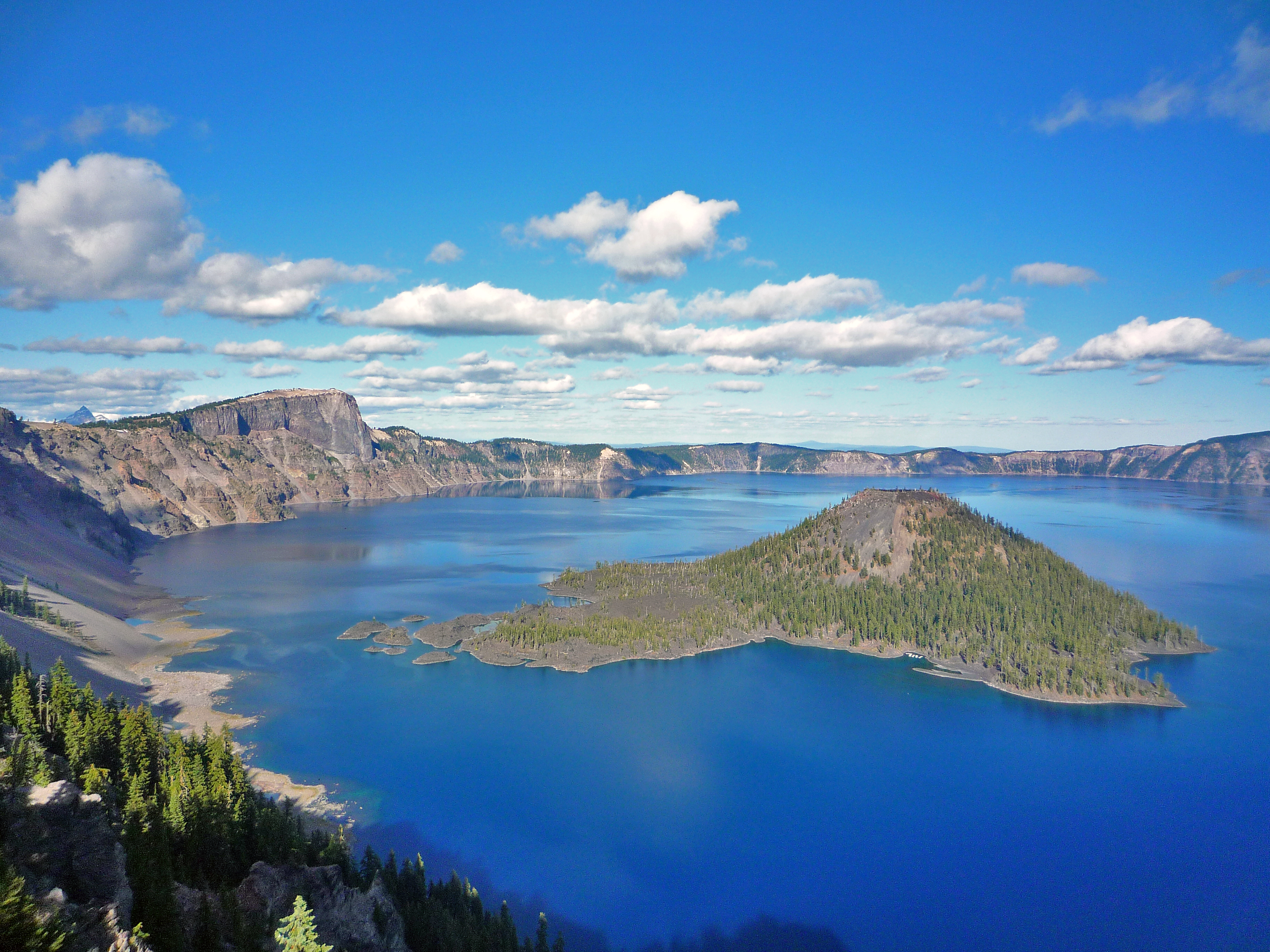
Crater Lake National Park — NPS Photo
Source: NPS API
Culture & Traditions
Oregon's cultural identity is defined by its fiercely independent spirit, environmental consciousness, and creative communities. Portland's food scene has earned national acclaim, from its food cart pods (over 500 carts across the city) to restaurants like Le Pigeon and Pok Pok that helped define the farm-to-table and global street food movements. Powell's City of Books in Portland, occupying an entire city block, is the largest independent bookstore in the world. Oregon's craft beer industry is among the nation's most innovative, with over 300 breweries statewide and Portland alone boasting more breweries than any other city on Earth. The Oregon Shakespeare Festival in Ashland, running since 1935, is the oldest existing Shakespeare festival in the United States and stages nearly 800 performances annually. The University of Oregon's track and field program, where Phil Knight was a runner under legendary coach Bill Bowerman (the two later co-founded Nike in 1964), is known as Track Town, USA.
Notable Cities
Salem
CapitalThe state capital, located in the heart of the Willamette Valley. A center for agriculture, government, and the growing wine industry.
175,754
Population
$67,540
Median income
$349,500
Home value
$1,224
Median rent
35.9
Median age
6.1%
Unemployment
54.9%
Homeownership
22,230
Bachelor's+
Portland
Oregon's largest city and a cultural trendsetter known for its craft beer, food carts, bookstores (Powell's is the world's largest independent bookstore), and quirky, progressive culture.
Eugene
Track Capital USA, home to the University of Oregon and Hayward Field. Nike was founded here by Bill Bowerman and Phil Knight.
Bend
A booming outdoor recreation hub in central Oregon, with skiing, mountain biking, kayaking, and a rapidly growing craft brewery scene.
Ashland
Home to the Oregon Shakespeare Festival, one of the oldest and largest professional theaters in the country, attracting over 400,000 visitors annually.
Capital city data: Census Bureau ACS 5-Year (2022)
Intel File · Fun Facts
Crater Lake is the deepest lake in the United States at 1,943 feet — formed by the collapse of a volcanic caldera about 7,700 years ago.
Oregon's entire 362-mile coastline is public by law — the 1967 Beach Bill guarantees free access to all beaches.
Oregon produces 99% of all hazelnuts (filberts) grown in the United States.
Portland has more breweries per capita than almost any other city in the world.
The Oregon Trail, traveled by over 400,000 pioneers in the mid-1800s, was roughly 2,000 miles long from Missouri to Oregon.
Printable Worksheet
Free, GeoProwl-branded, classroom-ready.
Download the Oregon Worksheet (PDF)
One page · ready to print at home or in class
Nickname
The Beaver State
Motto
Alis Volat Propriis (She Flies With Her Own Wings)
State Bird
Western Meadowlark
State Flower
Oregon Grape
State Tree
Douglas Fir
Also included: fill in what you learned
1. Crater Lake is the deepest lake in the United States at 1,943 feet — formed by the collapse of a volcanic caldera about 7,700 years ago.
2. Oregon's entire 362-mile coastline is public by law — the 1967 Beach Bill guarantees free access to all beaches.
3. Oregon produces 99% of all hazelnuts (filberts) grown in the United States.
4. Portland has more breweries per capita than almost any other city in the world.
Want all 50 states?
One PDF packet, every state, ready to print for the whole class.
Pair it with a math worksheet
Four Fours Challenge: build every number 1–100 using exactly four 4s.
Data & Statistics
Demographics
- Population
- 4,229,374
- Median income
- $76,632
- Median age
- 39.9
- Median home value
- $423,100
- Below poverty line
- 494,158
- Bachelor's degree+
- 654,185
Source: U.S. Census Bureau, ACS 5-Year Estimates (2022)
Agriculture
- Total farms
- 35,547
- Cropland
- 4,358,927 acres
- Market value
- $6,771M
Source: USDA NASS, Census of Agriculture (2022)
Public Health
- Obesity rate
- 33.6%
- Diabetes rate
- 10.9%
- Smoking rate
- 10.6%
- High blood pressure
- 33.5%
- Uninsured
- 5.6%
Source: CDC BRFSS Prevalence Data (2023, 2022 fallback)
National Parks & Sites
- National parks
- 1
- Total NPS sites
- 10
- Sites
- California National Historic Trail, Crater Lake National Park, Fort Vancouver National Historic Site, Ice Age Floods National Geologic Trail, John Day Fossil Beds National Monument, Lewis & Clark National Historic Trail, Lewis and Clark National Historical Park, Nez Perce National Historical Park, Oregon Caves National Monument & Preserve, Oregon National Historic Trail
Source: National Park Service API
Climate
- Avg temperature
- 50.9°F
- Avg high
- 62.3°F
- Avg low
- 39.1°F
- Annual precipitation
- 31.5 in
- Annual snowfall
- 7.8 in
Source: NOAA Climate Normals (2010)
Frequently Asked Questions
What is the capital of Oregon?▾
Salem is the capital of Oregon. While Portland is far more well-known, Salem has been the state capital since before Oregon achieved statehood, chosen for its central Willamette Valley location.
Why does Oregon have no sales tax?▾
Oregon has never had a sales tax. The state relies on income tax and property tax for revenue. Voters have rejected sales tax proposals multiple times over the decades, making it one of only five states with no general sales tax.
What is Crater Lake?▾
Crater Lake in southern Oregon is the deepest lake in the United States (1,943 feet) and one of the clearest in the world. It formed about 7,700 years ago when Mount Mazama collapsed after a massive eruption. The lake's stunning blue color comes from its extreme depth and clarity.
What is the Willamette Valley?▾
The Willamette Valley is a 150-mile-long valley in western Oregon between the Coast Range and the Cascade Range. It contains most of Oregon's population (Portland, Salem, Eugene) and is one of the premier wine-growing regions in the world, known especially for Pinot Noir.
Data sources
U.S. Census Bureau · USDA NASS · CDC BRFSS · National Park Service · NOAA CDO
This product uses the Census Bureau Data API but is not endorsed or certified by the Census Bureau. This product uses the NASS API but is not endorsed or certified by NASS.
Test your knowledge →
Play today's GeoProwl daily challenge — 10 states, 3 clues each, powered by real data.