Rhode Island
RI · Data from 2022–2023 government sources · Northeast · 50 States Learning Path
Rhode Island, the Ocean State, is the smallest state in America but packs a surprising amount of history, culture, and coastline into its 1,214 square miles. Founded on the principle of religious freedom, Rhode Island has a fascinating story that belies its tiny size. Newport's Gilded Age mansions, Providence's creative arts scene, and 400 miles of coastline make it a New England gem.
Think you know Rhode Island? Test your geography skills.
History
Rhode Island was founded in 1636 by Roger Williams, who was banished from Massachusetts for advocating religious freedom and separation of church and state. It was the first colony to declare independence from Britain (May 4, 1776, two months before the Declaration of Independence) but the last of the original 13 states to ratify the Constitution (1790). Newport was a major colonial port and later became the summer playground of America's wealthiest families during the Gilded Age.
Economy
Rhode Island's economy is driven by healthcare, education, defense, and tourism. The state is home to several prestigious institutions including Brown University, the Rhode Island School of Design (RISD), and Salve Regina University. The naval presence in Newport (Naval Station Newport and the Naval War College) is a major employer. Tourism generates over $6 billion annually, with visitors drawn to Newport's mansions, Providence's food scene, and the coastal villages.
Geography & Landmarks
Rhode Island covers just 1,214 square miles — you can drive across it in about 45 minutes. Despite its size, it has 400 miles of coastline along Narragansett Bay and the Atlantic Ocean. The state is mostly flat, with the highest point (Jerimoth Hill) at just 812 feet. Narragansett Bay, which cuts deep into the state, is the dominant geographic feature and defines much of the state's character and economy. Narragansett Bay, the largest estuary in New England, penetrates 28 miles inland and contains over 30 islands. Block Island, located 13 miles off the coast, is recognized by The Nature Conservancy as one of the 12 last great places in the Western Hemisphere for its undeveloped bluffs and migratory bird habitat.
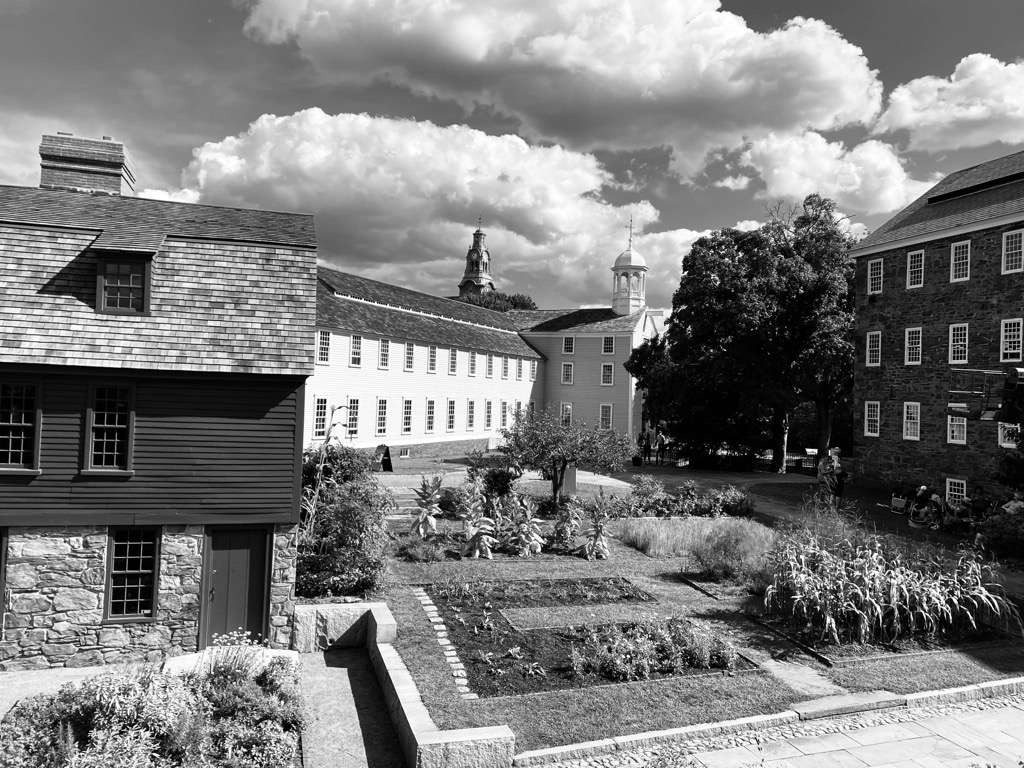
Blackstone River Valley National Historical Park — NPS Photo
Source: NPS API
Culture & Traditions
Rhode Island's cultural punch far exceeds its tiny footprint. The Rhode Island School of Design (RISD), founded in 1877, is one of the most prestigious art and design colleges in the world, and its museum holds over 100,000 works spanning ancient to contemporary art. Newport's music festivals — the Newport Jazz Festival (founded 1954, where Miles Davis premiered his famous quintet) and the Newport Folk Festival (where Bob Dylan controversially went electric in 1965) — are landmark events in American music history. Rhode Island's food traditions include stuffies (stuffed quahog clams), coffee milk (the state drink, made with coffee-flavored syrup), and the New York System wiener, a small hot dog topped with meat sauce, mustard, onions, and celery salt. WaterFire Providence, an award-winning public art installation featuring bonfires on the three rivers of downtown Providence, draws over one million visitors annually.
Notable Cities
Providence
CapitalThe state capital and largest city, known for Brown University, RISD, a nationally acclaimed restaurant scene, and the WaterFire art installation along the rivers.
189,715
Population
$61,365
Median income
$293,000
Home value
$1,214
Median rent
32.3
Median age
7.2%
Unemployment
39.9%
Homeownership
21,563
Bachelor's+
Newport
America's first resort town, famous for Gilded Age mansions (The Breakers, Marble House), the Cliff Walk, sailing culture, and the Newport Jazz and Folk Festivals.
Warwick
Rhode Island's second-largest city, home to T.F. Green Airport and a mix of waterfront communities along Narragansett Bay.
Narragansett
A seaside town known for its beaches, the historic Narragansett Towers, and some of the best surfing on the East Coast.
Bristol
Home to the oldest continuous Fourth of July celebration in the United States (since 1785) and Roger Williams University.
Capital city data: Census Bureau ACS 5-Year (2022)
Intel File · Fun Facts
Rhode Island is the smallest state by area (1,214 sq mi) — you could fit about 425 Rhode Islands inside Alaska.
Despite its name, Rhode Island is not an island — though Aquidneck Island (where Newport is located) may be the origin of the name.
Rhode Island was the first colony to declare independence from Britain (May 4, 1776) and the last of the original 13 to ratify the Constitution.
The state's official name is 'State of Rhode Island and Providence Plantations' — the longest official state name in the U.S. (though 'and Providence Plantations' was removed in 2020).
Mr. Potato Head was invented by a Rhode Island company (Hasbro, headquartered in Pawtucket) in 1952.
Printable Worksheet
Free, GeoProwl-branded, classroom-ready.
Download the Rhode Island Worksheet (PDF)
One page · ready to print at home or in class
Nickname
The Ocean State
Motto
Hope
State Bird
Rhode Island Red (chicken)
State Flower
Violet
State Tree
Red Maple
Also included: fill in what you learned
1. Rhode Island is the smallest state by area (1,214 sq mi) — you could fit about 425 Rhode Islands inside Alaska.
2. Despite its name, Rhode Island is not an island — though Aquidneck Island (where Newport is located) may be the origin of the name.
3. Rhode Island was the first colony to declare independence from Britain (May 4, 1776) and the last of the original 13 to ratify the Constitution.
4. The state's official name is 'State of Rhode Island and Providence Plantations' — the longest official state name in the U.S. (though 'and Providence Plantations' was removed in 2020).
Want all 50 states?
One PDF packet, every state, ready to print for the whole class.
Pair it with a math worksheet
Four Fours Challenge: build every number 1–100 using exactly four 4s.
Data & Statistics
Demographics
- Population
- 1,094,250
- Median income
- $81,370
- Median age
- 40.1
- Median home value
- $343,100
- Below poverty line
- 118,033
- Bachelor's degree+
- 165,487
Source: U.S. Census Bureau, ACS 5-Year Estimates (2022)
Agriculture
- Total farms
- 1,054
- Cropland
- 16,665 acres
- Market value
- $93M
Source: USDA NASS, Census of Agriculture (2022)
Public Health
- Obesity rate
- 31.6%
- Diabetes rate
- 11.8%
- Smoking rate
- 9.5%
- High blood pressure
- 34.0%
- Uninsured
- 5.3%
Source: CDC BRFSS Prevalence Data (2023, 2022 fallback)
National Parks & Sites
- National parks
- 0
- Total NPS sites
- 4
- Sites
- Blackstone River Valley National Historical Park, Roger Williams National Memorial, Touro Synagogue National Historic Site, Washington-Rochambeau Revolutionary Route National Historic Trail
Source: National Park Service API
Climate
- Avg temperature
- 50.9°F
- Avg high
- 59.1°F
- Avg low
- 41.7°F
- Annual precipitation
- 48.5 in
- Annual snowfall
- 35.0 in
Source: NOAA Climate Normals (2010)
Frequently Asked Questions
What is the capital of Rhode Island?▾
Providence is the capital of Rhode Island. It is the state's largest city and is known for its vibrant arts scene, excellent restaurants, and prestigious universities (Brown and RISD).
Why is it called Rhode Island if it's not an island?▾
The name likely comes from Italian explorer Giovanni da Verrazzano, who compared nearby Aquidneck Island to the Greek island of Rhodes. Dutch explorer Adriaen Block also noted a 'reddish' (roodt) island in the area. The name stuck for the entire colony and eventually the state.
What are the Newport mansions?▾
The Newport mansions are grand estates built by America's wealthiest families (Vanderbilts, Astors) during the Gilded Age (1870s-1900s) as summer 'cottages.' The most famous include The Breakers (70 rooms), Marble House, and Rosecliff. Several are open for tours and managed by the Preservation Society of Newport County.
What is WaterFire?▾
WaterFire is an award-winning fire sculpture installation in downtown Providence, where nearly 100 bonfires are lit on the surface of the three rivers running through the city. Created by artist Barnaby Evans in 1994, it draws hundreds of thousands of visitors annually.
Data sources
U.S. Census Bureau · USDA NASS · CDC BRFSS · National Park Service · NOAA CDO
This product uses the Census Bureau Data API but is not endorsed or certified by the Census Bureau. This product uses the NASS API but is not endorsed or certified by NASS.
Test your knowledge →
Play today's GeoProwl daily challenge — 10 states, 3 clues each, powered by real data.