March 22, 2026
Do Bees Know Things We Don't? 15 Surprising Bee Facts
You probably know that bees make honey and sting when threatened. Beyond those two facts, most people's bee knowledge drops off sharply. That is a shame, because bees are among the most scientifically fascinating organisms on the planet. They can do basic arithmetic. They communicate through choreography. They have been trained to detect explosives. And the vast majority of bee species never sting anyone at all. Here are 15 facts, drawn from USDA research, USGS surveys, and peer-reviewed entomology, that will change how you think about every bee you see this spring.
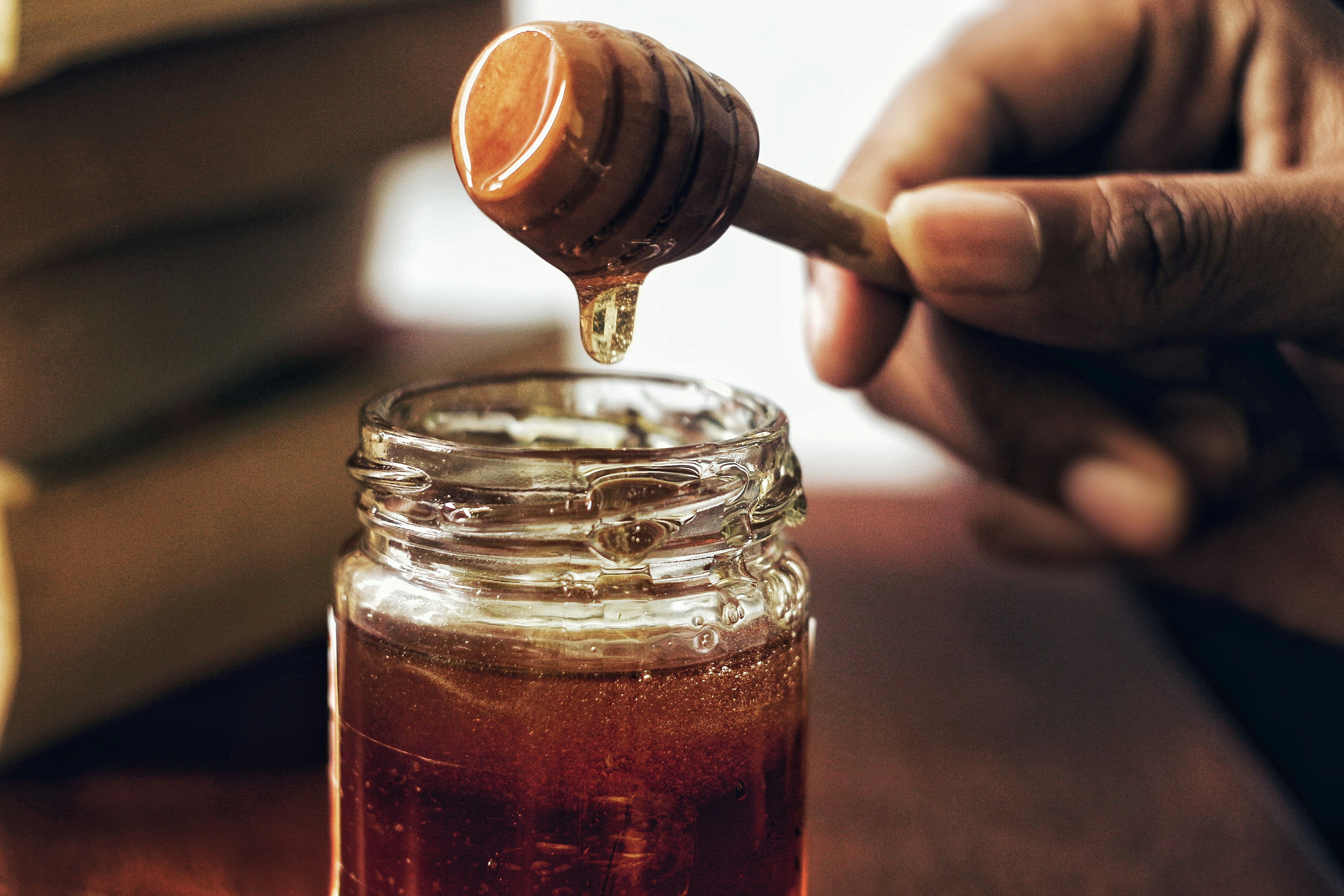
Photo credit: Unsplash
Tiny Mathematicians
1. Bees can add and subtract. In 2019, researchers at RMIT University demonstrated that honeybees could learn to associate blue with addition and yellow with subtraction, then correctly solve novel problems they had never seen before. A brain with fewer than one million neurons performing arithmetic that many preschoolers struggle with.
2. They understand the concept of zero. Honeybees can be trained to identify "zero" as a quantity less than one — a conceptual leap that most human children cannot make until age four. Only a handful of animal species have demonstrated this ability, including primates, dolphins, and parrots.
3. Bees solve the traveling salesman problem in real time. Given multiple feeding stations in random locations, bees quickly learn the shortest route that visits all of them — an optimization problem that stumps computers as the number of stops increases. They do this with a brain that weighs about one milligram.
The Superorganism
4. A honeybee colony is a single distributed organism. Biologists increasingly describe a colony not as a group of individual insects but as a superorganism — a single biological entity in which individual bees function like cells in a body. Foragers are the sensory organs. Nurse bees are the immune system. The queen is the reproductive system. No individual bee can survive alone for more than a few days.
5. Colonies make democratic decisions. When a swarm needs a new home, scout bees evaluate candidate locations and report back using waggle dances. Each scout advocates for her preferred site by dancing more vigorously. Over hours, the swarm reaches consensus as scouts switch allegiance to the most compelling option. Cornell biologist Thomas Seeley has shown this process is strikingly similar to how neurons in a primate brain reach a decision — a competition between signals that resolves when one crosses a threshold.
6. Bees thermoregulate their hive to within one degree. The brood nest is maintained at precisely 95°F (35°C) year-round. In summer, bees cool the hive by collecting water and fanning it across the comb to create evaporative cooling. In winter, they form a tight cluster and vibrate their flight muscles to generate heat. The temperature control is more precise than most home thermostats.
Agriculture by the Numbers
7. There are 20,000 known bee species worldwide. The honeybee gets most of the attention, but she is one species in an enormous family. The USGS Native Bee Inventory has documented approximately 4,000 native bee species in North America alone. Most are solitary, do not live in hives, and never produce a drop of honey. Many are far more efficient pollinators of specific crops than honeybees.
8. Americans consume about 1.5 pounds of honey per person per year. That adds up to roughly 500 million pounds nationally. Since domestic production covers only about 125 million pounds, the US imports more than three times what it grows. The gap has been widening steadily since the 1990s as domestic colony counts decline and consumption rises.
9. Colony losses hit 48.2% in 2022–23. The Bee Informed Partnership's annual survey reported that nearly half of all managed colonies in the US were lost during the 2022–2023 season. That figure includes summer and winter losses combined. Beekeepers can rebuild through splitting healthy colonies and purchasing replacement queens, but the annual replacement cost runs into hundreds of millions of dollars.
Not All Bees Sting (or Make Honey)
10. Male bees cannot sting. Drones — the males in a honeybee colony — have no stinger at all. The stinger is a modified egg-laying organ, which means only females possess one. Drones exist solely to mate with queens from other colonies. After mating season ends, the workers evict the drones from the hive to conserve resources for winter.
11. Most bee species are solitary and non-aggressive. Of those 4,000 North American species, the vast majority are solitary nesters — mason bees, leafcutter bees, mining bees — that build individual nests in soil, hollow stems, or wood. They technically possess stingers but almost never use them on humans because they have no hive to defend. You can stand inches from a mason bee nest without being stung.
12. Only 7 of those 20,000 species produce honey. Honey production is unique to the genus Apis — honeybees. The other 19,993 species pollinate just fine without making a drop. Bumblebees store small amounts of nectar in wax pots, but not in the quantities or long-term-stable form that we call honey.
Bees in Unexpected Places
13. Bees have been trained to detect bombs. Research funded by DARPA and conducted at Los Alamos National Laboratory demonstrated that honeybees can be conditioned to extend their proboscis (tongue) in response to trace amounts of explosives like TNT and C-4. Their sensitivity rivals that of trained bomb-sniffing dogs, and they can be conditioned in hours rather than weeks. Researchers built prototype "bee boxes" for airport and checkpoint screening, though the technology has not been widely deployed.
14. Honey has documented medical applications. Manuka honey from New Zealand is FDA-approved for wound dressing under the brand Medihoney. Honey's antimicrobial properties come from its low water content (typically 17–18%), low pH (around 3.9), and the presence of hydrogen peroxide generated by the enzyme glucose oxidase. Hospital studies have shown it to be effective against MRSA and other antibiotic-resistant bacteria in chronic wound care.
15. Bees have inspired computing algorithms. The "Bees Algorithm," published in 2005, mimics forager bee behavior to solve complex optimization problems in computer science — from routing delivery trucks to scheduling factory production lines. It works by sending virtual "scout bees" to explore a solution space, then concentrating "forager bees" around the most promising regions, just as a real colony allocates foragers to the richest flower patches. Variations of bee-inspired algorithms are now standard tools in operations research.
How Many Did You Know?
Test your bee knowledge — and learn even more — in Hive Mind Trivia. Each round pulls from a database of science-backed bee facts covering biology, agriculture, history, and ecology. Some are easy. Some will stump an entomologist. How deep does your hive knowledge go?
Sources
- USDA National Agricultural Statistics Service, "Honey" report, March 2024. Colony counts, production volumes, per-capita consumption estimates.
- Bee Informed Partnership, "2022–2023 Colony Loss Survey Results." Annual managed colony loss rates, methodology.
- USGS Native Bee Inventory and Monitoring Lab, "Bee Species of North America." Species counts and distribution data for native bees.
- Howard et al., "Numerical cognition in honeybees enables addition and subtraction," Science Advances, 2019. Arithmetic ability experiments.
- Seeley, T.D., Honeybee Democracy, Princeton University Press, 2010. Swarm decision-making and superorganism behavior.